

Reviewed · TAILOR & AO DAI FASHION
Half-day Silk Weaving Discovery In Hoi An
Silk starts as a leaf and patience. This half-day experience shows how Vietnam turns mulberry leaves into silk threads and into classic textiles linked to ao dai culture, with time in gardens, silkworm houses, and a weaving space. I especially like the hands-on parts, like feeding the silkworms and trying the processes yourself on the looms, and I like the calm pace that a small group (max 15) allows. One heads-up: the visit does end at a product showroom, so if you strongly dislike any retail atmosphere, set your mindset before you go.
The whole tour runs about 4 hours and is built around simple, visual steps in the silk-making chain. You’ll get hotel pickup and drop-off in Hoi An’s city center, bottled water, an English-speaking guide (other languages on request with a surcharge), and a snack at the site. Many guides keep things clear and practical, including well-regarded guides like Thu and Lyn mentioned in past groups, and you’ll often see life-cycle charts that make the process easier to follow.
If you’re short on time in Hoi An but want something more meaningful than shopping alone, this is a solid pick. You’ll leave with a better sense of why silk production is slow work, how workers manage each stage, and how traditional weaving results in wearable fabric, including Champa-style textiles you can see in the showroom.
In This Review
- Key Highlights You’ll Notice Right Away
- Silk Weaving in Hoi An: Why This Tour Feels More Real Than a Shopping Stop
- The 4-Hour Rhythm: Exactly How the Time Gets Used
- Stop 1 at the Silk Village: Mulberry Trees, Quiet Gardens, and a Welcome Drink
- Stop 2: Silkworm Breeding Houses, Cocoon Work, and Hands-On Weaving
- A quick reality check on hands-on time
- The Showroom Finale: Tailors at Work and Champa-Style Silk Products
- What You Get for $55: Value Breakdown That Actually Matters
- Best For Who: Silk Lovers, Curious Shoppers, and Anyone Who Wants a Calm Morning
- Practical Tips Before You Go (Based on How the Tour Runs)
- Should You Book This Half-Day Silk Weaving Discovery in Hoi An?
- FAQ
- How long is the Half-Day Silk Weaving Discovery tour?
- How much does it cost?
- Is hotel pickup and drop-off included?
- What can I expect to do during the tour?
- Is the guide available in English?
- What’s included in the price besides the tour guide?
- Are there age limits or child pricing?
- What is the cancellation policy?
Key Highlights You’ll Notice Right Away

- Ancient mulberry trees and a serene garden setting that sets the tone from minute one
- Silkworm feeding up close, with cocoons and the actual routine of sericulture explained
- Hands-on silk work, including spinning silk from cocoons and trying looms
- Champa textile focus, so you’re not just watching a factory demo
- A showroom finale where you can see finished silk products and tailors at work
- Hotel pickup and drop-off, which saves you time and hassle in Hoi An
Silk Weaving in Hoi An: Why This Tour Feels More Real Than a Shopping Stop
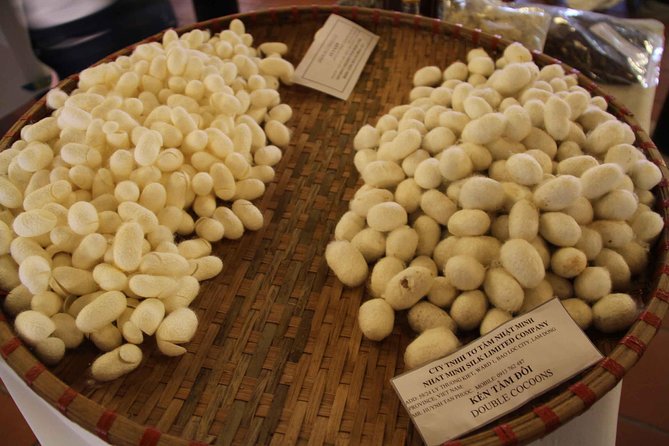
Hoi An is famous for pretty things: lanterns, old streets, and storefronts full of clothes. This half-day tour gives you a different entry point. Instead of starting with the finished garment, it starts with raw inputs: mulberry leaves, silkworms, and the threading steps that transform soft work into strong fabric.
That’s the main value here. Silk making is easy to misunderstand if you only see the final robe. Watching the chain of steps in order helps you connect details: why feeding matters, why cocoons are the turning point, and why weaving takes patience. It also helps you shop smarter later, since you’ll know what stage you’re paying for when you buy a silk item.
You’ll also get a few small comforts that make the experience easier to enjoy: bottled water, a welcome drink, and a snack during the visit. Those extras matter on a morning tour because they keep energy steady while you’re moving between garden, breeding house, and weaving areas.
Measured, cut and stitched, more tailor visits
- Discover Traditional Silk Process in Hoi An Silk Village★ 4.4 · 60 reviews
- Hoi An: Half-day Silk Weaving Discovery Tour★ 4.7 · 30 reviews
- Half-day Silk Weaving Discovery In Hoi An★ 5.0 · 25 reviews
- DISCOVER the Skills of sericulture & weaving, HOI AN SILK VILLAGE★ 5.0 · 24 reviews
The 4-Hour Rhythm: Exactly How the Time Gets Used
The tour runs for about 4 hours, which is long enough to see multiple stages but short enough to fit into a packed Hoi An schedule. Hotel pickup happens first, then you head to the silk village complex.
The schedule is built in chunks:
- A first stretch to orient you and get you into the mulberry garden setting.
- A second stretch focused on the sericulture process and the weaving work.
- A final stop for finished silk products and a short snack in the garden.
This structure is why the tour works for first-timers. You’re not sprinting from room to room, and you’re not stuck for hours staring at the same display wall. The small-group cap (maximum 15) also keeps the vibe unhurried when numbers are low.
One detail to keep in mind: while the experience is educational, it ends at a showroom where silk products are displayed and tailors may be working. If your goal is purely hands-on learning and you dislike any retail setting, treat the showroom as part of the craft experience, not a detour.
Stop 1 at the Silk Village: Mulberry Trees, Quiet Gardens, and a Welcome Drink
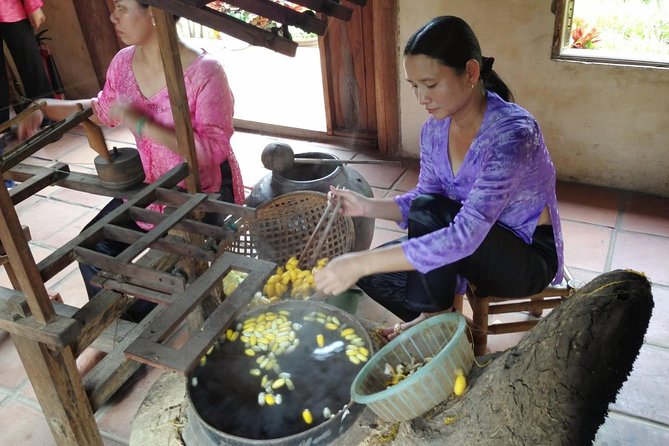
Your day begins with hotel pickup in Hoi An’s city center. When you arrive, you’re welcomed with a refreshing drink, which helps you settle in before you start walking the property.
The first stop centers on the mulberry garden, including over 40 ancient mulberry trees. Some are described as hundreds of years old, which instantly gives the place a sense of legacy. Beyond the “wow” factor, it’s also practical: mulberry trees are the starting point for the whole process, so seeing them early makes everything else make sense.
You’ll typically spend about 1 hour here, with time to look around and get oriented. If you like calm, photo-friendly places that don’t feel like a rush, this section delivers. The garden also sets up the next phase, where you’ll learn how leaves become silkworm food and how cocoons become silk thread.
Stop 2: Silkworm Breeding Houses, Cocoon Work, and Hands-On Weaving
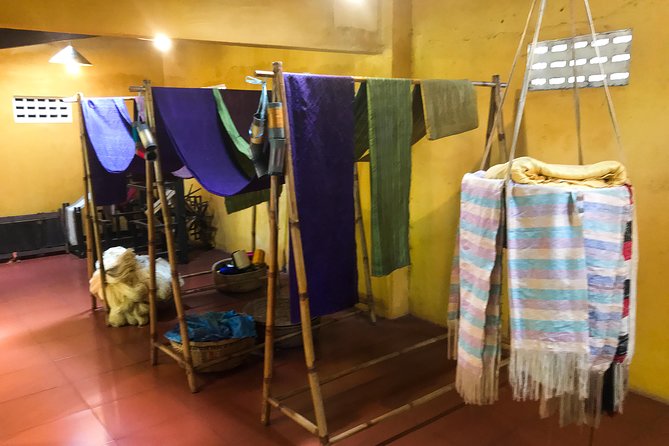
This is the portion most people remember, because it’s both visual and participatory. You start by visiting a traditional house in Quang Nam where the process of sericulture is explained. From there, you move into the silkworm areas and learn what happens between leaf and cocoon.
What you do here is the real point of the tour:
- You’ll see cocoons up close.
- You’ll learn how to feed silkworms.
- You may even have a chance to feed them yourself using mulberry leaves gathered from the gardens.
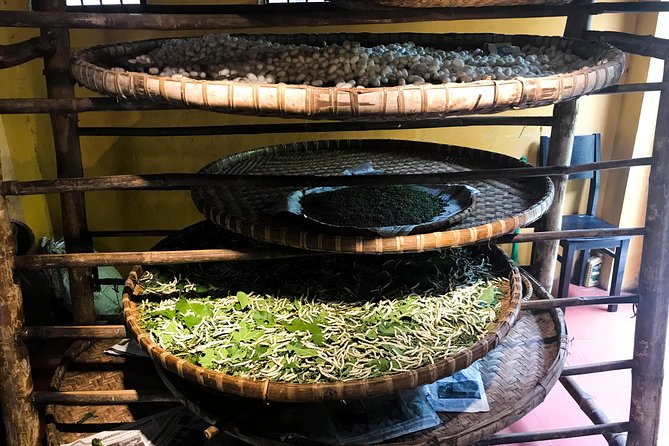
Past groups also highlighted that the experience isn’t just watch-and-walk. You’re guided step by step, and charts showing the life cycle of silk worms and moths can help you connect biology to craft. That structure is especially helpful if you’re the kind of person who asks why something works, not only how it’s done.
After the silkworm stage, you’ll shift into textile making. The tour includes exposure to traditional textile-making techniques linked to the Champa people and a Vietnamese silk weaving house where you can see how cloth is produced from silk threads.
Then comes the hands-on part many visitors love most: you can try working on looms and other steps connected with producing thread. Some groups mention running two different looms, plus trying tasks like pulling or spinning thread from cocoons. Even if you’re not an expert, it’s a chance to experience the workload behind a garment that might look effortless once it’s finished.
A few more Hoi An trips worth weighing before you book:





A quick reality check on hands-on time
Hands-on doesn’t mean you’ll run the entire production line end-to-end like a craftsman. But the tour does give you enough involvement to understand the sequence and the effort. That’s a better goal for most visitors anyway. You’re leaving with context you can carry into future shopping and conversations.
The Showroom Finale: Tailors at Work and Champa-Style Silk Products
After the working portions, you finish at a showroom. This is where you can shift from process to product.
You’ll have time to admire silk items—especially Champa-style textiles—and you may be able to watch skilled tailors working. Seeing finished goods right after you’ve tried (or at least witnessed) the thread and weaving steps is a smart way to learn. Your brain makes the link faster.
Just remember the earlier heads-up: the showroom is also a sales environment. That doesn’t make it bad. It’s simply not purely a museum setting. If you’re price-comparing later, you’ll benefit from knowing what goes into the cloth you’re considering.
If you do plan to buy silk, this is also a good moment to ask practical questions through your guide—things like what makes one piece feel different from another. The tour’s structure gives you enough background to recognize what you’re looking at.
What You Get for $55: Value Breakdown That Actually Matters
At $55 per person for about 4 hours, the price looks reasonable once you factor in what’s included. Here’s what you’re getting up front:
- Hotel pickup and drop-off in Hoi An City Center
- An English-speaking guide (other languages on request with a surcharge)
- Entrance fees
- Travel insurance
- Bottled drinking water
- Snack
- Confirmation at booking time
This matters for value because it removes the usual Hoi An math. You’re not paying separately for transport to a craft site, and you’re not hunting down admission tickets while trying to keep your day organized. For many people, that convenience is worth a lot in a short visit.
Could it be cheaper if you went DIY? Sure, but DIY usually means losing the structure that teaches you the process in order. Here, you’re paying for guided explanations, hands-on participation, and a clean route through gardens, silkworm houses, weaving, and finished textiles.
If you’re the kind of traveler who likes to understand how things are made—before you buy—you’ll likely feel like $55 is a fair trade for the time and access.
Best For Who: Silk Lovers, Curious Shoppers, and Anyone Who Wants a Calm Morning
This tour suits a few clear types of travelers:
You’ll love it if:
- You want a craft-focused morning in Hoi An that isn’t just walking streets.
- You like interactive learning, especially feeding silkworms and trying weaving basics.
- You’re curious about how Vietnam’s traditional ao dai culture connects to silk production and textile work.
- You enjoy small-group experiences. With a maximum of 15 travelers, it’s easier to get questions answered and to move at a comfortable pace.
It may be less ideal if:
- You want a strictly hands-off experience and dislike any showroom retail atmosphere.
- You’re only interested in buying silk and don’t care how it’s made.
It’s also a good option for people who want something between “museum tour” and “workshop class.” You get hands-on exposure without needing technical training.
Practical Tips Before You Go (Based on How the Tour Runs)
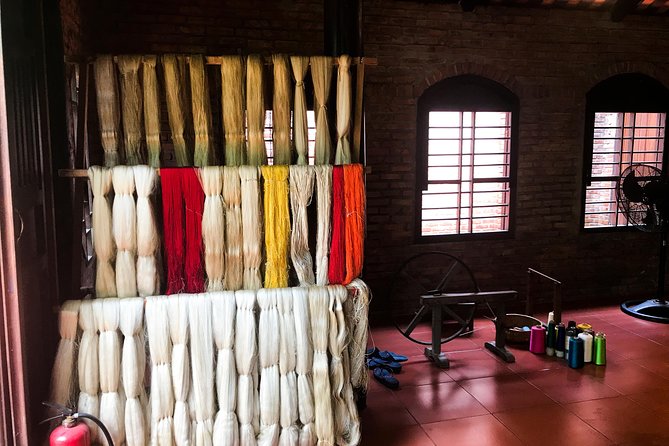
The tour is mostly on-site walking inside a garden and between working areas. A few practical moves can help you enjoy it more:
- Wear comfortable shoes. Even if the walking isn’t extreme, you’ll move between mulberry areas and indoor/outdoor craft spaces.
- Bring your questions for the guide. Guides like Thu and Lyn are known for explaining clearly, and asking questions can help you connect steps.
- If you’re sensitive to retail pressure, decide in advance how you want to handle the showroom. Treat it as part of the learning route, not a surprise stop.
Also, consider timing. Because you’re included for pickup in city center and the tour lasts about 4 hours, pick a slot when you’re not rushing to the next thing.
Should You Book This Half-Day Silk Weaving Discovery in Hoi An?
Book it if you want a real look at how silk becomes cloth, not just a place to browse products. The strongest reason to book is the combination of ancient mulberry trees, close-up silkworm work, and the chance to try parts of the weaving/thread process, capped with finished textiles in a showroom.
Skip it if you only want shopping or you’re uncomfortable with a final product display where tailors may be working. In that case, look for a purely museum-style craft visit or a different kind of experience.
If your goal is understanding and hands-on learning in limited time, this one is a smart use of a morning or early afternoon in Hoi An.
FAQ
How long is the Half-Day Silk Weaving Discovery tour?
The tour lasts about 4 hours.
How much does it cost?
It costs $55.00 per person.
Is hotel pickup and drop-off included?
Yes. Hotel pickup and drop-off are included for Hoi An City Center locations.
What can I expect to do during the tour?
You’ll visit a mulberry garden, see silkworm breeding houses and cocoons, learn how silkworms are fed (including a chance to feed them), watch or learn traditional textile-making and weaving, and visit a showroom where silk products are displayed and tailors work.
Is the guide available in English?
Yes, English-speaking guides are included. Other languages are available upon request with a surcharge.
What’s included in the price besides the tour guide?
Entrance fees, travel insurance, bottled drinking water, and a snack are included, along with the hotel pickup/drop-off.
Are there age limits or child pricing?
Children age 0–5 are free. Children age 6–10 pay 50% off. The policy also notes a maximum of 1 child accompanied by 1 adult, and the second child pays the adult price.
What is the cancellation policy?
Free cancellation is available up to 24 hours in advance for a full refund. If you cancel less than 24 hours before the experience starts, the amount paid is not refunded.
More Half-Day in Hoi An
- My Son Sanctuary Half-Day Private Guided Tour- Early Tour
★ 5.0 · 222 reviews - Hoi An: Half-day Excursion To My Son Sanctuary Tour
★ 4.5 · 130 reviews - My Son Sanctuary Half-day Journey
★ 4.0 · 97 reviews - Hoi An Half-Day Street Food Guided Tour – HFE
★ 5.0 · 83 reviews - Half-day Electric Scooter Countryside Adventure In Hoi An
★ 5.0 · 62 reviews - Hoi An: Half-day Electric Scooter Countryside Adventure
★ 4.8 · 37 reviews
More Tour Reviews in Hoi An
- Hoi An: Basket Boat Ride in the Coconut Forest
★ 4.9 · 4,956 reviews - Hoi An: Vietnamese Coffee Culture and Coffee Making Class
★ 4.9 · 4,006 reviews - Hoi An: Vietnamese Foldable Lantern Making Class
★ 4.9 · 3,742 reviews - Cooking Class Hoi An:Local Market, Basket Boat, Fishing & Cooking
★ 5.0 · 3,660 reviews - Hoi An Cooking Class(Market,BasketBoat Crabfishing&Cooking Class)
★ 5.0 · 3,386 reviews - Hoi An: My Son Sanctuary Early Morning w. Champa Food Brunch
★ 4.9 · 2,750 reviews
Tailored in Hoi An: More Ao Dai
- Professional Photography Tour Optional Ao Dai Dress in Hoi An
★ 5.0 · 99 reviews - Discover Traditional Silk Process in Hoi An Silk Village
★ 4.4 · 60 reviews - Hoi An: Half-day Silk Weaving Discovery Tour
★ 4.7 · 30 reviews - DISCOVER the Skills of sericulture & weaving, HOI AN SILK VILLAGE
★ 5.0 · 24 reviews - Hoi An Hidden Gem- Local Food- Lantern Making- Tailoring
★ 5.0 · 16 reviews - Ao Dai Photography: Traditional Attire Capture in Hoi An
★ 4.8 · 13 reviews
Just Reviewed: Fresh Hoi An Trips





Tailor & Ao Dai Fashion, compared.
 ★ 5.0Professional Photography Tour Optional Ao Dai Dress in Hoi AnFrom $3699 reviews
 ★ 4.4Discover Traditional Silk Process in Hoi An Silk VillageFrom $1160 reviews
 ★ 4.7Half-day Silk Weaving Discovery TourFrom $5530 reviews
 ★ 5.0DISCOVER the Skills of sericulture & weaving, HOI AN SILK VILLAGEFrom $3124 reviews
 ★ 5.0Local Food- Lantern Making- TailoringFrom $5016 reviews
 ★ 4.8Ao Dai Photography: Traditional Attire Capture in Hoi AnFrom $4013 reviews
 ★ 5.0Ao Dai Hoi An Photography TourFrom $1169 reviews
 ★ 4.6Silk Process, Lantern Making Workshop & Local FoodFrom $227 reviews
Browse the lists this tour appears in