
Reviewed · HOI AN FOOD TOURS
Hoi An: Silk Process, Lantern Making Workshop & Local Food
Silk and lanterns, all in one visit. I love how this tour links the mulberry-to-cocoon process to the lantern you’ll build and take home. It’s one of those experiences where you stop seeing craft as a product and start seeing it as a whole chain of work and care.
I also like the real silk vs fake silk lesson, because it gives you a smart shopping filter while you’re in Hoi An. One possible drawback: it’s not suitable for wheelchair users or people with mobility impairments, and the schedule is fairly full for a 150-minute visit.
In This Review
- Key things that make this tour worth your time
- Where the tour starts inside Hoi An’s craft world (Nguyen Tat Thanh)
- Quang Nam’s traditional house story: the sericulture mindset
- Ancient mulberry gardens and the silkworm-breeding house
- The Unraveling House: turning cocoons into thread you can weave
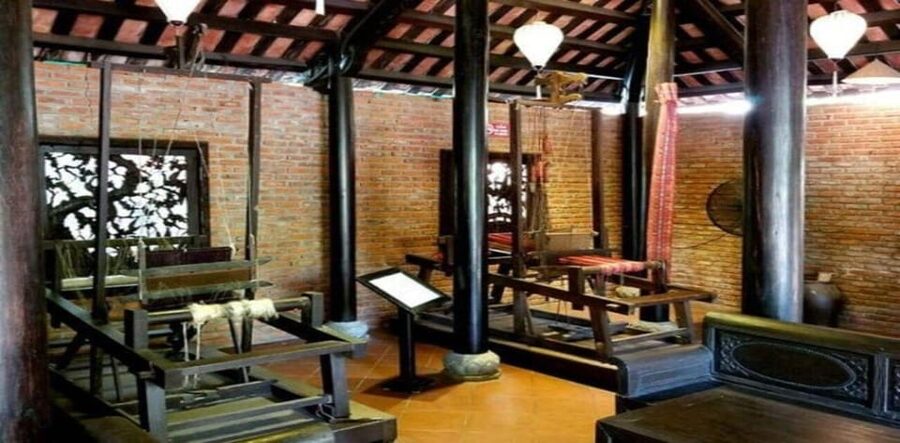
- Champa and Dai Viet textile craft in the weaving workshops
- Hoi An Silk Village exhibition: spotting pure silk (and saving money)
- Lantern class: history, shapes, colors, and making your own souvenir
- Lunch that actually tastes local: Cao Lau, spring rolls, and fruit
- What the $22 price covers (and what you’ll want to budget for)
- Who should book this silk and lantern workshop
- Should you book it?
- FAQ
- Where is the meeting point for this tour?
- How long does the experience last?
- How much does it cost?
- Is there an extra charge on Vietnamese public holidays?
- What’s included in the price?
- Is hotel pickup or drop-off included?
- Can the meal accommodate dietary needs?
- Can I take my lantern home?
- Is the tour suitable for wheelchair users?
- Is there free cancellation?
Key things that make this tour worth your time
- Mulberry gardens and silkworm feeding: you see what happens before silk ever becomes thread
- A stop that turns cocoons into usable silk thread at the Unraveling House
- Pure silk vs fake silk explained in a way that helps you shop later
- Champa-to-Dai Viet weaving roots through the traditional textile workshops
- A hands-on lantern class where you make one and keep it
- A proper local meal including Cao Lau, deep-fried spring rolls, and fruit
Where the tour starts inside Hoi An’s craft world (Nguyen Tat Thanh)
You meet at 28 Nguyen Tat Thanh street, right at Hoian Silk Village. That matters because you’re not starting in a random shop. From the first minutes, you’re inside the craft setting, with the tour building from sericulture (silkworm raising) to textiles to lantern making.
The whole session is about how objects get made, not just what they look like. You’ll move through gardens, workshops, and exhibition-style explanations, and then you’ll do one of the most memorable parts: making a lantern yourself.
This is also a good fit if you like small cultural “anchors.” After this, Hoi An’s lanterns won’t feel like decoration only. You’ll understand the shape, color thinking, and the steps behind how they’re constructed.
Still peckish? More cao lau and market bites
- Evening Walking Food Tour, folk game and lantern boat★ 5.0 · 665 reviews
- Hoi An at Sunset: Authentic Local Street Food Tour★ 4.5 · 329 reviews
- Hoi An Street Food Walking Tour with Tastings★ 5.0 · 317 reviews
- Hoi An street food tour with Billy★ 5.0 · 273 reviews
Quang Nam’s traditional house story: the sericulture mindset
The day begins with a welcome drink, then you visit a traditional house in Quang Nam. Here, you’re introduced to the craft culture behind sericulture—how people historically raised silkworms and built a living around silk.
What I find useful in this kind of opening is the mental framing. Before you see any worms or cocoons, you learn why mulberry, feeding, timing, and careful handling are so important. It’s the difference between watching a process and understanding why each step exists.
If you’re lucky enough to have a guide like Thu (mentioned in one of the best-rated experiences), this intro gets extra clear. The guide was described as sweet, kind, and very good at explaining what you’re seeing.
Ancient mulberry gardens and the silkworm-breeding house
Next comes the part most people come for: the mulberry gardens and the silkworm-breeding area. You’ll see the breeding house setup and learn how feeding works. The tour includes time around the silkworm lifecycle basics—enough for you to understand the work behind the scenes.
Even if you’re not a hobbyist, this is the “wow” section because it connects nature to product. Mulberry isn’t just a plant here; it’s the key input. And the silkworm isn’t just an animal; it’s the producer of the cocoon that becomes raw silk.
A practical consideration: this stop can be active and hands-on in nature, even if you’re not doing every task. Wear comfortable clothes and shoes you don’t mind getting warm in, especially if the day is humid.
The Unraveling House: turning cocoons into thread you can weave
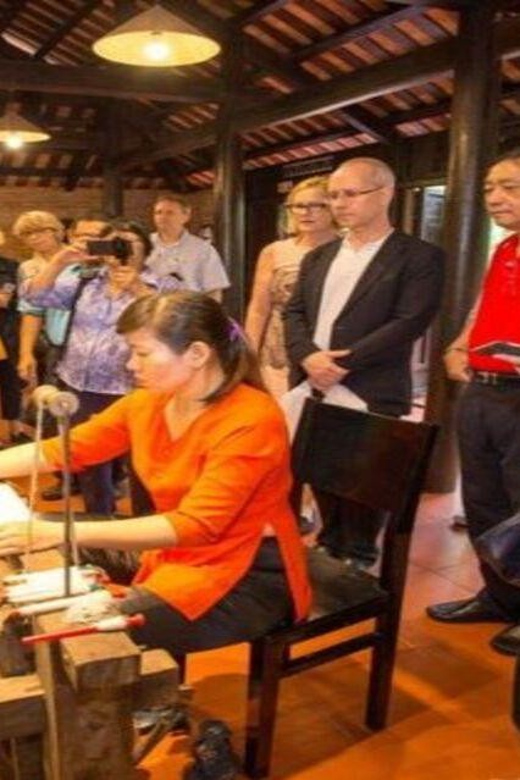
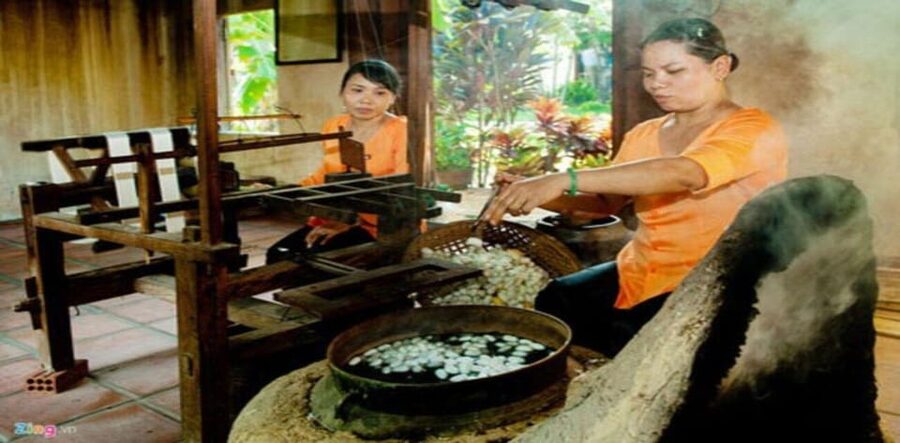
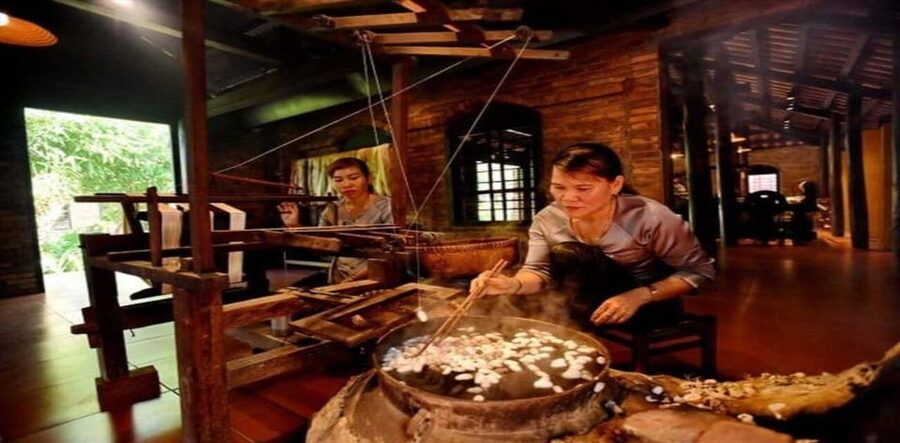
Then you shift from living things to the transformation process. At the Unraveling House, you learn how silk thread is obtained from the cocoon so it can be used for weaving.
This is one of the most valuable segments for first-timers. You get to understand the step that many visitors skip when they only see finished fabric. The tour is basically teaching you the “from A to B” logic: cocoon to thread to fabric.
Once you understand that link, textile workshops start making more sense. You’ll look at threads, patterns, and fabric texture with a more informed eye, instead of treating everything as decoration.
Fold and glue your own, a few more workshops


Champa and Dai Viet textile craft in the weaving workshops
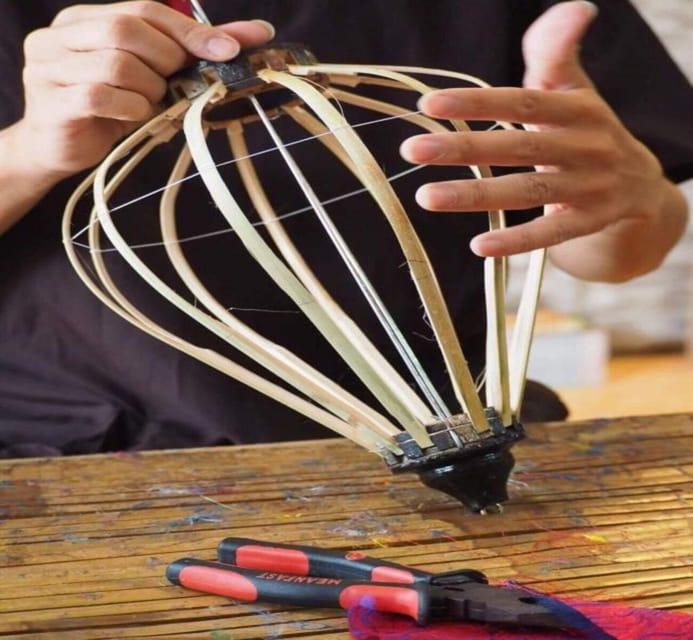
After the cocoon-to-thread stage, the tour introduces traditional textile weaving through the Vietnamese traditional silk weaving house. You’ll learn about handicrafts associated with Champa people and how traditional textile methods were preserved through the Champa – Dai Viet era.
This part is where the experience becomes cultural instead of purely technical. You’re not just learning “how silk is made.” You’re seeing how weaving traditions carried forward across time—through skills, techniques, and craft knowledge.
You’ll also start to notice why a product can look similar on the surface but be different in how it’s made. That leads directly into the next stop, which is designed for your eyes and your future shopping.
Hoi An Silk Village exhibition: spotting pure silk (and saving money)
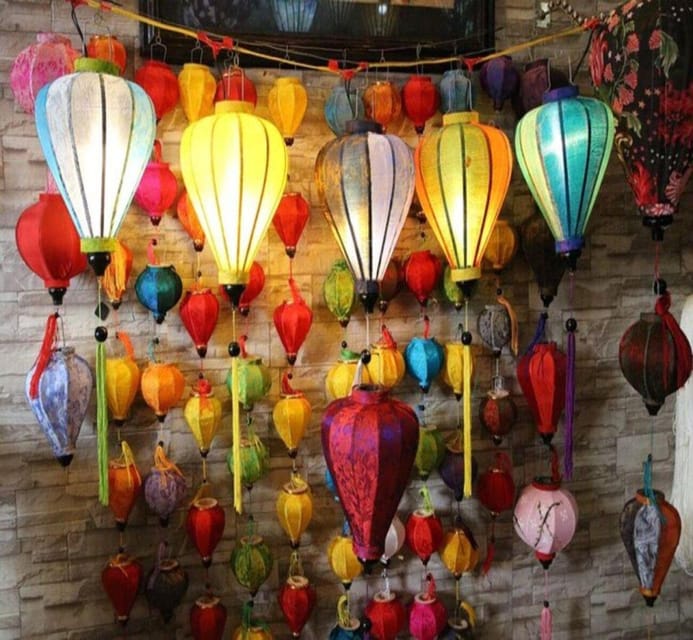
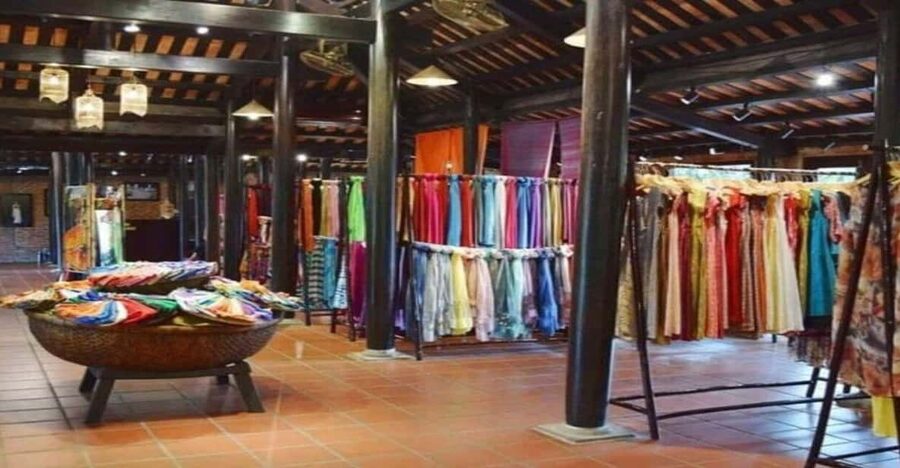
The exhibition section is built around a question most people in Hoi An eventually ask: how do you tell pure silk from fake silk fabric?
This stop is valuable because it’s educational in the most practical way. Even if you don’t plan on buying anything, you’ll know what to look for when you see silk scarves, clothing, and “silk” items on nearly every corner.
What makes this especially helpful is that it’s tied to the process you just learned. You’ll remember what silk thread comes from, and that memory becomes your comparison tool as you walk through the village and talk to shop owners.
A small caution: shopping any textile market is tricky because “silk” can be used broadly. The tour’s role here is to give you a better foundation so you can ask better questions and spend with more confidence.
Lantern class: history, shapes, colors, and making your own souvenir
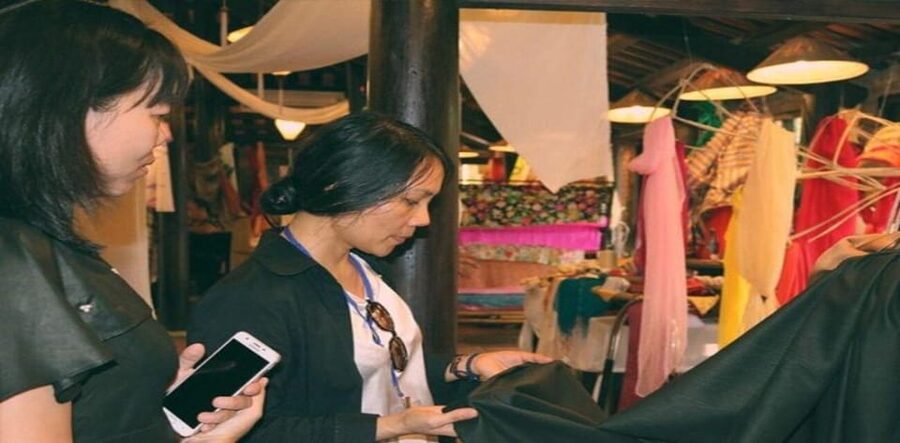
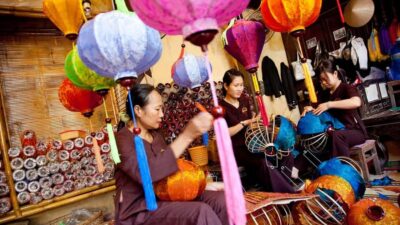
Now you pivot from fabrics to lanterns, which have become part of Hoi An culture in a way you feel everywhere you walk. You’ll get a briefing on the lantern’s history, plus how shape and color connect to the craft stages.
Then comes the main event: making your own lantern. You get all required materials and tools, and you keep your lantern as a souvenir. One lantern per person means you won’t have to share your project or fight for supplies.
This is the part I’d consider the best “takeaway” for most visitors. It’s not just watching—you’re creating. Even if you don’t consider yourself crafty, lantern making is perfect for an afternoon class format because the steps are structured and you can see your progress as you build.
Also, it’s a good photo moment, and a good memory moment. A finished lantern in your hands beats another “look-but-don’t-touch” attraction.
Lunch that actually tastes local: Cao Lau, spring rolls, and fruit
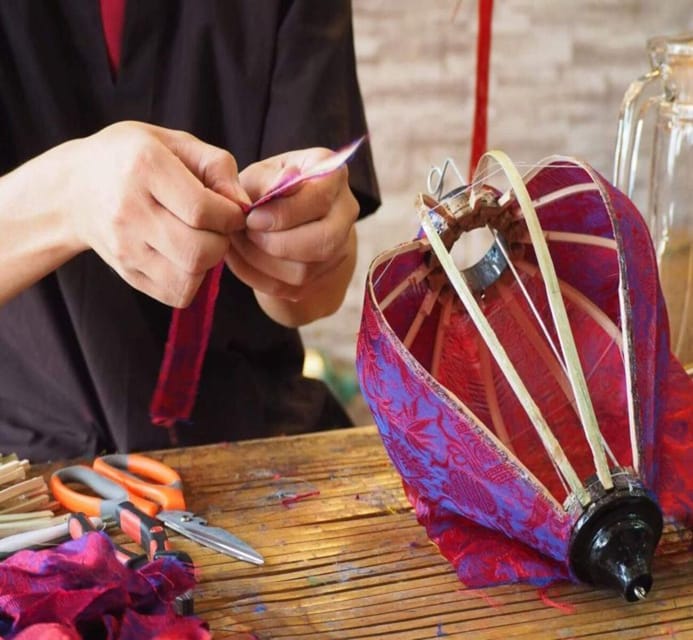
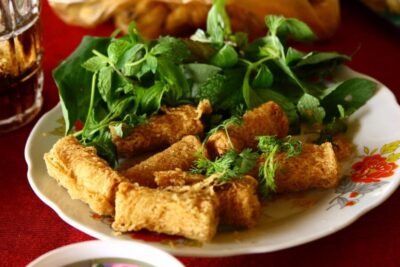
The tour wraps with local food. You’ll have a meal that includes Cao Lau, deep fried spring rolls, and a fruit plate.
Why this is worth caring about: Cao Lau is a Hoi An specialty, and it’s the kind of dish that helps tie your visit to place. Silk and lanterns explain the craft side, but food is where you get day-to-day culture.
If you have dietary needs, the tour notes that ingredients can be adapted for vegan, vegetarian, gluten-free, and allergies. So if you want something specific, ask ahead and don’t wait until the table.
What the $22 price covers (and what you’ll want to budget for)
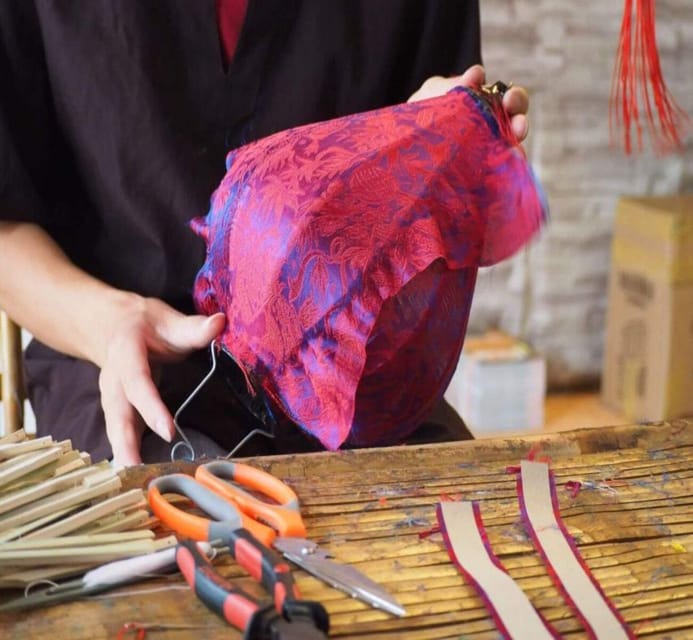
At $22 per person for a 150-minute experience, this feels like a solid value for a workshop that includes both a learn-and-make component. You’re paying for multiple guided segments plus the materials for the lantern, entrance fees, and a meal.
A key detail: it includes an English speaking guide and skips the ticket line. That saves time and helps you understand what you’re seeing as you move between sites.
What you should budget for is everything outside that core package. Personal expenses aren’t included, and the big gotcha is the Vietnamese public holiday note: there’s an extra 50% per person paid by cash for bookings on those days.
If you’re visiting around a holiday, that surcharge can turn “good value” into “check the final price carefully.” It’s still likely worth it for the workshop + meal, but don’t compare to the base $22 without including the holiday cost.
Who should book this silk and lantern workshop
This is a strong choice if you want:
- a hands-on craft souvenir (not just a photo stop)
- a guided explanation from mulberry and silkworms to thread and weaving
- practical help for understanding real silk vs lookalikes
- a local meal included in the ticket
It’s especially good for couples and small groups who like structured tours with clear stops. It’s also a fine choice if you want a break from the usual “market and museum” rhythm, because this one is built around making.
If you have limited mobility, you should skip it—this experience isn’t suitable for wheelchair users or people with mobility impairments, based on the tour info.
Should you book it?
Yes—if you like workshops that connect the dots. The lantern class gives you a souvenir you actually made, and the silk process lessons add context that makes Hoi An’s shopping and crafts more understandable.
I’d skip or rethink it only if mobility access is a concern, if you strongly dislike guided pacing, or if you’re traveling on a Vietnamese public holiday and the extra cash cost would feel painful.
If you can handle a full, structured 150 minutes and want a craft day with food attached, this one is a good bet.
FAQ
Where is the meeting point for this tour?
You meet at 28 Nguyen Tat Thanh street, Hoi An, at Hoian Silk Village.
How long does the experience last?
The tour duration is 150 minutes.
How much does it cost?
The price is listed as $22 per person.
Is there an extra charge on Vietnamese public holidays?
Yes. There is an extra 50% per person paid by cash for bookings on Vietnamese public holidays.
What’s included in the price?
Included are an English speaking guide, entrance fees, a meal (Cao Lau, deep fried spring rolls, and fruit plate), a welcome drink, one lantern per person, and all required materials and tools.
Is hotel pickup or drop-off included?
No, hotel pickup and drop-off are not included.
Can the meal accommodate dietary needs?
Yes. Food ingredients can be adapted for vegan, vegetarian, gluten-free, or allergies.
Can I take my lantern home?
Yes. You make your own lantern during the class and keep it as a souvenir.
Is the tour suitable for wheelchair users?
No. It is not suitable for people with mobility impairments or wheelchair users.
Is there free cancellation?
Yes. You can cancel up to 24 hours in advance for a full refund.
Tailored in Hoi An: More Ao Dai
- Professional Photography Tour Optional Ao Dai Dress in Hoi An
★ 5.0 · 99 reviews - Discover Traditional Silk Process in Hoi An Silk Village
★ 4.4 · 60 reviews - Hoi An: Half-day Silk Weaving Discovery Tour
★ 4.7 · 30 reviews - Half-day Silk Weaving Discovery In Hoi An
★ 5.0 · 25 reviews - DISCOVER the Skills of sericulture & weaving, HOI AN SILK VILLAGE
★ 5.0 · 24 reviews - Hoi An Hidden Gem- Local Food- Lantern Making- Tailoring
★ 5.0 · 16 reviews
Make Your Own: More Lantern Workshops
- Hoi An: Vietnamese Foldable Lantern Making Class
★ 4.9 · 3,742 reviews - Hoi An Full Lantern Making Class- A special Foldable lantern
★ 5.0 · 2,007 reviews - Hoi An: Basket Boat with Lantern-Making & Cooking Class Tour
★ 4.9 · 1,444 reviews - The Lantern Lady: Traditional Lantern Class in Old Town
★ 4.9 · 444 reviews - Hoi An: Local Foldable Lantern-Making Class with Locals
★ 4.9 · 410 reviews - Hoi An: Cooking Class with Market, Lantern Making, Basket Boat
★ 5.0 · 221 reviews
Eat Hoi An: More Food Walks
- Evening Walking Food Tour, folk game and lantern boat
★ 5.0 · 665 reviews - Hoi An food tour
★ 4.9 · 412 reviews - Hoi An at Sunset: Authentic Local Street Food Tour
★ 4.5 · 329 reviews - Hoi An Street Food Walking Tour with Tastings
★ 5.0 · 317 reviews - Hoi An street food tour with Billy
★ 5.0 · 273 reviews - Hoi An: Evening Food Tour with 7 Tastings and Boat Trip
★ 4.9 · 266 reviews
Just Reviewed: Fresh Hoi An Trips




Hoi An Food Tours, compared.
 ★ 5.0Evening Walking Food Tour, folk game and lantern boatFrom $39665 reviews
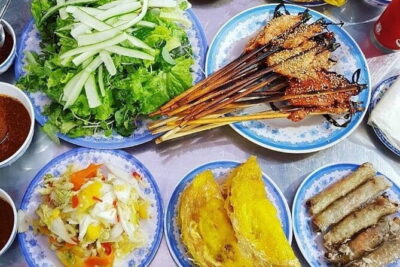 ★ 4.9Hoi An food tourFrom $26412 reviews
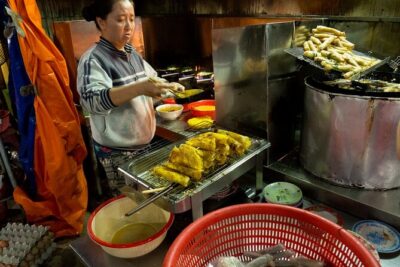 ★ 4.5Authentic Local Street Food TourFrom $39329 reviews
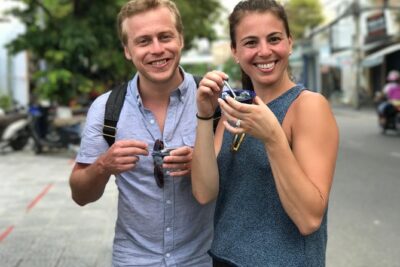 ★ 5.0Hoi An Street Food Walking Tour with TastingsFrom $35317 reviews
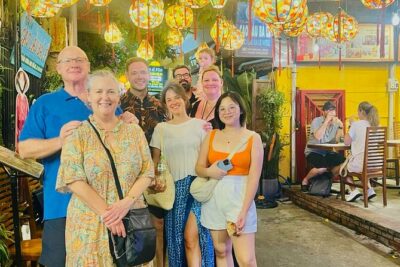 ★ 5.0Hoi An street food tour with BillyFrom $35273 reviews
 ★ 4.9Evening Food Tour with 7 Tastings and Boat TripFrom $39266 reviews
 ★ 5.0Hoi An Night Market – Ancient Town street food tours by NightFrom $45165 reviews
 ★ 4.5Hoi An Ancient Town – Night Market Street Food Tours By NightFrom $55161 reviews
Browse the lists this tour appears in