

Reviewed · TRADITIONAL CRAFT VILLAGES
DISCOVER the Skills of sericulture & weaving, HOI AN SILK VILLAGE
Silk starts with squirmy little worms. At Hoi An Silk Village, you walk through the whole process of sericulture, from mulberry feeding to silk thread, with a guide explaining what’s happening and why it matters. One heads-up: this is a purpose-built craft facility, so it’s more about technique than open-air village life.
I love that the tour focuses on real skills, not just pretty displays. You’ll get a clear lesson on silk unraveling and weaving, and you’ll even learn how to tell pure silk from fake fabric. The included meal at the on-site restaurant is a solid bonus after all the hands-on stages.
In This Review
- Key things to know before you go
- Hoi An Silk Village: a practical 3-hour intro to sericulture and weaving
- Traditional House: history, silk sea road trade, and where the craft begins
- Cham Culture stops: weaving traditions tied to mulberry trees and old looms
- Vietnamese mulberry garden: best leaves, careful chopping, and feeding silkworms
- Silkworm breeding house and lifecycle: understanding the timing behind silk
- Unraveling House and Cuu Dien House: from cocoon thread to preserved craftwork
- Cham Textile House: short and long looms, and why loom type matters
- Hoi An Silk Village exhibition: pure silk vs fake silk (and how to shop smarter)
- Lunch or dinner at the Silk Village Restaurant: local food after the craft
- Price and value: what $31.05 buys you in real-world skills
- Who this tour is best for (and who might skip it)
- Should you book Hoi An Silk Village?
- FAQ
- How long is the Hoi An Silk Village tour?
- Where does the tour start and where does it end?
- What is the price per person?
- What languages are the guides available in?
- What’s included in the tour?
- Is this a private tour?
- Will I get a meal during the tour?
- Is good weather required?
- Can I bring a service animal?
- Can I get a refund if I cancel?
Key things to know before you go
- From mulberry to cocoon: you see how leaf choice and feeding affect the silk you get later
- Unraveling and weaving houses: the process is shown room by room, from cocoon thread to fabric
- Cham culture woven into the story: you’ll connect silk-making to Cham textile traditions and looms
- Hands-on practice: you’re not just watching—there’s time to try parts of the process
- Pure vs fake silk lesson: the exhibition helps you shop with confidence (if you want to buy)
- Meal included: you finish with a local-specialty lunch or dinner at the Silk Village restaurant
Hoi An Silk Village: a practical 3-hour intro to sericulture and weaving
Hoi An has long been tied to silk. This tour gives you the best kind of shortcut: you don’t need to guess how silk happens. In about 3 hours, you move through multiple working areas where sericulture (raising silkworms) and weaving are explained in a logical order.
The setting is calm and easy to enjoy. The guided format helps a lot because silk production has tiny steps that mean everything. Even if you only remember a few key ideas—mulberry leaves matter, cocoon thread must be handled carefully, weaving is slow—you’ll leave with a new respect for every scarf and shirt you see in Hoi An.
Also, this is a private tour for your group. That means you can ask questions without feeling rushed, and you’re more likely to get individualized help during the hands-on moments.
Potters and carvers in the riverside villages
- Hoi An Countryside Biking Tour(Vegetable village -basket boat – fishing village)★ 5.0 · 216 reviews
- Hoi An: Tra Que Herb Village Cooking Class★ 4.5 · 102 reviews
- Hoi An Local Market and Vegetable Village Cooking Class★ 5.0 · 93 reviews
- Hoi An: Thanh Ha Village Tour with Pottery Making and Gift★ 4.8 · 78 reviews
Traditional House: history, silk sea road trade, and where the craft begins
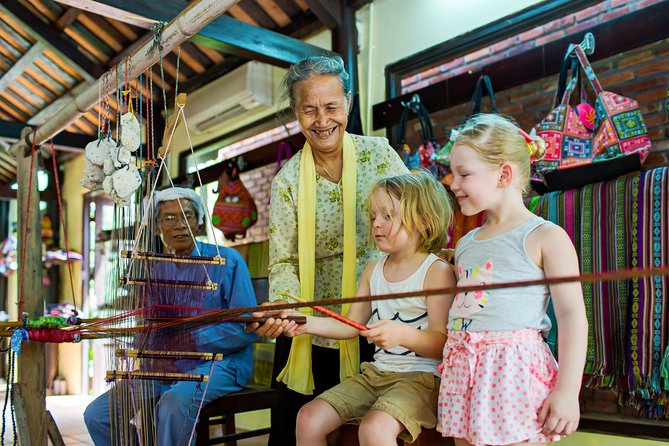
You start with the Traditional House, and it’s a smart opener. Instead of jumping straight into worms and thread, you get context for why people in this region cared so much about silk.
You’ll learn how Hoi An once served as a silk hub in Quang Nam province. The tour explains how finished products were shipped along the so-called “silk sea road” to Europe and Asia. That trade angle matters because silk wasn’t just a local craft—it was a major livelihood for thousands of residents.
Then you connect that history to the real mechanics. The guide walks you through the core chain: unraveling silk thread from cocoons and then weaving it into fabric. The key benefit here is pacing. By the time you reach the breeding and unraveling areas, you already know what you’re looking at.
If there’s a drawback, it’s simply that you’ll spend part of your time learning rather than fully producing. If you’re the type who wants maximum action the whole time, keep expectations balanced: it’s educational first, hands-on throughout.
Cham Culture stops: weaving traditions tied to mulberry trees and old looms
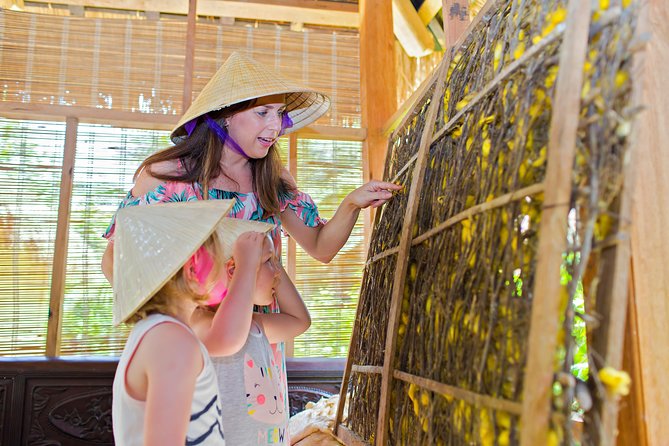
One of the more interesting parts is the connection to Cham culture. You’ll see a collection of Cham mulberry trees and learn about how Cham people wove textiles from early periods through the mid-15th century.
This section works because it gives you a timeline feel. Silk isn’t one single technique. It has regional styles, and the looms and patterns reflect that. Even if you don’t read a single brochure, the guided explanation makes the differences easier to picture.
You also get a sense of how tradition survives through craft. The tour shows the process, not just the products. That’s important because in textile work, the “how” often tells you as much as the “what.”
If you’re short on attention span, this is the area where it helps to ask questions. When you ask why a certain approach was used, the time feels more purposeful.
Vietnamese mulberry garden: best leaves, careful chopping, and feeding silkworms
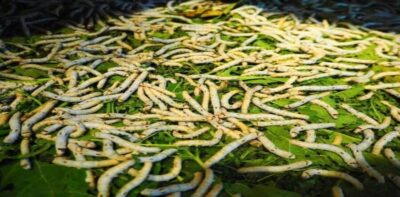
The tour makes mulberry leaves sound like a serious ingredient, because they are. In the Vietnamese mulberry garden stop, you learn how to get the best leaves, cut them into small pieces, and hand-feed the silkworms.
This part is one of the best for understanding cause and effect. Silk quality depends on what the silkworm eats and how you prepare it. Leaf choice, leaf size, and feeding timing all affect the process—so you start to see why sericulture is skilled labor, not a casual hobby.
You’ll also get up close to the silkworm workflow. Seeing the silkworm lifecycle explained in context makes later stops much easier to follow. You stop thinking of silk as fabric and start thinking of it as a product of living stages.
Practical tip: if you’re sensitive to smells or want a fully calm experience, keep in mind this is a working biological process. It’s clean and guided, but it’s still about living creatures.
Measured, cut and stitched, more tailor visits





Silkworm breeding house and lifecycle: understanding the timing behind silk
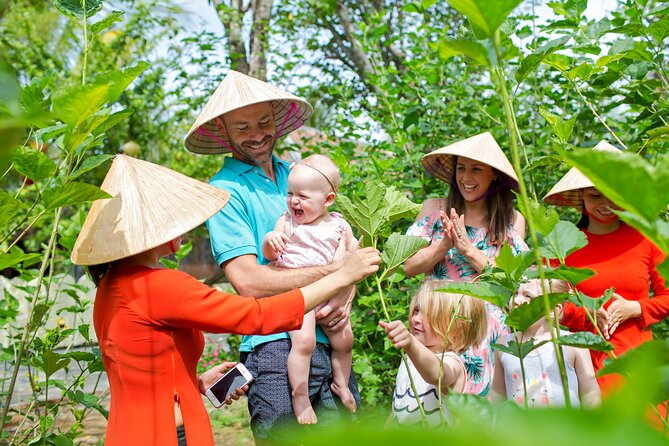
Next comes the Silkworm breeding house, where you learn the silkworm lifecycle. This isn’t just trivia. The lifecycle helps you understand why the steps in weaving and unraveling come when they do.
Silk production has a strong timing component. If you unravel too early or too late, the thread and handling process changes. The guide’s explanation helps you see how the craft depends on patience and correct sequencing.
This is also where the tour often wins people over. You get the feeling that the system is carefully managed. One review highlight was the experience of watching silkworms and learning the full chain right from their stage of growth.
If you’re visiting with kids or curious adults, this is a natural moment to pause and ask follow-up questions. It’s also the part where the guide can explain in plain language what you’re looking at.
Unraveling House and Cuu Dien House: from cocoon thread to preserved craftwork
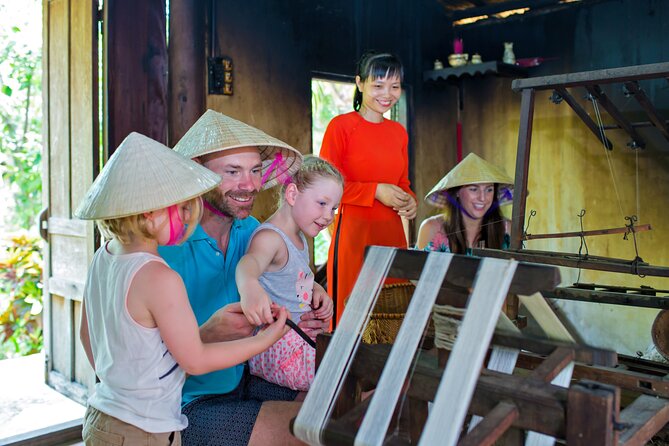
Then you move into the Unraveling House, where you learn how silk thread comes from the cocoon. This step is where “silk” becomes real in your hands, conceptually at least. The guide explains how the thread is pulled and managed so it can be woven into fabric.
After that, you visit the Cuu Dien House. Here, the focus shifts to pure handicraft silk preserved from the early 20th century. This is a nice contrast. You see both the production method and the craft’s longer cultural life.
What makes this pairing work is perspective. The unraveling step shows the technical chain. The Cuu Dien display gives you a sense of continuity—how families and artisans preserved techniques and aesthetics across time.
If you care about authentic craft, this section tends to feel more meaningful than shopping for silk products right away.
Cham Textile House: short and long looms, and why loom type matters
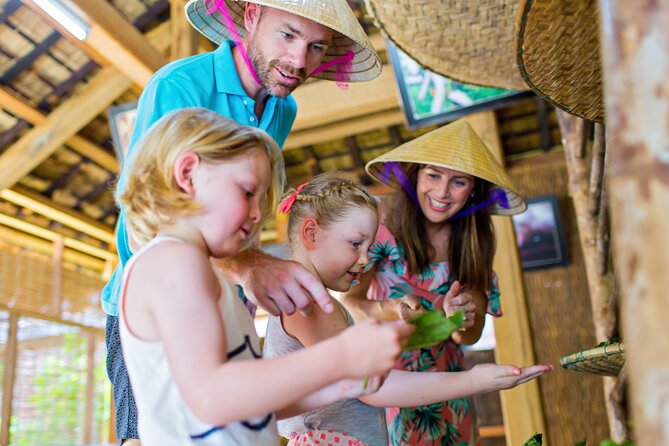
The Cham Textile House is where weaving turns from a concept into visible technique. You’ll discover weaving methods used by Cham people using short and long wooden looms, leading to unique handicraft products.
The big value here is understanding loom differences. Loom length and setup affect what can be woven and how patterns are achieved. You start to notice that textile art is engineering plus creativity.
And yes—this tour is designed for more than watching. Many people get the chance to participate in stages of the process. That can include practical tasks like threading and weaving attempts, depending on the flow of the visit and your group.
From a learning standpoint, hands-on time is where the tour becomes memorable. You quickly realize why artisans charge for work like this. It’s not just skill—it’s time, repetition, and careful handling.
Hoi An Silk Village exhibition: pure silk vs fake silk (and how to shop smarter)
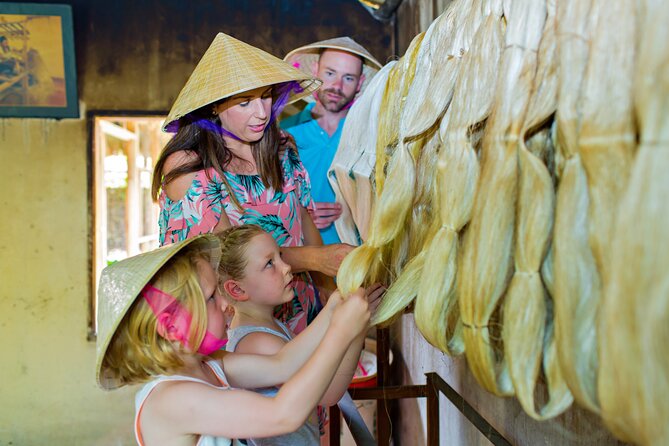
After the workshop rooms, you’ll visit the Hoi An Silk Village exhibition. This is one of the highest-use stops because it prepares you for what you’ll see later in Hoi An markets.
You learn the difference between pure silk fabric and fake silk. That matters because silk shopping can be confusing. If you’re able to tell what you’re buying, you’re less likely to overpay for something that won’t wear or drape the way you expect.
I like this approach because it respects your wallet. You’re not being told what to buy. You’re being given the tools to decide for yourself. And if you do buy something, you’ll have context for why it’s priced the way it is.
Practical advice: if a vendor claims silk without explanation, treat that as a red flag. Your goal is to ask questions and compare what you learned in the exhibition to what’s being offered.
Lunch or dinner at the Silk Village Restaurant: local food after the craft
After the tour, you can enjoy lunch or dinner at the Silk Village Restaurant. The meal is included and described as a local specialty. This is a smart add-on because it keeps your day smooth—no scramble for food after a focused activity.
The restaurant setting is part of the experience. It’s also the kind of meal that feels like a reward, since your brain has been working overtime decoding how silk happens.
You don’t need a fancy outfit here. Casual is fine. You’ll appreciate the break.
Price and value: what $31.05 buys you in real-world skills
At about $31.05 per person, this tour is priced like a low-stress cultural workshop with more included than a typical museum visit.
You get an English or French-speaking guide, entrance fees, bottled water, and a meal with a local specialty. That bundle is the heart of the value. If you tried to replicate this on your own—finding the right craft spaces, arranging a guide, and fitting it into one half-day—you’d spend more time and likely pay more.
The strongest value is educational depth plus participation. The tour teaches the full chain: mulberry leaves, silkworm lifecycle, unraveling cocoons, and weaving on looms. When a tour gives you that flow, you don’t feel like you’re hopping between unrelated rooms.
If you only want souvenirs, the value drops a bit. But if you want to understand silk and see the making process, the price makes sense.
Who this tour is best for (and who might skip it)
I’d recommend this tour if you love crafts, textiles, history, or hands-on learning. It’s also ideal for anyone who wants a break from the old town routines but still wants a cultural experience that connects to Hoi An’s identity.
It can also work well if you’re a planner. The tour is about process, and the stops are structured like a production line. You’ll leave with a coherent story you can repeat.
If you strongly prefer outdoors and want dramatic landscapes, you might feel less satisfied. This is a craft facility with a calm atmosphere, not a rugged nature day. The trade-off is that the skills are explained clearly and you get to see multiple stages in one go.
If you’re simply looking for the shortest possible activity, this is a bit longer than a quick stop. Plan for a calm half day and let it be a focus.
Should you book Hoi An Silk Village?
Yes, if you want to learn how silk is made without guessing. The best part is that the tour teaches the whole chain—from feeding mulberry to unraveling cocoons and understanding weaving on looms—while also helping you shop smarter by explaining pure vs fake silk.
Skip it only if you’re mainly after scenery or you dislike hands-on learning. In that case, you may prefer a slower cultural stroll or a different kind of workshop.
If you do book, wear comfortable shoes and bring your curiosity. This tour rewards attention, and it turns silk from an item on a hanger into a story you actually understand.
FAQ
How long is the Hoi An Silk Village tour?
It lasts about 3 hours (approx.).
Where does the tour start and where does it end?
The tour starts at Silk Village Hoi An – The Tourist, 28 Nguyễn Tất Thành, Phường Cẩm Phổ, Hội An, Quảng Nam, Vietnam. It ends back at the same meeting point.
What is the price per person?
The price is $31.05 per person.
What languages are the guides available in?
The tour includes an English or French-speaking guide.
What’s included in the tour?
It includes the guide, a meal with a local specialty, entrance fee, and bottled water.
Is this a private tour?
Yes. It’s a private tour/activity, so only your group participates.
Will I get a meal during the tour?
Yes. You can enjoy lunch or dinner at the Hoi An Silk Village Restaurant after the silk tour, and the meal is included.
Is good weather required?
Yes. The experience requires good weather and may be rescheduled or refunded if canceled due to poor weather.
Can I bring a service animal?
Yes. Service animals are allowed.
Can I get a refund if I cancel?
You can cancel for a full refund if you cancel up to 24 hours in advance. If you cancel less than 24 hours before the start time, the amount paid is not refunded.
More Tour Reviews in Hoi An
- Hoi An: Basket Boat Ride in the Coconut Forest
★ 4.9 · 4,956 reviews - Hoi An: Vietnamese Coffee Culture and Coffee Making Class
★ 4.9 · 4,006 reviews - Hoi An: Vietnamese Foldable Lantern Making Class
★ 4.9 · 3,742 reviews - Cooking Class Hoi An:Local Market, Basket Boat, Fishing & Cooking
★ 5.0 · 3,660 reviews - Hoi An Cooking Class(Market,BasketBoat Crabfishing&Cooking Class)
★ 5.0 · 3,386 reviews - Hoi An: My Son Sanctuary Early Morning w. Champa Food Brunch
★ 4.9 · 2,750 reviews
Tailored in Hoi An: More Ao Dai
- Professional Photography Tour Optional Ao Dai Dress in Hoi An
★ 5.0 · 99 reviews - Discover Traditional Silk Process in Hoi An Silk Village
★ 4.4 · 60 reviews - Hoi An: Half-day Silk Weaving Discovery Tour
★ 4.7 · 30 reviews - Half-day Silk Weaving Discovery In Hoi An
★ 5.0 · 25 reviews - Hoi An Hidden Gem- Local Food- Lantern Making- Tailoring
★ 5.0 · 16 reviews - Ao Dai Photography: Traditional Attire Capture in Hoi An
★ 4.8 · 13 reviews
Potters, Carvers and Silk Villages
- Hoi An Countryside Biking Tour(Vegetable village -basket boat – fishing village)
★ 5.0 · 216 reviews - Hoi An: Tra Que Herb Village Cooking Class
★ 4.5 · 102 reviews - Hoi An Local Market and Vegetable Village Cooking Class
★ 5.0 · 93 reviews - Hoi An: Wood Carving Class with Village Master Artisan
★ 4.9 · 93 reviews - Hoi An: Thanh Ha Village Tour with Pottery Making and Gift
★ 4.8 · 78 reviews - Discover Traditional Silk Process in Hoi An Silk Village
★ 4.4 · 60 reviews
Just Reviewed: Fresh Hoi An Trips




Traditional Craft Villages, compared.
 ★ 5.0basket boat – fishing village)From $45216 reviews
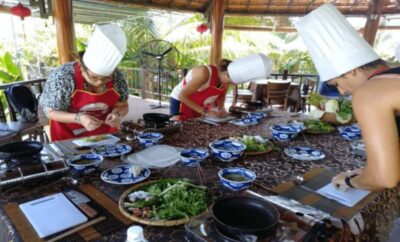 ★ 4.5Tra Que Herb Village Cooking ClassFrom $28102 reviews
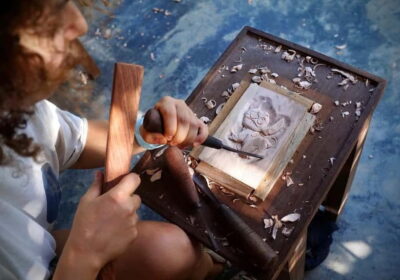 ★ 4.9Wood Carving Class with Village Master ArtisanFrom $3193 reviews
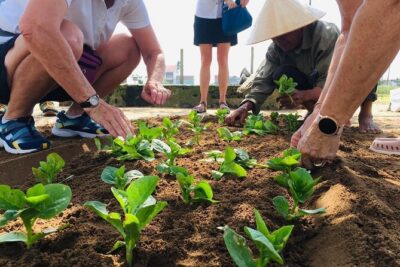 ★ 5.0Hoi An Local Market and Vegetable Village Cooking ClassFrom $2993 reviews
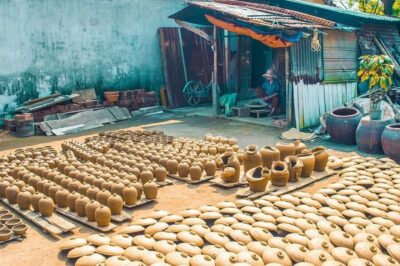 ★ 4.8Thanh Ha Village Tour with Pottery Making and GiftFrom $2378 reviews
 ★ 4.4Discover Traditional Silk Process in Hoi An Silk VillageFrom $1160 reviews
 ★ 5.0Hoi An countryside biking – Basket Boat – Vegetable village – Local home CookingFrom $5837 reviews
 ★ 5.0Cocopalm Forest To A Craft VillageFrom $3231 reviews
Browse the lists this tour appears in