
Reviewed · TRADITIONAL CRAFT VILLAGES
Hoi An: Silk Village Tour with Artisan and Local Meal
Silk weaving looks simple. It is not. This Hoi An Silk Village tour walks you through traditional sericulture and textile craft, from silkworm food to finished thread, with stops that explain why silk quality is so hard to fake.
Two things I especially like are the focus on the cocoon-to-thread process and the chance to watch weaving up close, including looms and pattern work.
One consideration: the route involves multiple indoor workshops and standing time, so it is not suitable for wheelchair users or people with mobility impairments.
In This Review
- Key points to know before you go
- Why this Hoi An silk village tour is good value at $35
- Getting started at 28 Nguyen Tat Thanh Street
- Stop by stop: what you’ll see and why each part matters
- Traditional House: sericulture, unraveling, and weaving history
- Cham culture focus: mulberry trees and weaving methods
- Vietnamese mulberry garden: where silk starts
- Silkworm breeding house: the lifecycle in action
- Unraveling House: turning cocoons into silk thread
- Cuu Dien House: pure handcrafted silk and what processing changes
- Cham textile house: weaving on wooden looms and brocade patterns
- Hoi An Silk Village exhibition: pure silk vs fake silk
- The local meal: simple, filling, and timed well
- What the tour does well (based on what people remember)
- Who should book this tour—and who might want to skip it
- Price and logistics: the practical stuff that affects your day
- Final verdict: should you book the Hoi An Silk Village tour?
- FAQ
- How much does the Hoi An Silk Village tour cost?
- How long is the tour?
- What language is the guide?
- What’s included in the price?
- Where does the tour start and end?
- Is it refundable if I cancel?
Key points to know before you go
- Cocoon-to-thread unraveling shows how raw silk becomes workable thread.
- Silkworm lifecycle stops connect mulberry feeding, breeding, and production.
- Cham culture weaving includes short and long wooden looms and brocade-style pattern work.
- Cuu Dien House highlights early 20th-century handcrafted silk and shows what changes after processing.
- Pure vs fake silk is explained in a dedicated exhibition area, helpful if you plan to shop.
- A local meal follows the craft portion, so you are not left hunting food afterward.
Why this Hoi An silk village tour is good value at $35
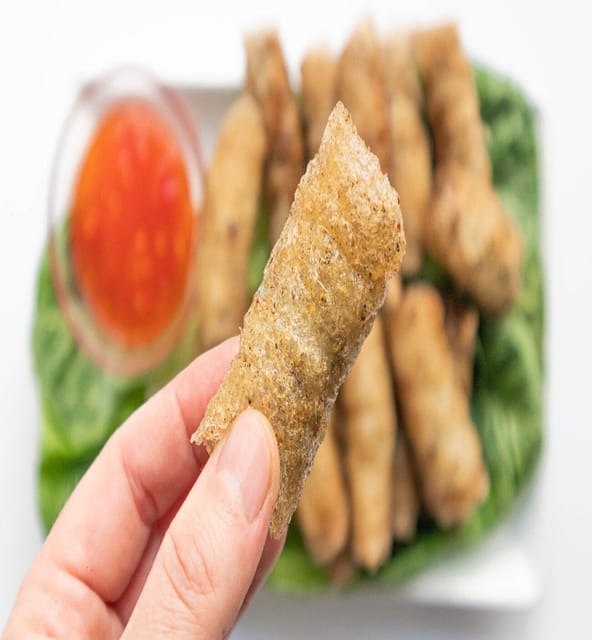
At $35 per person for about 3 hours, you are paying for more than a quick craft demo. You get an English-speaking guide, entrance fees, a bottle of water, and a local meal (spring roll, fried noodles, and seasonal fruits). That combination matters in Hoi An, where many “craft” stops turn into mostly shopping time.
What makes this feel worth it is the structure: you do not just watch finished products. You move through the system—mulberry trees, silkworms, breeding houses, unraveling, and weaving—so the craft makes sense when you later see bolts of fabric.
There is also a small timing and cost footnote. On public holidays, there is a 50% cash surcharge for bookings. If you are traveling on a holiday, check the total before you commit.
Potters and carvers in the riverside villages
- Hoi An Countryside Biking Tour(Vegetable village -basket boat – fishing village)★ 5.0 · 216 reviews
- Hoi An: Tra Que Herb Village Cooking Class★ 4.5 · 102 reviews
- Hoi An Local Market and Vegetable Village Cooking Class★ 5.0 · 93 reviews
- Hoi An: Thanh Ha Village Tour with Pottery Making and Gift★ 4.8 · 78 reviews
Getting started at 28 Nguyen Tat Thanh Street
The tour meets at 28 Nguyen Tat Thanh Street and ends back at the meeting point. That simple “home base” setup is handy if you are staying somewhere central in Hoi An and do not want to coordinate pickup.
Bring comfortable shoes and comfortable clothes. Even if you are mostly watching, you will likely move through several rooms and workshops. This is the kind of tour where your feet do the timekeeping.
Stop by stop: what you’ll see and why each part matters
Traditional House: sericulture, unraveling, and weaving history
The first stop is the traditional house, where you get the big picture: sericulture (raising silkworms for silk), silk unraveling, and weaving. This is the section that helps you stop treating silk as magic and start seeing it as a process.
You’ll get context on how the craft developed and how the steps connect. That matters because later, when you reach the unraveling and weaving houses, you will know what you are looking at instead of just admiring pretty fabric.
Potential downside here: if you already know the basics of silk production, this portion may feel like an overview before the hands-on parts.
Measured, cut and stitched, more tailor visits





Cham culture focus: mulberry trees and weaving methods
Next comes the Cham Culture stop, including a collection of Cham mulberry trees and a look at Cham weaving practices from the 5th century to the mid 15th century.
This is a smart twist because it explains that silk in Central Vietnam is not a single “one technique” story. You see how different communities shaped how they made and used textiles over time. If you like cultural craft more than shopping, this segment is a highlight.
It can also be a good reality check. Many textile tours skip the cultural roots and jump straight to demonstrations. Here, the historical thread is part of the experience.
Vietnamese mulberry garden: where silk starts
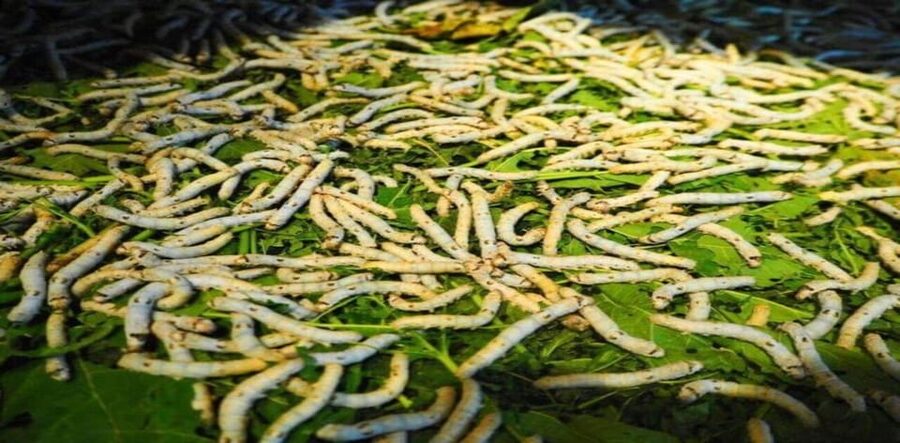
Silk starts with feed, and you get that lesson in the Vietnamese mulberry garden. You learn how to get the best mulberry leaves—cut into small pieces—and how those leaves are used to hand-feed silkworms.
This is one of those “small details that explain everything.” Silk production depends on consistent feeding and careful handling, and the tour uses that idea to connect food, biology, and fiber quality.
If you like animals and biology (and who doesn’t on a craft day?), you will enjoy this stop.
Silkworm breeding house: the lifecycle in action
Then you visit the silkworm breeding house and learn about the silkworm lifecycle. This is where the tour slows down enough to make the process feel real.
You are not just hearing about cocoons. You’re seeing the stages that lead to them. That makes the later unraveling house feel less like a trick and more like manufacturing—careful, time-based, and easy to mess up.
Unraveling House: turning cocoons into silk thread
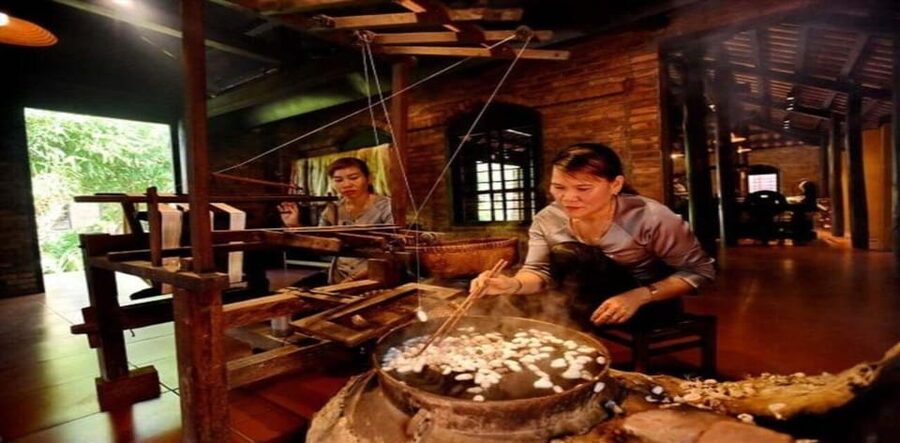
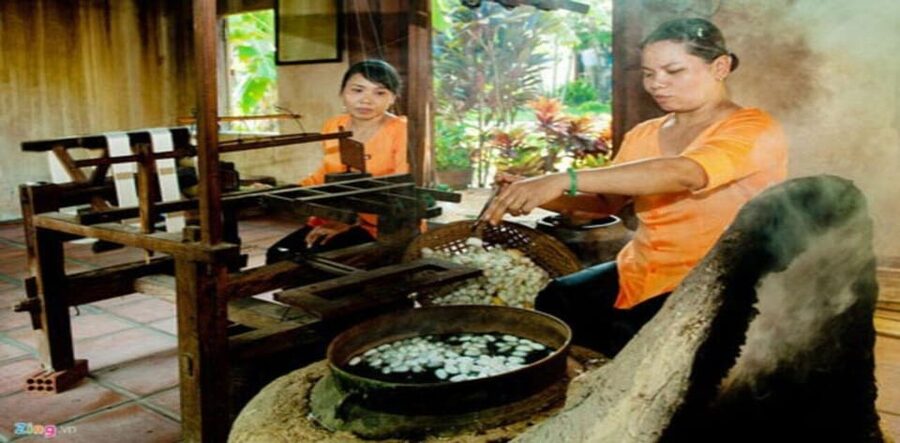
At the Unraveling House, the focus is the conversion step: how you get silk thread from the cocoon so it can be woven into fabric. This is where the tour earns its keep.
Why? Because silk thread is only useful if it is prepared correctly. The tour explains how cocoons become thread and how that thread is made ready for weaving. Once you understand that, you can better appreciate why some fabrics look silky and others do not.
This is also the point where you start spotting how quality is controlled—before you ever reach the shopping stops.
Cuu Dien House: pure handcrafted silk and what processing changes
The Cuu Dien House is centered on pure handicraft silk from the beginning of the 20th century, preserved in Quang Nam Province. You will feel the original silk threads from the cocoons, then feel how the fibers are different after processing.
That tactile comparison is one of the best ways to learn. Seeing a demonstration is fine; feeling a material change gives you a memory you can use when you are checking fabric later.
You also experience the weaving process to understand how difficult it is to produce pure products. The point is not to make you a weaver; it is to show why “cheap silk” can be a marketing phrase, not a fiber reality.
Cham textile house: weaving on wooden looms and brocade patterns
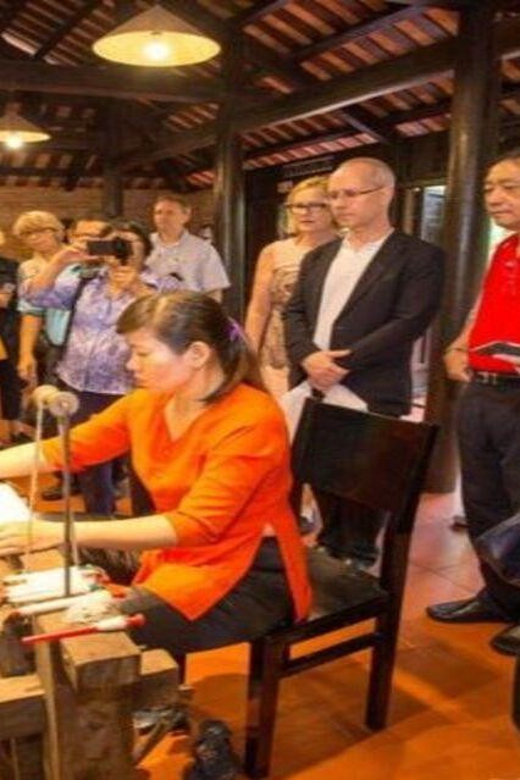
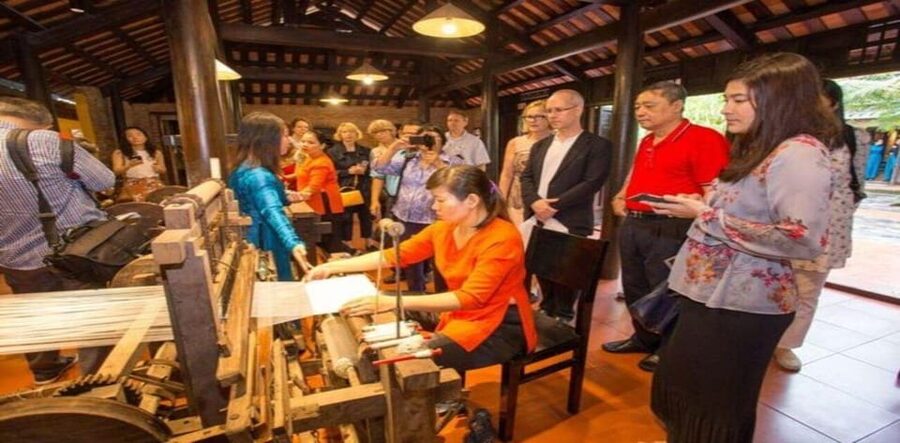
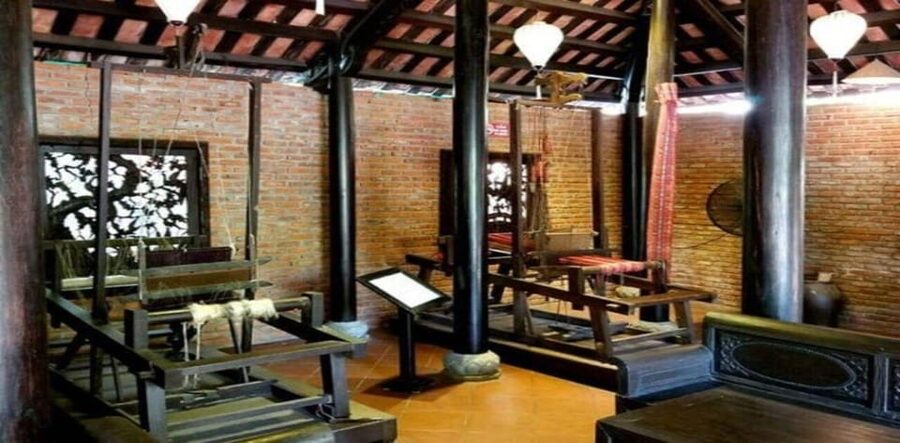
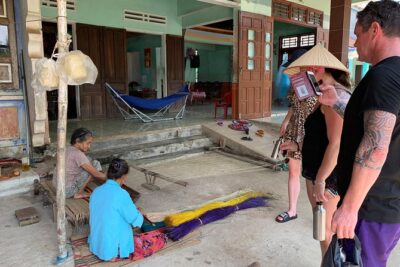
At the Cham textile House, you discover the weaving process of Cham artisans using short and long wooden looms. You also get guided help on moving the silk thread to create different patterns—especially brocade-style looks.
If you liked the cultural history, this is where it becomes practical. Pattern weaving is mostly about control: tension, rhythm, and the way threads are guided. When you watch it closely, you start to understand why certain textiles cost more.
This is one of the spots that tends to stick with people. The craft feels specialized, and the loom work looks harder than it first appears.
Hoi An Silk Village exhibition: pure silk vs fake silk
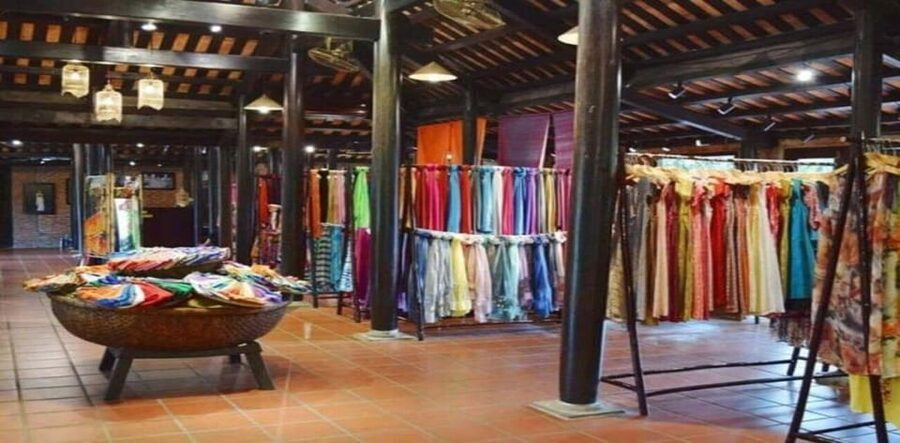
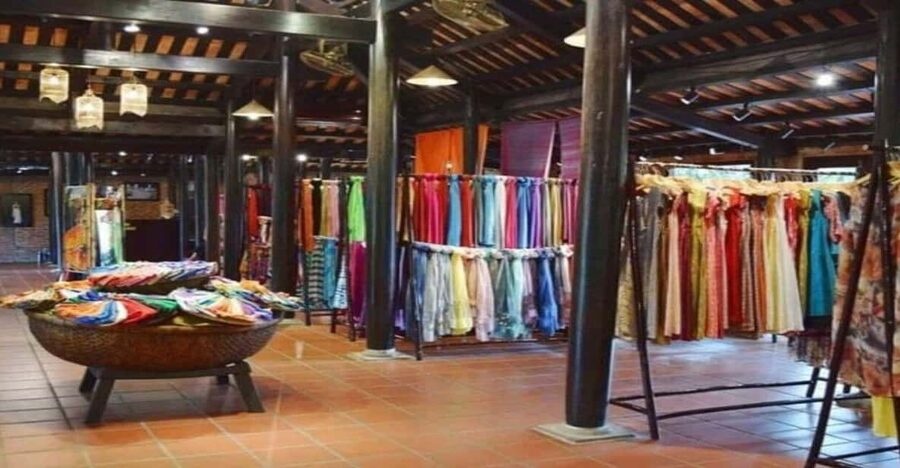
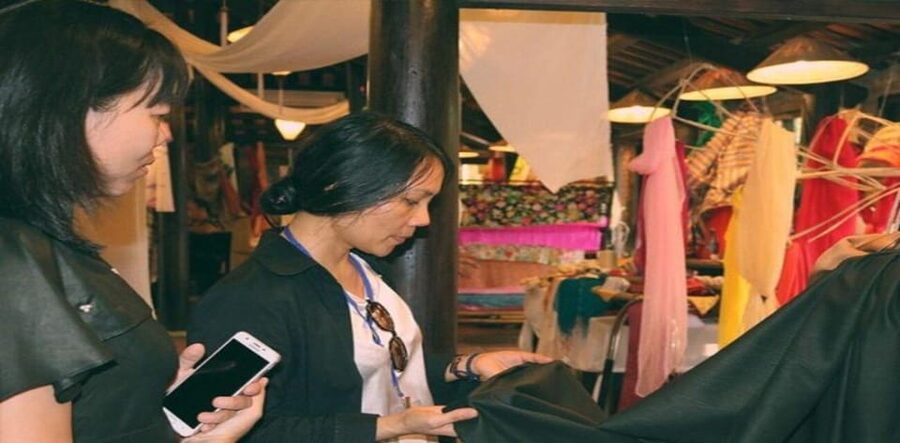
Near the end, the tour shifts into what you might actually use on your next shopping stop: an exhibition explaining the difference between pure silk and fake silk fabric.
This section is valuable even if you do not plan to buy. It gives you a framework for questions you can ask. It also helps you understand why silk shops can show very different price points for fabrics that look similar from far away.
The tour also sets you up with the idea that products here can support both shopping and tailoring needs, depending on what you want made.
The local meal: simple, filling, and timed well
After the craft portion, you eat at the Hoi An Silk Village Restaurant. The menu is straightforward: spring roll, fried noodles, and seasonal fruits.
This meal is not trying to be fancy. It works because it is scheduled right after a tour where you are doing a lot of reading with your eyes and listening with your ears. You avoid that awkward “what now?” moment that hits when craft tours run long.
If you have dietary needs, you might want to confirm details in advance—because the tour data here only lists the standard menu items.
What the tour does well (based on what people remember)
The best feedback from this experience is consistent: people love how the tour connects stages of production and makes weaving feel special instead of like a sales talk. You get both the big story (how silk is made) and the specific work (looms, thread handling, pattern creation).
Two moments tend to land hardest:
- Watching weaving looms and the silk-making process in a sequence that actually makes sense.
- Trying or experiencing weaving on looms with artisans, which shows how complex the craft is even when you think you know what weaving looks like.
If you want a craft tour that feels educational, not just decorative, this is the right format.
Who should book this tour—and who might want to skip it
Book it if you:
- Want a process-based craft tour, not just photo ops.
- Like textile work, cultural history, and hands-on demonstrations.
- Plan to shop for silk and want a quick education before you choose fabric for tailoring.
You might skip it if you:
- Prefer completely hands-off sightseeing and minimal standing.
- Already know silk production deeply and want a more advanced workshop (this tour is more educational and guided than specialized training).
- Have mobility concerns, since it is not suitable for wheelchair users.
Also, keep your expectations realistic: you are going to learn a lot in three hours, but it is still a guided experience. The goal is understanding and appreciation, not mastery.
Price and logistics: the practical stuff that affects your day
$35 per person is reasonable because the tour bundles:
- an English-speaking guide
- entrance fees
- water
- and a meal
In other words, you are not just paying for a guide’s time—you are paying for a full craft circuit that includes feeding, unraveling, weaving, and an exhibition segment.
Your timing is the other piece. The duration is about 3 hours, but starting times depend on availability. Check the start time that fits your Hoi An schedule so you do not feel rushed.
Final verdict: should you book the Hoi An Silk Village tour?
If you want a Hoi An activity that teaches you something real and makes silk shopping less confusing, I think this tour is a smart buy. The itinerary connects silkworm care to thread preparation to weaving, and that sequencing is what turns craft viewing into actual understanding. Add the local meal and the English guide, and the value looks solid for most visitors.
The main reason to hesitate is the standing/walking involved and the fact that it is not suitable for wheelchair users. If that is not an issue for you, book with confidence—especially if you care about textiles, traditional methods, or learning how to spot quality silk.
FAQ
How much does the Hoi An Silk Village tour cost?
The price is listed as $35 per person.
How long is the tour?
The tour duration is 3 hours. Starting times vary, so you’ll need to check availability.
What language is the guide?
The tour includes an English-speaking guide.
What’s included in the price?
Included are an English speaking guide, a meal with local specialty, entrance fee, and a bottle of water.
Where does the tour start and end?
The meeting point is at 28 Nguyen Tat Thanh street, Hoi An, Viet Nam, and the tour ends back at the same meeting point.
Is it refundable if I cancel?
Yes. You can cancel up to 24 hours in advance for a full refund.
More Tour Reviews in Hoi An
- Hoi An: Basket Boat Ride in the Coconut Forest
★ 4.9 · 4,956 reviews - Hoi An: Vietnamese Coffee Culture and Coffee Making Class
★ 4.9 · 4,006 reviews - Hoi An: Vietnamese Foldable Lantern Making Class
★ 4.9 · 3,742 reviews - Cooking Class Hoi An:Local Market, Basket Boat, Fishing & Cooking
★ 5.0 · 3,660 reviews - Hoi An Cooking Class(Market,BasketBoat Crabfishing&Cooking Class)
★ 5.0 · 3,386 reviews - Hoi An: My Son Sanctuary Early Morning w. Champa Food Brunch
★ 4.9 · 2,750 reviews
Tailored in Hoi An: More Ao Dai
- Professional Photography Tour Optional Ao Dai Dress in Hoi An
★ 5.0 · 99 reviews - Discover Traditional Silk Process in Hoi An Silk Village
★ 4.4 · 60 reviews - Hoi An: Half-day Silk Weaving Discovery Tour
★ 4.7 · 30 reviews - Half-day Silk Weaving Discovery In Hoi An
★ 5.0 · 25 reviews - DISCOVER the Skills of sericulture & weaving, HOI AN SILK VILLAGE
★ 5.0 · 24 reviews - Hoi An Hidden Gem- Local Food- Lantern Making- Tailoring
★ 5.0 · 16 reviews
Potters, Carvers and Silk Villages
- Hoi An Countryside Biking Tour(Vegetable village -basket boat – fishing village)
★ 5.0 · 216 reviews - Hoi An: Tra Que Herb Village Cooking Class
★ 4.5 · 102 reviews - Hoi An Local Market and Vegetable Village Cooking Class
★ 5.0 · 93 reviews - Hoi An: Wood Carving Class with Village Master Artisan
★ 4.9 · 93 reviews - Hoi An: Thanh Ha Village Tour with Pottery Making and Gift
★ 4.8 · 78 reviews - Discover Traditional Silk Process in Hoi An Silk Village
★ 4.4 · 60 reviews
Just Reviewed: Fresh Hoi An Trips





Traditional Craft Villages, compared.
 ★ 5.0basket boat – fishing village)From $45216 reviews
 ★ 4.5Tra Que Herb Village Cooking ClassFrom $28102 reviews
 ★ 5.0Hoi An Local Market and Vegetable Village Cooking ClassFrom $2993 reviews
 ★ 4.9Wood Carving Class with Village Master ArtisanFrom $3193 reviews
 ★ 4.8Thanh Ha Village Tour with Pottery Making and GiftFrom $2378 reviews
 ★ 4.4Discover Traditional Silk Process in Hoi An Silk VillageFrom $1160 reviews
 ★ 5.0Hoi An countryside biking – Basket Boat – Vegetable village – Local home CookingFrom $5837 reviews
 ★ 5.0Cocopalm Forest To A Craft VillageFrom $3231 reviews
Browse the lists this tour appears in