
Reviewed · MOTORBIKE & JEEP TOURS
Private Motorbike tour and Discover local villages around Hoi An
Hoi An has a pretty face, but this tour shows the work behind it. I love that it’s private and organized around hands-on crafts, not just photo stops. You’ll ride between countryside villages and get time to try small, memorable making activities—pottery, rice paper, and weaving—rather than only watching.
What I especially like is the mix of traditional trades. You’ll see Thanh Ha pottery, then watch how families make noodles and rice paper on Cam Kim Island, and later step into the wood-and-bamboo world at Kim Bong Carpentry Village. The last stop is Tra Nhieu’s mat-making tradition, where the process connects directly to daily comfort in Vietnam’s heat.
One thing to consider: this is a motorbike experience and it’s weather dependent. If conditions aren’t good, the tour may be changed or refunded, so plan to dress for rain/heat and be comfortable riding for the day’s short stretches.
In This Review
- Key highlights you’ll actually use
- Private Motorbike + Hoi An Village Crafts: what makes it worth $55
- Getting going from Market Terrace: the easiest way to do this day right
- Stop 1: Thanh Ha Pottery Village and the calm patience of clay
- Stop 2: Cam Kim Island noodle factory and rice paper you can watch being born
- Stop 3: Kim Bong Carpentry Village—woodwork, bamboo, and ships that take patience
- Stop 4: Tra Nhieu mat village—sleeping mats made the old way, and you can try weaving
- Stop 5: Hoi An light vegetarian lunch and a smoother ending
- What it feels like on the road: private pace, less crowd stress
- Who this tour is best for (and who should pick another option)
- Practical tips so you enjoy every stop
- Should you book this Hoi An motorcycle village tour?
- FAQ
- How long is the private motorbike tour around Hoi An?
- What’s included in the tour besides the motorbike ride?
- Is lunch included, and is it vegetarian?
- Is this a private tour or shared group?
- Where do I meet and where does the tour end?
- What happens if the weather is bad or I need to cancel?
Key highlights you’ll actually use
- Hands-on pottery at Thanh Ha Pottery Village, including making a piece yourself after a quick teacher-led intro
- Cam Kim Island’s rice paper and noodle process, starting with soaking rice for about 6 hours and grinding with water
- Kim Bong Carpentry Village wood and ship work, showing the patience behind carved products and boat-building
- Tra Nhieu mat weaving you can try, using locally made threads from the plant used for sleeping mats
- Private group, private pace, with only your group participating so you’re not squeezed into a crowd
- Light vegetarian lunch in Hoi An is included, so your day doesn’t end on an empty stomach
Private Motorbike + Hoi An Village Crafts: what makes it worth $55
For $55, the value here isn’t just the motorbike ride. It’s the fact that the day is built like a craft route through working villages—ceramics, rice staples, carpentry, and sleeping mats—so you understand what people do all year, not only what they sell to visitors.
The tour is set for about 4 hours, and it includes travel time plus several village stops, with short, focused visits. That matters, because in a short window you can still get a feel for how each craft works, and you don’t feel stuck waiting around.
You’ll also get a practical bonus: pickup is offered, you’ll use a mobile ticket, and the tour ends back at the meeting point (Market Terrace area in central Hoi An). It’s designed to be easy to start and easy to finish.
Two wheels or open jeep, more back roads
- Hai Van Pass Motorbike Private Tour with Mister T Easy Rider★ 5.0 · 742 reviews
- Hoi An Countryside Jeep Tour: Food, Culture & Daily Life★ 5.0 · 414 reviews
- Hoi An Countryside Vespa Tour: Food, Culture & Daily Life★ 5.0 · 406 reviews
- Hoi An Vespa Tours: Hoi An Highlights and Hidden Gems★ 5.0 · 382 reviews
Getting going from Market Terrace: the easiest way to do this day right
The meeting point is Market Bar – Market Terrace at Đ. Bạch Đằng / 02 Hoàng Diệu, Cẩm Châu, Hội An. It’s a smart place to meet because it keeps you central, so you’re not wasting your time crossing town before you even hit the countryside.
From there, you’ll travel out between villages by motorbike with your guide. The tour is private, meaning it’s only your group participating. That usually makes a big difference in a day like this: you can ask questions, pause for a specific view, or slow down if you want to watch the making process more carefully.
If you’re thinking about logistics, keep in mind the tour requires good weather. Vietnamese weather can be unpredictable, so bring a light rain layer even if the morning looks perfect.
Stop 1: Thanh Ha Pottery Village and the calm patience of clay
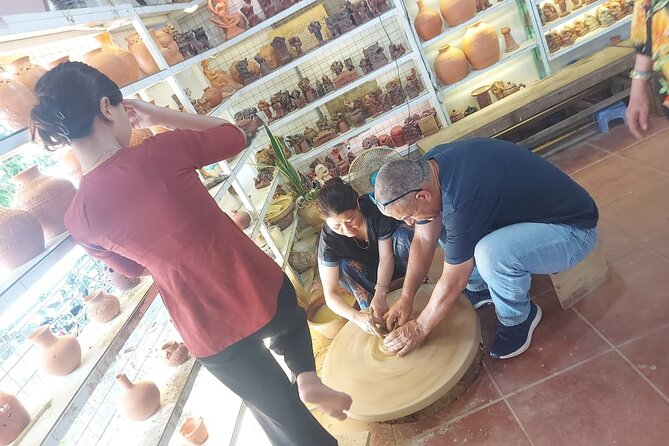
At Thanh Ha Pottery Village, you’ll spend around 50 minutes, and admission is included. This stop is ideal if you want to see craft in its most basic form: clay turning into everyday objects.
What makes this visit more than a quick look is the teaching format. The owner teaches you how to make pottery products like ashtrays and vases, then you make something yourself. Even if you’re a beginner, you’ll walk away with a better understanding of the steps and the pace—how shaping and finishing aren’t rushed jobs.
Why this stop works for most people:
- It’s interactive without being complicated.
- It’s visual and hands-on, so you’re not stuck translating just to understand.
- It ties the whole day together, because later stops also focus on practical village trades.
Possible drawback: pottery can be a bit messy and time-sensitive. Wear clothes you don’t mind getting a little dust or residue on, just in case.
Stop 2: Cam Kim Island noodle factory and rice paper you can watch being born
Next up is Cam Kim Island, a stop built around traditional food-making—your “how do they do that?” moment.
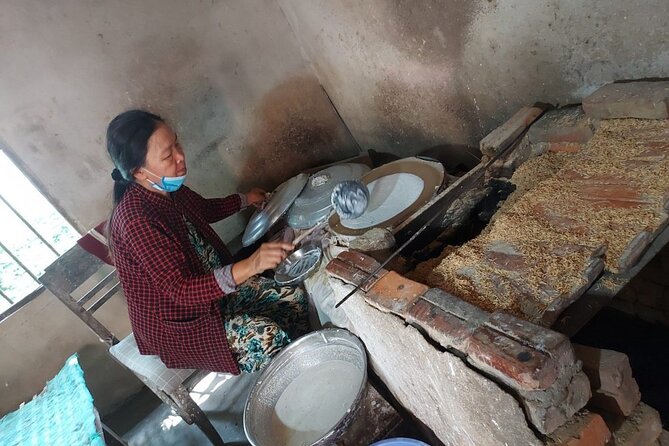
You’ll get about 50 minutes here, again with admission included. This is where families make noodles and rice paper from rice grains. You’ll see a process that includes:
- Soaking rice for about 6 hours
- Grinding with water
- Heating in a specialized pot
- Then multiple additional steps as the mixture turns into rice paper and related products
Even without a super technical breakdown, the key point is this: rice paper and noodles don’t appear out of nowhere. They’re the result of planning time (that soak) and consistent cooking.
Why I think this is a standout stop:
- You see the food process as a real, repeatable routine.
- It connects to village life, because rice-based ingredients are everywhere and matter daily.
- Watching the steps makes the countryside feel real, not like a staged stop.
Tip for your visit: pay attention to the timing. The reason the process takes hours isn’t just tradition—it’s how the ingredients change. If your guide points out the sequence, lean in; it makes what you’re seeing click.
A car and guide for your group alone





Stop 3: Kim Bong Carpentry Village—woodwork, bamboo, and ships that take patience
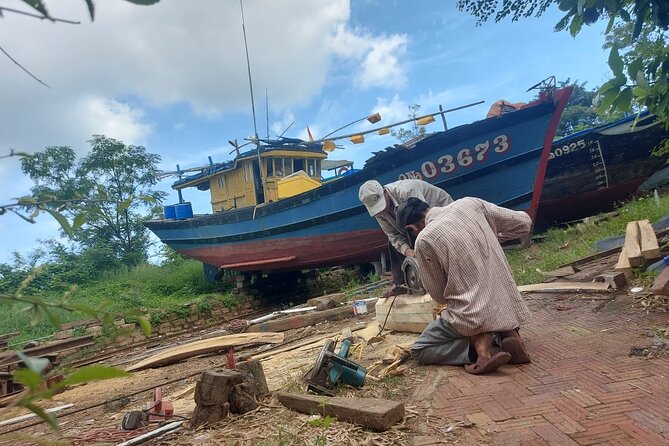
Kim Bong Carpentry Village is about 40 minutes with admission included. This is the craft stop for people who love tools, materials, and slow work.
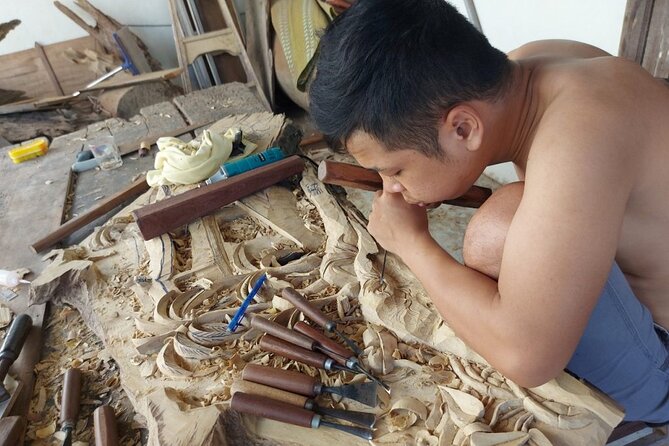
You’ll see products made from wood and bamboo, often beautiful in a way that’s easy to overlook if you only glance at finished items. Here, you get the broader picture: carving and design require time and patience, and you can feel that just by watching the makers work.
The real eye-opener is the ship element. You’ll also see ship carpenters on the river, where workers are busy renovating and manufacturing wooden ships. That makes this stop more than “pretty souvenirs.” It shows a trade that supports transport and the local economy, not just decor.
Possible drawback: since this stop is shorter than the pottery or rice paper visits, you might wish you had more time to ask about specific techniques or look more closely at the details.
Stop 4: Tra Nhieu mat village—sleeping mats made the old way, and you can try weaving
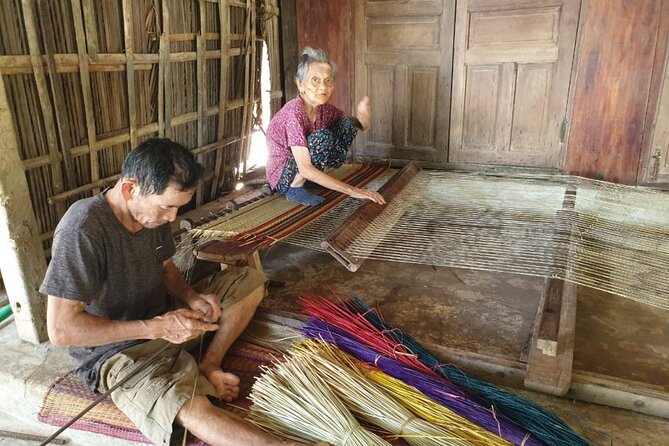
Tra Nhieu is the most practical stop of the day—sleeping mats as a real response to heat. You’ll spend about 50 minutes, and this is where you move from watching to experimenting.
Here’s the core idea: locals use mats as a mattress replacement when it’s hot, a system that’s been around for years when many homes didn’t have air conditioning. What’s great is that the tour doesn’t treat mats as a single product. You’ll learn about:
- The plant used to make mat materials
- How it gets processed into threads
- How those threads become woven mats
- The role of women and children in weaving—described as the new generation carrying the work forward
You can also experiment with the weaving process. That part matters because you understand how much control it takes to keep threads lined up. It’s one thing to watch weaving; it’s another to try it and feel how easy it is to mess up.
Why I think this is a high emotional payoff stop:
- It connects craft to daily comfort, not just aesthetics.
- It shows reuse and practicality—mats can be washed and reused.
- It gives you a hands-on skill moment that sticks with you later.
What to expect physically: weaving uses fine, repetitive hand movements. If you have trouble with small hand tasks, you might prefer watching closely first, then trying only briefly.
Stop 5: Hoi An light vegetarian lunch and a smoother ending
After the village route, you’ll drive back to Hoi An for a light vegetarian lunch. The tour gives you about 50 minutes for this part, and it’s marked free.
This lunch slot is more than just food. It’s the downtime brake pedal after motorbike riding and craft stops. You’ll be able to reset before heading back to your meeting point.
If you’re used to full sightseeing days, this ending feels considerate: you get something simple, and you’re not forced into a long sit-down meal you didn’t plan for.
What it feels like on the road: private pace, less crowd stress
A big theme in the feedback I’d trust: this kind of motorbike village route is a good way to escape tourist crowds and see the real green countryside between stops. Riding between small villages gives you context that you don’t get from staying in town.
Because it’s private, you’re not fighting for space at every doorway. If your guide (for example, Daniel / Dani from Traveling 2 Asia) explains what you’re seeing, you can ask follow-up questions without feeling rushed.
Also, since the route includes multiple crafts, your brain keeps switching gears. That makes the day feel varied instead of repetitive. You go from clay to food making to woodworking to weaving, and each one changes the vibe.
Who this tour is best for (and who should pick another option)
This is a strong fit if you:
- Want a short, well-paced day (about 4 hours) with real village activities
- Like hands-on learning, even if you’re a beginner
- Prefer smaller, private experiences over crowded group tours
- Enjoy understanding how everyday products are made—from bowls and plates to rice paper and sleeping mats
You might want to skip (or choose carefully) if:
- You’re sensitive to motorbike riding
- You hate any chance of rain and don’t have a plan for weather changes (the tour is weather dependent)
- You want long stays at each workshop. Here, visits are intentionally focused, so each stop is meaningful but not exhaustive.
Practical tips so you enjoy every stop
- Wear breathable clothes. This route is rural and warm, and you’ll likely be active in a few craft spaces.
- Bring something for hands: in places like pottery and weaving areas, you don’t want to worry about minor mess.
- Ask your guide to explain the steps at the food and weaving stops. Small details like the rice soaking time make the whole process easier to appreciate.
- If you’re shopping, keep an eye on what’s made where. Different stops sell different things, and having the background helps you judge what you actually want.
Should you book this Hoi An motorcycle village tour?
If your goal is to see beyond the Old Town postcards and get a real sense of village work, I’d book it. The pricing feels fair for what you get: a private motorbike day, guided craft visits (with real interaction), and a simple included lunch.
I’d especially recommend it for first-time visitors who want a compact sampler of traditional life around Hoi An. And if you’re traveling as a family, this style of day often works well because there are multiple visual “wow” moments and you can choose how hands-on you want to be.
If you’re the type who hates any uncertainty, plan around weather, because this tour can be adjusted or refunded due to conditions. But if you can be flexible, this is one of the more authentic ways to spend a half day in the region.
FAQ
How long is the private motorbike tour around Hoi An?
The tour lasts about 4 hours (approx.), including travel time between the village stops.
What’s included in the tour besides the motorbike ride?
You’ll visit Thanh Ha Pottery Village, Cam Kim Island (noodles and rice paper), Kim Bong Carpentry Village, and Tra Nhieu mat village. Admission tickets for those craft stops are included, and there is a light vegetarian lunch in Hoi An.
Is lunch included, and is it vegetarian?
Yes. After the tour, you’ll drive to a local restaurant for a light vegetarian lunch, and it’s included in the experience.
Is this a private tour or shared group?
It’s private. Only your group will participate.
Where do I meet and where does the tour end?
You start at Market Bar – Market Terrace in Hoi An (Đ. Bạch Đằng/02 Hoàng Diệu, Cẩm Châu, Hội An). The tour ends back at the same meeting point.
What happens if the weather is bad or I need to cancel?
The experience requires good weather. If it’s canceled due to poor weather, you’ll be offered a different date or a full refund. You can cancel for a full refund up to 24 hours in advance.
More Tours in Hoi An
- From Hoi An: Market Tour, Basket Boat Ride and Cooking Class
★ 4.8 · 2,208 reviews - Hoi An: Basket Boat with Lantern-Making & Cooking Class Tour
★ 4.9 · 1,444 reviews - Coconut Jungle Eco & Hoi An City Tour With Boat Ride
★ 5.0 · 800 reviews - Hoi An: Ancient Town Guided Walking Tour
★ 4.9 · 766 reviews - Hai Van Pass Motorbike Private Tour with Mister T Easy Rider
★ 5.0 · 742 reviews - Hoi An Countryside: Guided Morning or Afternoon Bicycle Tour
★ 4.9 · 686 reviews
More Tour Reviews in Hoi An
- Hoi An: Basket Boat Ride in the Coconut Forest
★ 4.9 · 4,956 reviews - Hoi An: Vietnamese Coffee Culture and Coffee Making Class
★ 4.9 · 4,006 reviews - Hoi An: Vietnamese Foldable Lantern Making Class
★ 4.9 · 3,742 reviews - Cooking Class Hoi An:Local Market, Basket Boat, Fishing & Cooking
★ 5.0 · 3,660 reviews - Hoi An Cooking Class(Market,BasketBoat Crabfishing&Cooking Class)
★ 5.0 · 3,386 reviews - Hoi An: My Son Sanctuary Early Morning w. Champa Food Brunch
★ 4.9 · 2,750 reviews
Back Roads by Bike and Jeep
- Hai Van Pass Motorbike Private Tour with Mister T Easy Rider
★ 5.0 · 742 reviews - Hoi An Countryside Jeep Tour: Food, Culture & Daily Life
★ 5.0 · 414 reviews - Hoi An Countryside Vespa Tour: Food, Culture & Daily Life
★ 5.0 · 406 reviews - Hoi An Vespa Tours: Hoi An Highlights and Hidden Gems
★ 5.0 · 382 reviews - Hoi An to Hai Van Pass and back to Hoi An with Mr.T Easy Rider (One Day)
★ 5.0 · 363 reviews - Countryside and Villages Tour By Motorbike
★ 5.0 · 159 reviews
Just Reviewed: Fresh Hoi An Trips




Motorbike & Jeep Tours, compared.
 ★ 5.0Hai Van Pass Motorbike Private Tour with Mister T Easy RiderFrom $58742 reviews
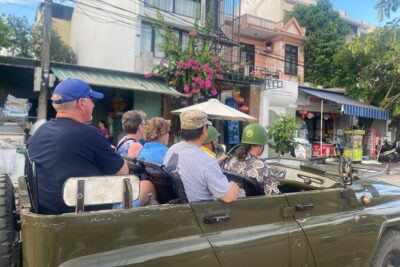 ★ 5.0Food, Culture & Daily LifeFrom $79414 reviews
 ★ 5.0Food, Culture & Daily LifeFrom $93406 reviews
 ★ 5.0Hoi An Highlights and Hidden GemsFrom $57382 reviews
 ★ 5.0Hoi An to Hai Van Pass and back to Hoi An with Mr.T Easy Rider (One Day)From $58363 reviews
 ★ 5.0Countryside and Villages Tour By MotorbikeFrom $51159 reviews
 ★ 5.03 Hours Hoi An Countryside Motorbike TourFrom $51152 reviews
 ★ 5.0Authentic & Exotic Food CultureFrom $39151 reviews
Browse the lists this tour appears in