
Reviewed · TOURS
WAR TRAILS TOUR to KY ANH TUNNELS & CHAM RUINED SANCTUARY
Underground silence is louder than you expect. This WAR TRAILS TOUR from Hoi An sends you through the Ky Anh Tunnels and then on to the Chien Dan Cham ruins, with real war-era context from veterans like Mr. Thom. I especially like the guided tunnel walk where you can see the logic of the underground system: dimly lit passageways, shallow water pools, and the village warning setup that helped people survive. I also like the added historical contrast of the Cham sanctuary stop, so the day doesn’t feel like one long, heavy lecture. One consideration: this is Vietnam War subject matter, and it can feel emotionally weighty.
You’ll start with hotel pickup around 8:30 am, move at a comfortable pace for a 5 to 6 hour outing, and keep the day efficient with admission tickets included at both stops. The group is kept small (up to 15), which helps the guide keep things clear. The setting is rural Quang Nam province—peaceful on the surface, but the places you visit have a darker past underneath. If you’re sensitive to damp, low-light spaces, wear appropriate shoes and plan for conditions that come with walking through tunnels.
In This Review
- The real pull: Ky Anh Tunnels beyond the postcard versions
- Walking the network: what the tunnel visit is actually like
- The guide layer: veterans like Mr. Thom make history personal
- Chien Dan Cham Tower: a 10th–11th century break from the war story
- Timing, pickup, and a small group feel
- Price value check: what $64 gets you in real terms
- Weather matters here: how to plan around the tunnels
- Who should book this tour (and who should think twice)
- The small details that make it easier
- Should you book WAR TRAILS TOUR to Ky Anh Tunnels & Chien Dan Cham Tower?
- FAQ
- How long is the WAR TRAILS TOUR?
- What time does pickup happen in Hoi An?
- Does the tour include transportation pickup?
- What are the main stops on the itinerary?
- Are admission tickets included?
- What is the group size limit?
- Is good weather required?
- Is free cancellation available?
- Are service animals allowed?
The real pull: Ky Anh Tunnels beyond the postcard versions
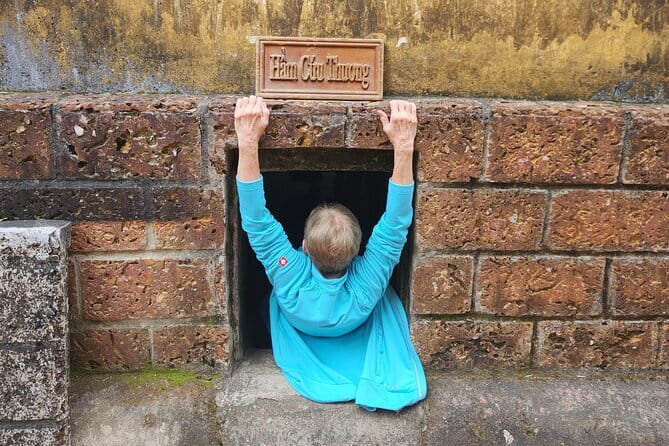
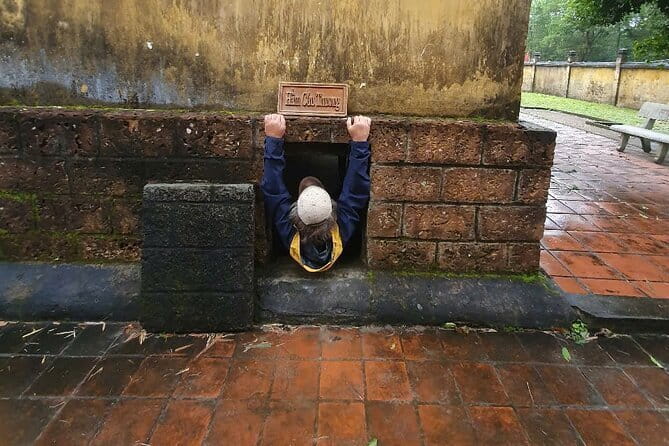
Ky Anh Tunnel Systems is not one of those “only the main corridor” type of sites. You’re looking at a network that was dug over years, using hand work, as a practical response to being hunted. From 1965 to 1967, the resistance side (Northern Vietnam) dug and expanded the tunnels into a web that ran under villages, homes, straw piles, bamboo bushes, and canals. The total length is about 32 km, which is hard to picture until you’re standing where people once relied on it.
What I like here is the sense that the tunnel plan wasn’t just for hiding—it was part of a living survival system. The tour focuses on how warnings worked, how people moved, and why the underground world was laid out to avoid detection. That’s why this doesn’t feel like a museum stop where you just read placards. It’s closer to following a map made for real life during war.
You also get something you won’t find at the very biggest, most commercial sites: a quieter, off-the-main-route feel. Cu Chi is famous, but Ky Anh is the one that feels more rural and less staged. That matters because you can connect the battlefield story to the farmland reality around it—the rice fields and village edges that made the terrain matter.
Walking the network: what the tunnel visit is actually like
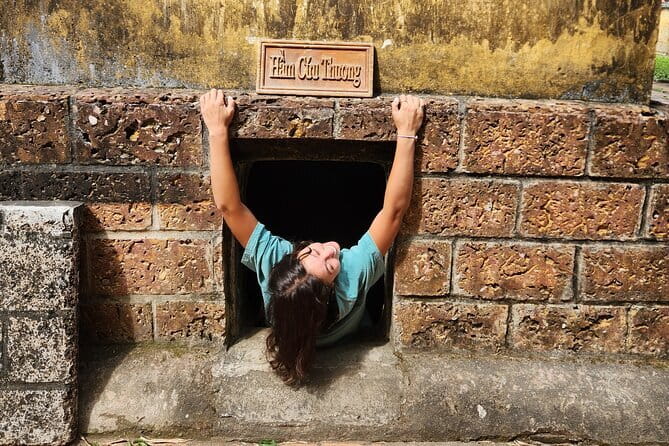
Your tunnel segment runs about 1 hour 30 minutes with admission included. Timing in the schedule puts you discovering Ky Anh around 10:00 am. Expect a guided walk through dim passageways with shallow water pools. Those two details are the biggest “show up ready” items.
Dim lighting changes how you see everything. It slows your pace naturally, and it also helps the guide’s storytelling land. You can’t skim. You have to pay attention—where you step, what’s explained, and how the tunnels connect to the surrounding village layout.
The shallow water pools are a real part of the experience. So this is not the kind of stop where you want delicate footwear or footwear you’d be upset to get damp. Closed-toe shoes with grip are your best friend. If you know you don’t like wet floors, make peace with it now.
A practical note: the tour is built for people to participate, and the schedule is fixed. That means you should plan to stay with the group and keep moving through the route they’ve arranged.
Still deciding? Line this one up against a few Hoi An favourites.
- Hoi An: Basket Boat Ride in the Coconut Forest★ 4.9 · 4,956 reviews
- Hoi An: Vietnamese Coffee Culture and Coffee Making Class★ 4.9 · 4,006 reviews
- Hoi An: Vietnamese Foldable Lantern Making Class★ 4.9 · 3,742 reviews
- Cooking Class Hoi An:Local Market, Basket Boat, Fishing & Cooking★ 5.0 · 3,660 reviews
The guide layer: veterans like Mr. Thom make history personal
There’s a difference between hearing a history lecture and hearing someone explain what people did to survive. This tour emphasizes guidance by veterans, including Mr. Thom. In practice, that means the tunnel story comes with human details—not just dates and measurements.
The best part is how the guide ties the tunnel layout to village life. You’ll hear why warning systems mattered, how the underground spaces were used, and how people tried to out-think an enemy with better equipment and more reach. When a veteran or someone closely connected to the site shares those points, the explanation feels grounded rather than abstract.
I also like that the organization keeps the flow smooth. You’re picked up, driven out, guided on-site, and then moved to the next stop without stress. That’s not just convenience—it helps you stay present. You’re not constantly wondering when you’ll be back or whether you missed something.
Chien Dan Cham Tower: a 10th–11th century break from the war story
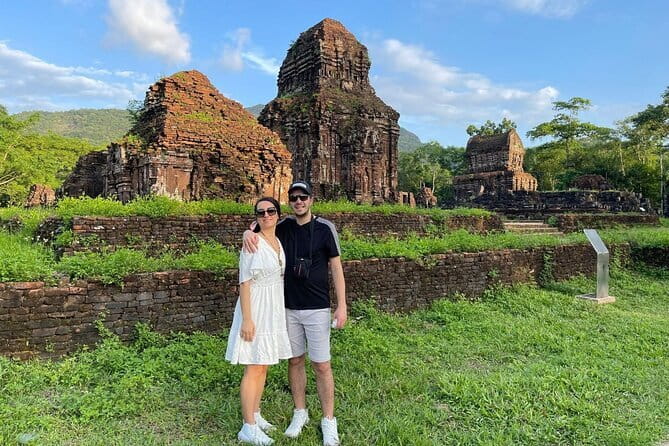
After the tunnels, the day pivots to culture and architecture at Chien Dan Cham Tower. The schedule sets you exploring this stop around 12:00. It’s described as a set of three sanctuaries facing east, built in the late 10th to early 11th centuries by the Champa kingdom.
One of the most useful things you’ll learn is that there’s a large inscribed stone on-site called the Chien Dan inscription. It provides evidence that the towers were built during the reign of King Harivarmadeva. There’s also an interpretive layer here: the guide may note that whether the king personally sponsored the monuments stays open to interpretation.
Even if you’re not a hardcore architecture person, that’s a good kind of “thinking stop.” You get enough context to understand why the inscription matters, and you can look at the sanctuaries with more purpose than simply taking photos. For many people, this is also a needed shift. After walking a war survival network, it’s grounding to look at a place created for belief, ritual, and long-lasting stonework.
You’ll also have time for local noodles around 12:30. The schedule doesn’t turn it into a long sit-down meal, so think of it as a practical break before you head back toward town.
Timing, pickup, and a small group feel
This tour runs about 5 to 6 hours total, starting with pickup at 8:30 am from your hotel area in Hoi An. The activity ends back at the meeting point. The “shape” of the day matters: you’re not stuck traveling all morning and then rushing at the site. You spend real time at Ky Anh, then you get a solid cultural stop at the towers, then you’re back by early afternoon.
There’s also a max group size of 15. For a site like Ky Anh, smaller groups help. You’re moving through passageways, and pacing is important. With a larger crowd, it would be harder to keep the guide’s story at the front of your attention. Here, it feels more controllable and less chaotic.
If you like clear planning, this schedule offers it. Confirmation is received at booking, and the start time is clearly stated as 8:30 am.





Price value check: what $64 gets you in real terms
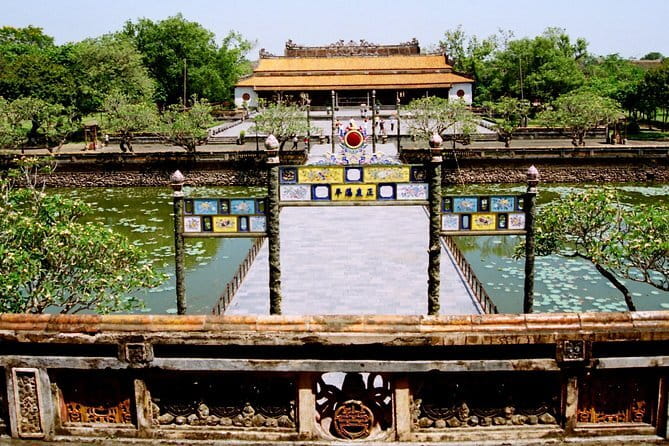
At $64 per person, the value comes from three things you don’t always get together: pickup, guided time, and admission included.
You’re paying for:
- Transportation pickup from Hoi An
- Guided entrance time at Ky Anh (about 1 hour 30 minutes) with admission included
- Guided time at Chien Dan Cham Tower (about 1 hour) with admission included
- A planned break for local noodles
- A small-group setup (max 15)
For a half-day format, that’s a strong bundle—especially when admission tickets are included rather than added at the door. The cost also makes sense if you don’t want to spend extra time figuring out how to reach Ky Anh and coordinate the two-site day on your own.
Could it be less expensive if you DIY? Sure. But you’d be trading convenience and guided context for savings. With a site like this, that context is part of the value.
Weather matters here: how to plan around the tunnels

This experience requires good weather. That’s not a random fine-print line; for a site that includes shallow water pools and outdoor driving through rural areas, bad weather can change how comfortable the experience is and whether it can safely operate.
So if you’re scheduling this on a day with mixed forecast, try to build in flexibility. If the tour is canceled due to poor weather, you’ll be offered a different date or a full refund.
Also, even when the weather is good, it’s still Vietnam countryside. Bring a mindset that the day won’t feel like an air-conditioned city outing. You’re going to the countryside, and the tunnels have their own environment.
Who should book this tour (and who should think twice)

You’ll likely enjoy this most if:
- You care about Vietnam War history and want the less mass-market side of it
- You like guided explanations tied to real survival logic
- You want a half-day that combines war-era history with Champa-era culture
It might be less ideal if:
- You get uncomfortable with dim, enclosed spaces or you strongly dislike damp conditions
- You prefer light entertainment on vacation, because the tone here is serious
There’s also a simple match question: do you want to look beyond the famous names and see what an off-the-route battlefield site feels like? Ky Anh is built for that kind of curiosity.
The small details that make it easier
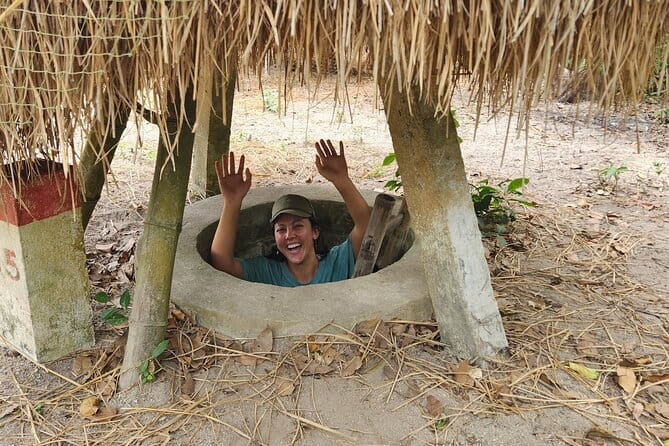
This tour is designed to be straightforward. Service animals are allowed, it’s near public transportation, and most people can participate. Also, since it runs on a fixed schedule, the day stays structured even if you’re trying to fit it in between other Hoi An sights.
And for anyone using this as a history-focused day, it helps that the itinerary doesn’t ramble. You get one main site first (Ky Anh tunnels), then one focused cultural stop (Chien Dan Cham towers), then you’re back.
Should you book WAR TRAILS TOUR to Ky Anh Tunnels & Chien Dan Cham Tower?
If your interest leans toward Vietnam War history, I think this is a smart pick—especially because you’re not just reading about the past. You walk the tunnel system, guided by veterans like Mr. Thom, and you get context that connects the underground plan to village life. The small group size and included admissions keep the day efficient for the time you have.
Book it if you can handle serious themes and you’re okay with dim, wet-feeling tunnel conditions. Skip it if you want a soft, easygoing day with minimal emotional weight. If that’s not your vibe, you might prefer a more relaxed Hoi An-focused itinerary. But if you want meaning, this one has it.
FAQ
How long is the WAR TRAILS TOUR?
It lasts about 5 to 6 hours.
What time does pickup happen in Hoi An?
Pickup starts at 8:30 am.
Does the tour include transportation pickup?
Yes, pickup is offered.
What are the main stops on the itinerary?
The tour visits Ky Anh Tunnel and then Chien Dan Cham Tower.
Are admission tickets included?
Yes. Admission tickets are included for both Ky Anh Tunnel (about 1 hour 30 minutes) and Chien Dan Cham Tower (about 1 hour).
What is the group size limit?
The maximum group size is 15 travelers.
Is good weather required?
Yes. The experience requires good weather. If it’s canceled due to poor weather, you’ll be offered a different date or a full refund.
Is free cancellation available?
Yes, free cancellation is available up to 24 hours in advance for a full refund.
Are service animals allowed?
Yes, service animals are allowed.
More Tours in Hoi An
- From Hoi An: Market Tour, Basket Boat Ride and Cooking Class
★ 4.8 · 2,208 reviews - Hoi An: Basket Boat with Lantern-Making & Cooking Class Tour
★ 4.9 · 1,444 reviews - Coconut Jungle Eco & Hoi An City Tour With Boat Ride
★ 5.0 · 800 reviews - Hoi An: Ancient Town Guided Walking Tour
★ 4.9 · 766 reviews - Hai Van Pass Motorbike Private Tour with Mister T Easy Rider
★ 5.0 · 742 reviews - Hoi An Countryside: Guided Morning or Afternoon Bicycle Tour
★ 4.9 · 686 reviews
More Tour Reviews in Hoi An
- Hoi An: Basket Boat Ride in the Coconut Forest
★ 4.9 · 4,956 reviews - Hoi An: Vietnamese Coffee Culture and Coffee Making Class
★ 4.9 · 4,006 reviews - Hoi An: Vietnamese Foldable Lantern Making Class
★ 4.9 · 3,742 reviews - Cooking Class Hoi An:Local Market, Basket Boat, Fishing & Cooking
★ 5.0 · 3,660 reviews - Hoi An Cooking Class(Market,BasketBoat Crabfishing&Cooking Class)
★ 5.0 · 3,386 reviews - Hoi An: My Son Sanctuary Early Morning w. Champa Food Brunch
★ 4.9 · 2,750 reviews
Just Reviewed: Fresh Hoi An Trips




Tours, compared.
 ★ 4.8Market Tour, Basket Boat Ride and Cooking ClassFrom $172,208 reviews
 ★ 4.9Basket Boat with Lantern-Making & Cooking Class TourFrom $301,444 reviews
 ★ 5.0Coconut Jungle Eco & Hoi An City Tour With Boat RideFrom $42800 reviews
 ★ 4.9Ancient Town Guided Walking TourFrom $2766 reviews
 ★ 5.0Hai Van Pass Motorbike Private Tour with Mister T Easy RiderFrom $58742 reviews
 ★ 4.9Guided Morning or Afternoon Bicycle TourFrom $28686 reviews
 ★ 5.0Evening Walking Food Tour, folk game and lantern boatFrom $39665 reviews
 ★ 5.0My Son Sanctuary Morning Tour & Early Morning with Boat TripFrom $19645 reviews