
Reviewed · HOI AN COOKING CLASSES
Private cooking class tour with Master Chef
A cooking day in Hoi An can feel like a behind-the-scenes meal lesson. What I like most is getting your hands on the real dishes, from Hoi An crispy spring rolls to green mango with prawn salad, and learning the why behind the flavors with a patient, fun chef like Chef Thanh. One thing to consider: the class is not suitable for people with food allergies, and the menu can shift based on what’s fresh that day.
You also get a market-focused start that makes the rest of the day click. You’ll learn how to work with local sellers, spot key ingredients, and use that knowledge right away in the kitchen. The group stays small and private, so you’re not just watching from the sidelines—you’re cooking, tasting, and adjusting as you go.
In This Review
- Key Things I’d Plan for Before You Go
- Hoi An Pickup to Your Cutting Board: How This Day Actually Runs
- Choosing Your Time Slot: Cooking-Only vs Market + Organic Garden
- The Local Market Walk: How to Buy Vietnamese Ingredients Without Guessing
- Organic Garden Visit: Herbs, Greens, and the Flavor Logic
- In the Kitchen With Chef Thanh: Tips You’ll Use Again
- Your Menu, Step by Step: What You’ll Cook and Eat
- Sauces and starters
- Main course: pho or noodle soup style
- Dessert
- What the Meal Feels Like: You Sit, You Taste, You Level Up
- Price and Value: Is $39 Worth It?
- Comfort, Timing, and Logistics: Small Things That Affect Your Day
- Who This Cooking Class Is Best For (And Who Should Skip It)
- Should You Book This Private Cooking Class in Hoi An?
- FAQ
- How long is the cooking class?
- What time options are available for the cooking-only session?
- What’s included if I choose the local market and organic garden option?
- Is there an English-speaking guide?
- Are the market tour and organic garden part of every booking?
- What dishes are on the menu?
- Do they handle dietary restrictions or allergies?
- What should I bring for the class?
Key Things I’d Plan for Before You Go
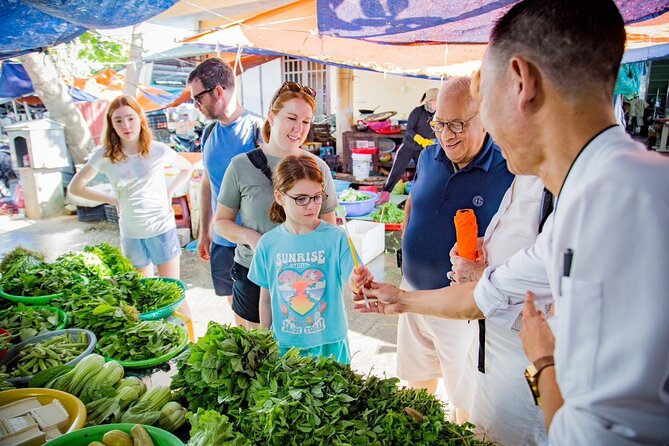
- Market shopping skills: you’ll practice buying ingredients like a local, not just admire the stalls
- Hands-on instruction: expect step-by-step guidance while you cook your own dishes
- A practical menu: spring rolls, mango prawn salad, sweet and sour chili sauce, plus pho
- Garden-to-kitchen context: an organic garden visit helps you understand where herbs and greens start
- Small private group feel: more attention when you’re chopping, mixing, and tasting
Hoi An Pickup to Your Cutting Board: How This Day Actually Runs
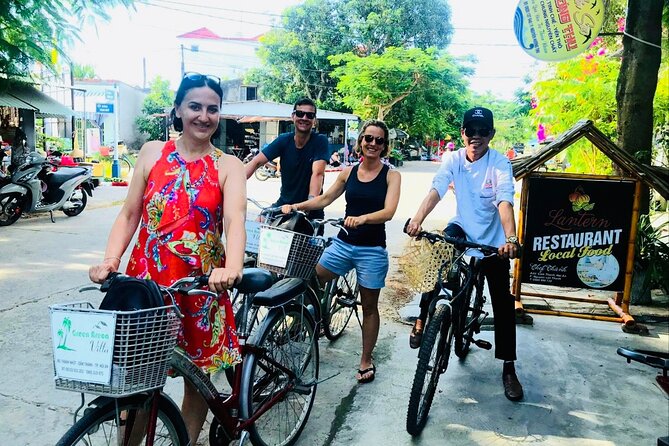
This is a one-day cooking class based in Central Vietnam with a clear flow: you start in Hội An (with hotel pickup depending on your option), you go out for ingredients, and then you spend the rest of the time cooking and eating what you make.
You’re not stuck in a long lecture. The structure is practical: market, then prep and cooking, then sit down together for the meal. That matters because Vietnamese food is all about balance—sweet, sour, salty, spicy—and you learn it faster when you’re actively making it.
There are two main ways to choose your timing. If you want the cooking focus, you can book cooking-only sessions. If you want the full food journey, you choose the option that includes the local market and an organic garden visit.
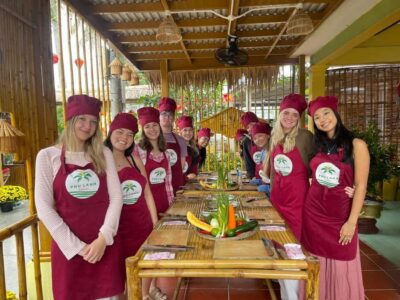
Aprons on for another Hoi An kitchen
- Cooking Class Hoi An:Local Market, Basket Boat, Fishing & Cooking★ 5.0 · 3,660 reviews
- Hoi An Cooking Class(Market,BasketBoat Crabfishing&Cooking Class)★ 5.0 · 3,386 reviews
- From Hoi An: Market Tour, Basket Boat Ride and Cooking Class★ 4.8 · 2,208 reviews
- Hoi An: Basket Boat with Lantern-Making & Cooking Class Tour★ 4.9 · 1,444 reviews
Choosing Your Time Slot: Cooking-Only vs Market + Organic Garden
Your schedule depends on which version you pick.
Cooking-only option (shorter, kitchen-forward):
- Morning: 10:30–12:30
- Afternoon: 15:30–17:30
- Evening: 18:00–20:00
Local market + organic garden option (more experience, longer):
- Morning: 9:00–12:30
- Afternoon: 14:30–17:30
In real-life terms, go cooking-only if you’re tight on time or already know what you want to cook. Go market + garden if you like understanding ingredients—because the garden and the stalls give you a map for what to buy and why.
One small planning note: the market energy can vary. If your day falls near Tet season, you might find things quieter, but the chef/guides still help you learn what ingredients matter and how to select them.
The Local Market Walk: How to Buy Vietnamese Ingredients Without Guessing
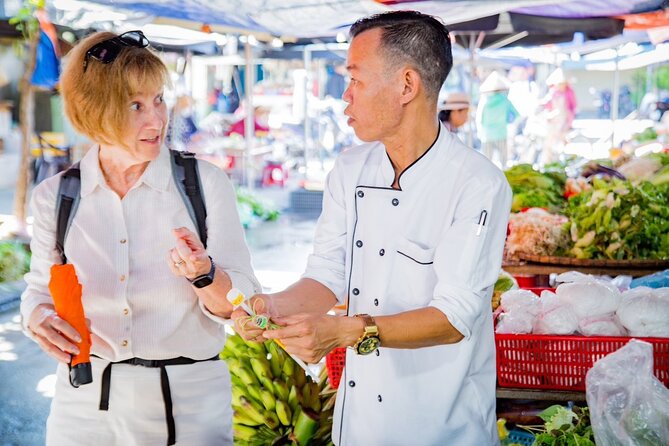
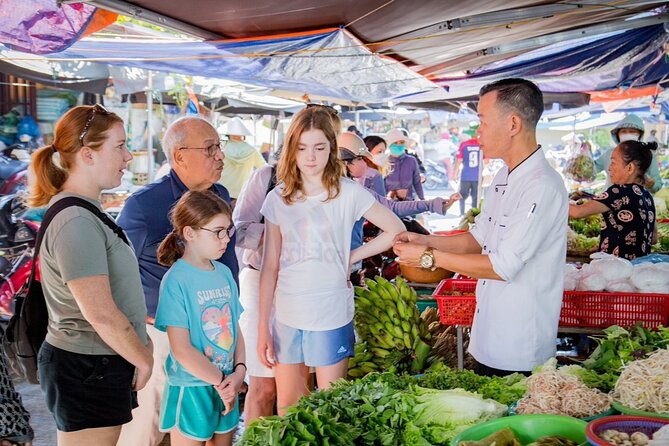
The market stop is more than a photo break. You learn how local sellers work, how to ask for what you need, and what ingredients to look for so your sauces and salads come out right.
You’ll also have a chance to decide whether to buy ingredients for the cooking class. That’s useful even if you don’t cook at home often, because Vietnamese cooking depends on a few key staples, and once you know what they look like, you can recreate the flavors later.
This is where the chef’s guidance really pays off. In at least one class experience, the guide walked people through different vegetables and ingredients even when the market was quieter during Tet. That kind of attention is what turns market chaos into a clear shopping checklist.
Practical tip: wear comfortable clothes. You’ll be walking and leaning in close. Bring your camera if you enjoy documenting ingredients—there’s a lot to spot once you know what you’re hunting for.
Organic Garden Visit: Herbs, Greens, and the Flavor Logic
If you choose the market + garden option, you’ll also visit an organic garden. The point isn’t just to look at plants. It’s to connect Vietnamese flavors to real sourcing: herbs, greens, and produce that make dishes taste fresh rather than flat.
Vietnamese dishes often rely on multiple greens and aromatics, not just one hero ingredient. When you see them growing (and you learn how they’re used), it’s easier to follow the cooking process later—especially for salads and spring rolls, where texture and aroma both matter.
You may also notice that some sessions move from garden to a cooking base (like a chef’s home setup). That can make the whole thing feel more personal and less like a staged restaurant tour.
A car and guide for your group alone




In the Kitchen With Chef Thanh: Tips You’ll Use Again
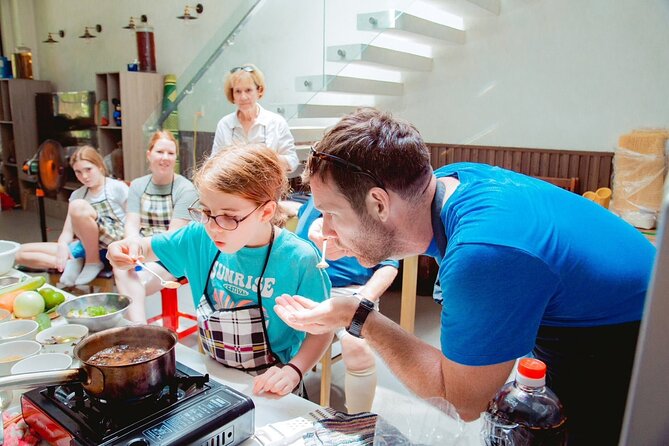
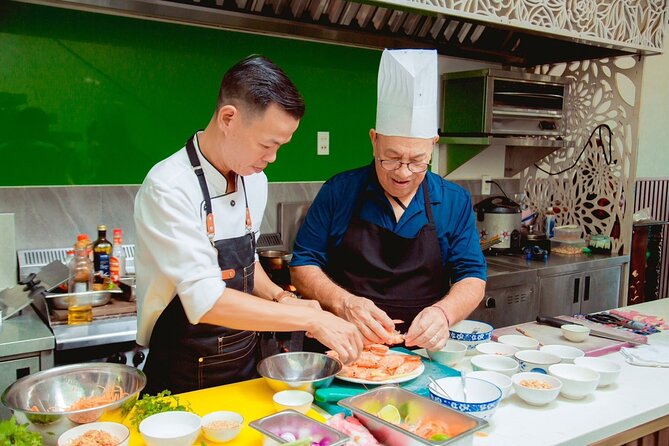
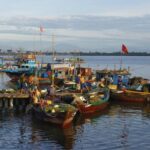
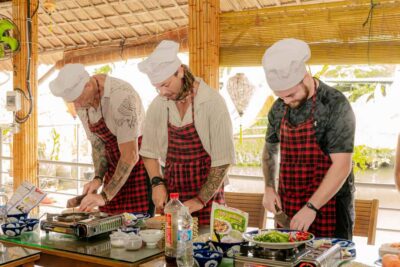
The cooking class is led by a professional chef with many years of experience in Vietnamese cuisine. The teaching style is hands-on and patient, with a lot of small advice that saves you from common mistakes.
In one version of this experience, people highlighted how Chef Thanh was very patient and gave practical tips with a sense of fun. In another, the guide (named Thue) was personable and clearly knew what she was doing with ingredients and how they behave in Vietnamese cooking.
That combination—chef expertise plus a friendly, real-world teaching approach—is what you want. Vietnamese cooking isn’t complicated, but it is exact in a few places. Sauces need the right balance. Garnishes can’t be an afterthought. Even timing matters with spring rolls.
Also, you’re cooking with a small private group. That matters because you’re more likely to get quick corrections when your chopping size is off or your sauce needs another adjustment.
Your Menu, Step by Step: What You’ll Cook and Eat
The menu is designed to cover a range of Vietnamese textures and flavors: salad/appetizers, main dishes, and dessert. And yes, you’ll actually make most of it, not just watch someone else do the work.
Sauces and starters
You’ll learn to make sweet and sour chili sauce. This is a key one because it shows you how Vietnamese meals build flavor layers. Once you understand this sauce, you’ll recognize its logic in many dishes across the country.
You’ll also make green mango with prawn salad. Mango brings bright fruitiness, and the salad teaches you how acidity and spice should wake up seafood without overpowering it.
For an iconic Hoi An dish, you’ll make Hoi An crispy spring rolls. Spring rolls are a great learning dish because you see the difference between good filling, good rolling, and the kind of frying that gives you crisp texture without turning greasy.
Main course: pho or noodle soup style
For the main, you’ll cook either Hanoi beef noodle soup or chicken noodle soup (based on what’s offered in your class). Pho is the comfort part of the meal, and it also teaches you how broth flavors are built and balanced.
This is where the earlier ingredient learning pays off. If you learned what herbs and aromatics are key, you’ll notice the broth and soup garnish make more sense—not just as decoration, but as part of the taste.
Dessert
You’ll finish with mixed fresh fruit. Simple, yes, but it’s a smart ending after spicy and savory dishes. It also reinforces the idea that Vietnamese meals often balance intensity with something light.
One important detail: the menu can change based on ingredient availability. That isn’t a drawback so long as you treat it as freshness-based cooking. If an ingredient isn’t at its best that day, you’ll still learn the method and flavor structure.
What the Meal Feels Like: You Sit, You Taste, You Level Up
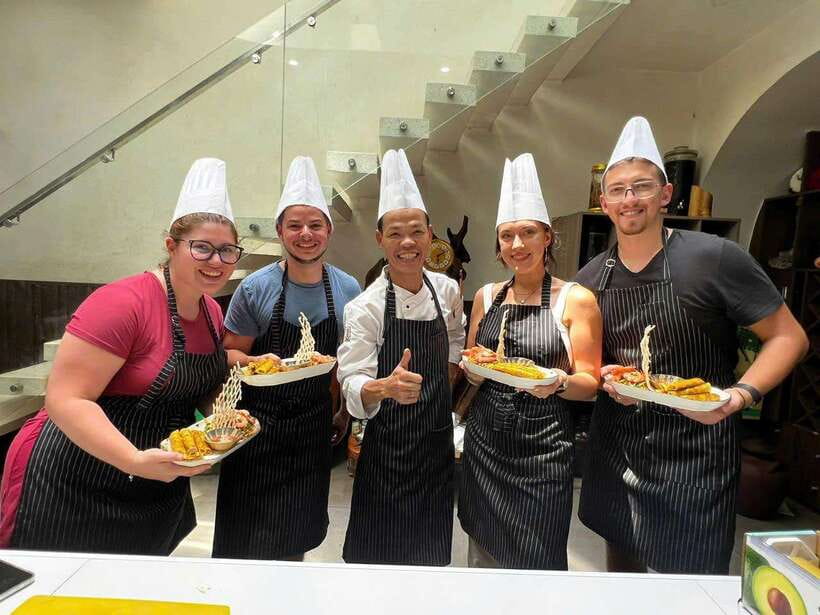
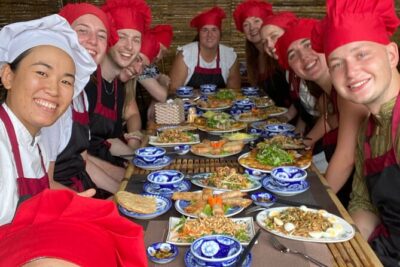
When you’re done cooking, you eat what you made. That might sound obvious, but it’s a big difference between a real cooking class and a demo. Since you assembled the dishes, you taste with purpose: you can identify what you got right and what you’d tweak next time.
This is also why the small private group format matters. You’re not sharing attention with a huge group. You can ask for help when something’s unclear, and you can taste more than once as flavors develop.
And since you’re cooking dishes that are common in Central Vietnam and around Vietnam, you leave with a mental recipe. You understand the order of operations—what goes in first, what goes on top, and how sour and sweet should behave together.
Price and Value: Is $39 Worth It?
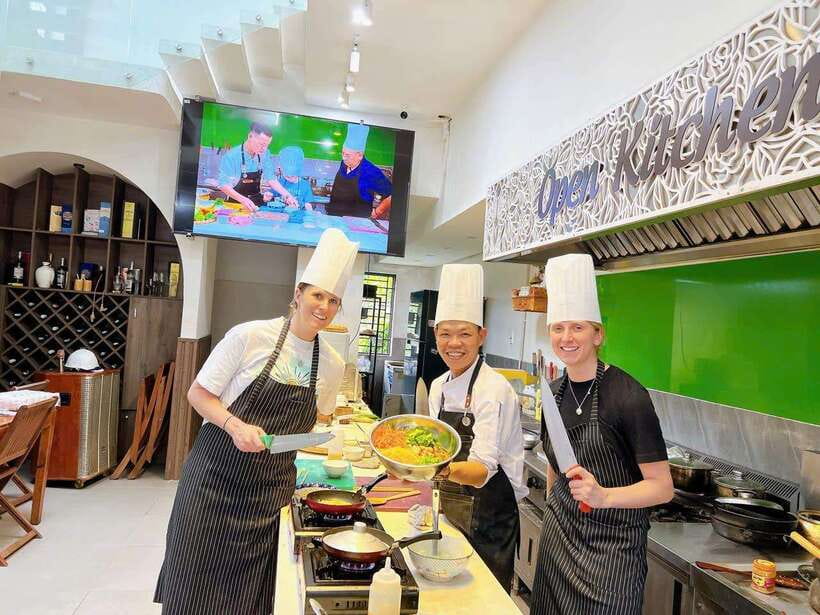
At $39 per person for a one-day experience, this class is priced in a way that feels fair for what you get: a professional chef, ingredient guidance, market shopping time (with an option), cooking instruction, and a full meal you prepare.
You’re also paying for something harder to quantify: turning food curiosity into real ability. A market walk helps you learn what to buy. Garden context helps you understand ingredients. Then cooking practice turns it into muscle memory.
If you only want to eat Vietnamese food, you could skip this and go out. But if you want to come home able to recreate flavors—or at least confidently order and understand what you’re tasting—this kind of hands-on class is good value.
The private group size also tilts the value toward you. More attention per person means less wasted time and more cooking time.
Comfort, Timing, and Logistics: Small Things That Affect Your Day
You’ll want comfortable clothes for cooking and walking. Since you’ll be handling ingredients, closed-toe shoes can help too, even though it’s not listed—better safe than sorry.
The experience includes cooking ingredients and a meal of the prepared dishes. Water is also listed as free, but you should still bring what you normally need for sun and walking.
Pickup details can depend on the option you choose, with pickup mentioned from your hotel in Hội An by car or motorbike. If you’re staying in the center, that usually keeps things simple. If you’re on the edge of town, it can help to confirm where the car or motorbike will meet you.
Finally: no smoking. Not a big issue, but it’s part of the class rules.
Who This Cooking Class Is Best For (And Who Should Skip It)
This works well if you’re in Hội An and you want an active food experience rather than a passive tour. It’s especially good for couples, solo travelers, and small groups who want a more personal pace.
It’s also a strong pick if you like Asian food and want to understand why sauces taste the way they do. Learning sweet and sour chili sauce plus mango salad and spring roll techniques gives you a toolkit, not just a meal.
Skip it if you have food allergies. The information specifically says it’s not suitable for people with food allergies. The menu can also change based on ingredient availability, so if your needs are complicated, you’ll want extra caution.
It isn’t suitable for children under 9 either. So plan this as an adult-focused food day.
Should You Book This Private Cooking Class in Hoi An?
Yes—if your goal is to leave with real Vietnamese cooking skills (not just photos). The hands-on menu—spring rolls, mango prawn salad, sweet and sour chili sauce, plus pho-style soup and fruit dessert—gives you a well-rounded taste of Vietnam, and you learn it through market-to-kitchen context.
Book the market + garden option if you want to understand ingredients and buying decisions. Book cooking-only if you’re busy and still want a guided, chef-led cooking session at convenient times.
Skip or rethink if you have food allergies, and double-check dietary needs in advance since the menu may change. If that doesn’t apply to you, this is a solid $39-style experience that pays you back every time you cook (or order) Vietnamese food afterward.
FAQ
How long is the cooking class?
The experience is listed as 1 day, with different time windows depending on the option you choose.
What time options are available for the cooking-only session?
The cooking-only option is available in three windows: 10:30–12:30, 15:30–17:30, and 18:00–20:00.
What’s included if I choose the local market and organic garden option?
That option includes the local market and an organic garden visit, plus the cooking class with ingredients and the meal.
Is there an English-speaking guide?
Yes. The live tour guide is listed as English.
Are the market tour and organic garden part of every booking?
No. The market tour is described as optional, and the organic garden is tied to the option that includes the local market and garden.
What dishes are on the menu?
The menu includes items like sweet and sour chili sauce, green mango with prawn salad, Hoi An crispy spring rolls, a main dish of Hanoi beef or chicken noodle soup, and mixed fresh fruit for dessert.
Do they handle dietary restrictions or allergies?
You should notify dietary restrictions or allergies in advance. However, the experience is not suitable for people with food allergies.
What should I bring for the class?
Bring a camera, water, comfortable clothes, and cooking equipment (as listed). Smoking is not allowed during the experience.
More Tours in Hoi An
- From Hoi An: Market Tour, Basket Boat Ride and Cooking Class
★ 4.8 · 2,208 reviews - Hoi An: Basket Boat with Lantern-Making & Cooking Class Tour
★ 4.9 · 1,444 reviews - Coconut Jungle Eco & Hoi An City Tour With Boat Ride
★ 5.0 · 800 reviews - Hoi An: Ancient Town Guided Walking Tour
★ 4.9 · 766 reviews - Hai Van Pass Motorbike Private Tour with Mister T Easy Rider
★ 5.0 · 742 reviews - Hoi An Countryside: Guided Morning or Afternoon Bicycle Tour
★ 4.9 · 686 reviews
More Tour Reviews in Hoi An
- Hoi An: Basket Boat Ride in the Coconut Forest
★ 4.9 · 4,956 reviews - Hoi An: Vietnamese Coffee Culture and Coffee Making Class
★ 4.9 · 4,006 reviews - Hoi An: Vietnamese Foldable Lantern Making Class
★ 4.9 · 3,742 reviews - Cooking Class Hoi An:Local Market, Basket Boat, Fishing & Cooking
★ 5.0 · 3,660 reviews - Hoi An Cooking Class(Market,BasketBoat Crabfishing&Cooking Class)
★ 5.0 · 3,386 reviews - Hoi An: My Son Sanctuary Early Morning w. Champa Food Brunch
★ 4.9 · 2,750 reviews
Cook It Yourself: More Hoi An Kitchens
- Cooking Class Hoi An:Local Market, Basket Boat, Fishing & Cooking
★ 5.0 · 3,660 reviews - Hoi An Cooking Class(Market,BasketBoat Crabfishing&Cooking Class)
★ 5.0 · 3,386 reviews - From Hoi An: Market Tour, Basket Boat Ride and Cooking Class
★ 4.8 · 2,208 reviews - Hoi An: Basket Boat with Lantern-Making & Cooking Class Tour
★ 4.9 · 1,444 reviews - Hoi An Cooking Class(Local market,Basket Boat,Fishing & Cooking)
★ 5.0 · 1,323 reviews - Hoi An: Market Experience with Optional Fishing and Cooking
★ 4.7 · 928 reviews
Just Reviewed: Fresh Hoi An Trips



Hoi An Cooking Classes, compared.
 ★ 5.0Cooking Class Hoi An:Local Market, Basket Boat, Fishing & CookingFrom $283,660 reviews
 ★ 5.0Hoi An Cooking Class(Market,BasketBoat Crabfishing&Cooking Class)From $283,386 reviews
 ★ 4.8Market Tour, Basket Boat Ride and Cooking ClassFrom $172,208 reviews
 ★ 4.9Basket Boat with Lantern-Making & Cooking Class TourFrom $301,444 reviews
 ★ 5.0Hoi An Cooking Class(Local market,Basket Boat,Fishing & Cooking)From $281,323 reviews
 ★ 4.7Market Experience with Optional Fishing and CookingFrom $4928 reviews
 ★ 4.9Basket Boat Ride, Cooking Class by HangcoconutFrom $19802 reviews
 ★ 5.0Hoi An Eco Tour Cooking Class & Fishing (Local market,basket boat,learn cooking)From $29567 reviews
Browse the lists this tour appears in