

Reviewed · ANCIENT TOWN WALKING TOURS
Hoian Old Town – Immersive Free Walking Tour
Hoi An feels like a living postcard, and this 2-hour walk points you straight to the Japanese Covered Bridge and the lanes that used to feed the trading port.
I like that it’s compact and focused, so you get real orientation fast rather than a vague wandering loop.
I also like the local perspective from Quoc Le, especially when the stops turn from photos into stories you can picture. Places like Phùng Hưng Ancient House feel less like architecture and more like how people actually lived.
One drawback to plan for: UNESCO-listed sights along the route require a ticket, about $5 / 120,000 VND, and the tour runs rain or shine.
In This Review
- Key highlights worth your time
- Why a 2-hour Hoi An Old Town walk makes sense
- Price, tips, and the UNESCO ticket that changes your budget
- Meet Quoc Le at 125 Phan Chu Trinh, then get moving
- Japanese Covered Bridge and Tan Ky Old House: the fast way to see Hoi An’s core
- Assembly halls and Kazik Park: how merchant communities shaped the town
- Phùng Hưng Ancient House: when the trading-port story turns human
- Traditional art performance: the culture stop that isn’t just a photo break
- Hoi An Central Market finish: use the timing to eat and shop
- Who this tour suits best (and who should skip it)
- Should you book this Hoi An Old Town walking tour?
- FAQ
- How long is the Hoi An Old Town walking tour?
- Where does the tour start?
- What is the cost?
- Is it rain or shine?
- Is the guide English speaking?
- Do I need UNESCO tickets?
- How much should I tip?
- What is the cancellation policy?
Key highlights worth your time
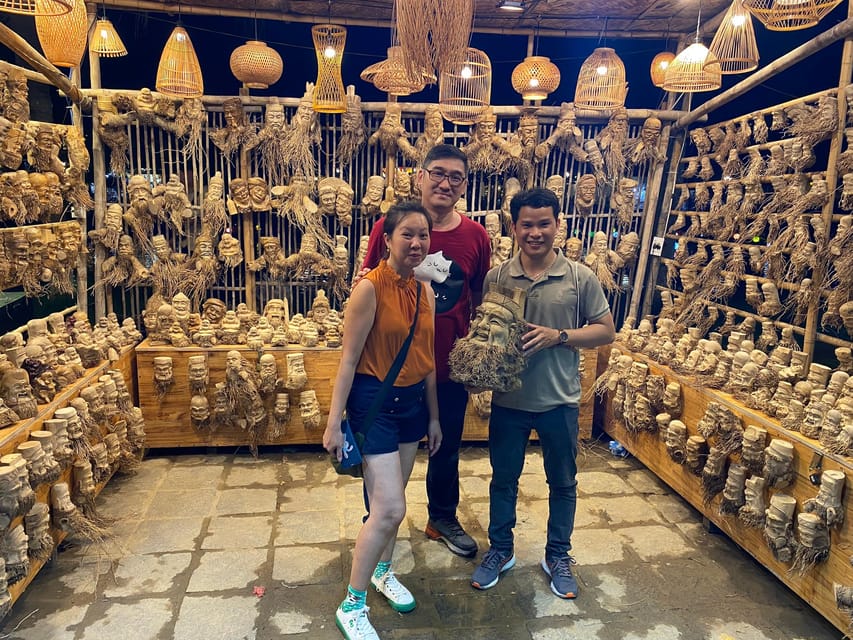
- Small group (max 5) means you can actually ask questions and keep up at a human pace
- Japanese Covered Bridge + Tan Ky Old House get you the classic Hoi An imagery fast
- 45-minute traditional performance gives you culture you can watch, not just read about
- Ancient houses and assembly halls explain how merchant communities shaped town life
- Finish at Hoi An Central Market so you end where you can snack and shop immediately
Why a 2-hour Hoi An Old Town walk makes sense
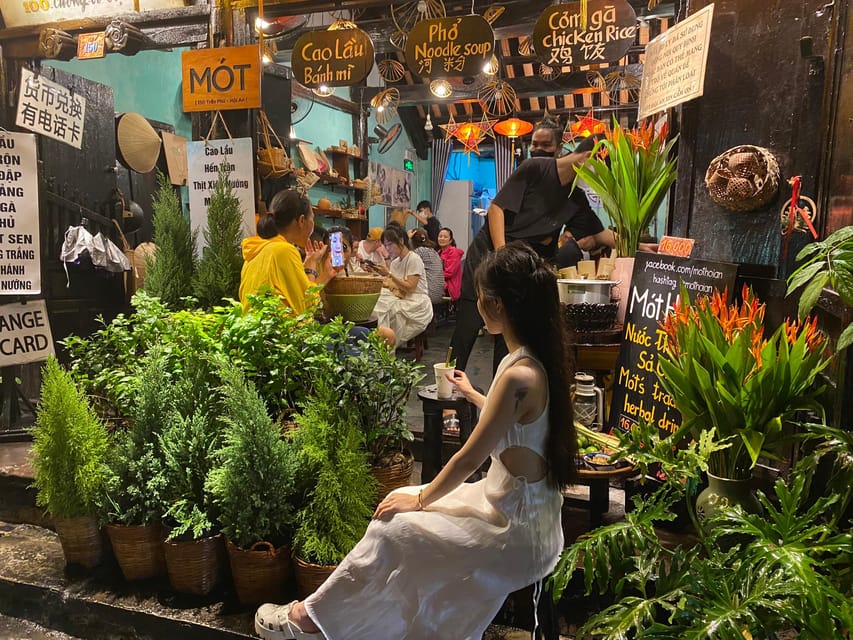
Hoi An’s Old Town is famous for a reason: it’s laid out for pedestrians. Once you’re walking, the town’s shape becomes clear—the way lanes funnel toward the old trading sites, and how the buildings look arranged for daily life, not just sightseeing.
This tour is built for getting oriented quickly. The route hits the main landmarks without dragging you into a half-day production. If it’s your first day in town, you’ll also get practical guidance from the guide on how to spend the rest of your visit.
The small-group size matters more than you’d think. With a group limited to 5, the guide can slow down when you ask a question, and you’re less likely to feel like you’re sprinting to stay in frame.
Deeper into the yellow-walled lanes on foot
- Hoi An: Ancient Town Guided Walking Tour★ 4.9 · 766 reviews
- Hoi An Ancient Town Walking Tour with a Local★ 5.0 · 517 reviews
- The Lantern Lady: Traditional Lantern Class in Old Town★ 4.9 · 444 reviews
- Hoi An Ancient Town – Walking Tour with Local Guide★ 4.9 · 385 reviews
Price, tips, and the UNESCO ticket that changes your budget
The tour is listed at $10 per person and operates on a tip-based model. That means your final cost depends on what you feel is fair for the guide and the value you got.
Then there’s the part people sometimes forget to budget: UNESCO entrance tickets. According to the tour info, you’ll need a ticket to enter UNESCO attractions, priced at $5 (120,000 VND). So even though the walking tour itself is low-cost, plan for that extra entrance fee on top.
Here’s a simple way to think about value. You’re paying for an English-speaking guide to connect the dots across multiple historic sites in about 2 hours. If you’d otherwise pay for guided time anyway (or spend your first day trying to self-interpret everything), this format can feel like a bargain.
Tips are also clearly guided. The suggested tipping amounts are 250,000 VND per person for nice and 300,000 to 400,000 VND per person for great. If you’re the type who likes to reward good explaining and smooth pacing, that guidance makes budgeting easy.
Meet Quoc Le at 125 Phan Chu Trinh, then get moving
The meeting point is 125 Phan Chu Trinh. The guide will be wearing a white T-shirt with a shoulder bag, which makes it easier to spot the right person quickly.
Wear comfortable clothes. The tour notes no loose clothing and no see-through clothing, likely because you’ll pass through heritage areas where modesty and safety matter. You’ll also be walking enough that your shoes matter, even if the stops are short.
This is a rain-or-shine tour. That doesn’t mean it’s miserable; it just means you should show up ready. If you know you hate wet streets, consider bringing a small umbrella or rain layer so you don’t spend the walk fighting the weather.
Also note one practical boundary: it’s not suitable for people over 95 years. So if age is a factor, choose accordingly.
Japanese Covered Bridge and Tan Ky Old House: the fast way to see Hoi An’s core
The route starts by heading toward the Japanese Covered Bridge Pagoda. You’ll spend about 10 minutes there, which is just enough for a focused look. This is one of those places where photos are common, but the real value is understanding why it sits where it does and how the bridge fits into the town’s older cultural layers.
Next is a quick stop at Tan Ky Old House for another 10 minutes. Old houses in Hoi An aren’t just pretty shells; they show how design handled daily life—family space, light, privacy, and the way commerce influenced the home.
Here’s the practical payoff for you: after these two stops, the town stops feeling random. You start to recognize the pattern—where people built outward toward trade, how buildings relate to one another, and why the streets feel intentionally narrow and purposeful.
Hoi An at a stroll, more routes





Assembly halls and Kazik Park: how merchant communities shaped the town
After the house stops, the tour moves into the social side of Hoi An: meeting places. You’ll visit Fujian Assembly Hall (and the tour also references a Cantonese Assembly Hall as part of the route). These halls represent how Chinese merchant communities organized themselves—where people gathered, worshipped, and supported one another through the rhythms of business and life.
This is the part of the tour where I find walking tours can get generic, but here it’s handled better by story focus. The goal isn’t just to point at a façade. It’s to connect the architecture to community structure, so the hall becomes a clue about how people organized in a trading port.
Then there’s Kazik Park. It’s a short stop, but parks in historic areas can act like breathing space. Even briefly, it gives your legs a reset and helps you re-orient before the next historic-heavy portion of the walk.
Phùng Hưng Ancient House: when the trading-port story turns human
One of the best parts of this route is the stop at Phùng Hưng Ancient House. Ancient houses like this don’t just show old materials; they show old thinking. You can look at the layout and start imagining what daily routines must have looked like for the families who lived there.
What I like here is that the guide’s storytelling turns the visit from sightseeing into comprehension. When you hear the local explanations, you start noticing details you would otherwise gloss over—how rooms and entrances relate, how the home’s structure fits the neighborhood, and how heritage buildings still carry the town’s identity.
If you’re someone who likes history but hates feeling like you’re stuck reading a wall of information, this kind of guided interpretation is a sweet spot.
Traditional art performance: the culture stop that isn’t just a photo break
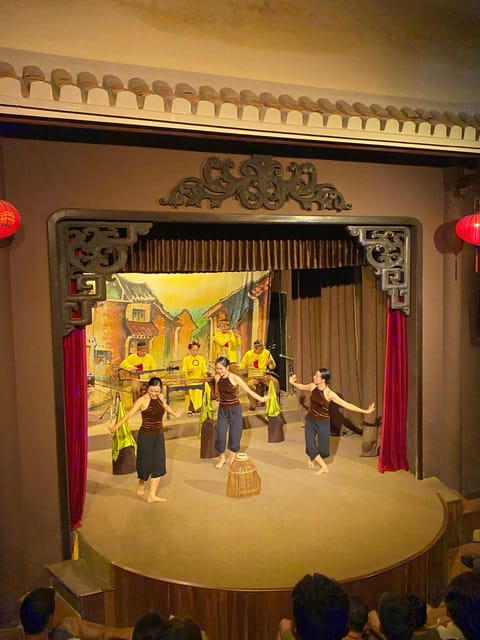
The tour includes a major cultural moment at the Hoi An Traditional Art Performance Theatre. You’ll spend about 45 minutes there, and the schedule includes a concert and dance show.
This matters because Hoi An isn’t only about architecture. It’s also about living traditions—how art reflects identity, memory, and the blending of influences that shaped the port over centuries. Even if you don’t catch every word in English (performances rarely translate perfectly), you still get the rhythm and emotion of what’s happening.
A practical tip: 45 minutes is long enough that you should settle in and give yourself permission to just watch. Don’t try to multitask with phone scrolling. The show is the kind of thing that feels better when you’re fully in it.
After that, the tour also references time at a Performance Art Center. Expect it to function like a companion stop to the theatre—another chance to connect the performance you saw with the cultural context around it.
Hoi An Central Market finish: use the timing to eat and shop
The tour ends at the Hoi An Market / Hoi An Central Market. This is smart scheduling. Instead of finishing somewhere inconvenient, you leave the walk near the place where you can keep exploring right away.
Market time is best for practical goals:
- grab a drink or a quick snack
- pick up small gifts while you’re already in the historic shopping zone
- observe how locals move through the same streets you just learned about
If you want to keep the experience feeling personal, use what you learned on the walk. When you understand the trading-port background, you’ll notice how the market connects to that story—how the town still functions as a place of exchange.
Who this tour suits best (and who should skip it)
This walking tour is a great match if you want:
- a tight, efficient route through major Old Town sites
- an English-speaking guide who can explain what you’re looking at
- a mix of heritage architecture and live traditional performance
- a small-group experience that doesn’t feel like a cattle line
It’s also a solid value when you treat it as a first-day orientation. Join early in your stay and you’ll pick up useful tips for how to plan the rest of your time in Hoi An.
Consider a different option if you:
- need a lot of mobility time or prefer longer museum-style pacing
- don’t want to pay UNESCO entrance tickets on top of the tour cost
- dislike the idea of walking in rain (since it operates rain or shine)
Should you book this Hoi An Old Town walking tour?
If your goal is to see the essential sights without wasting your first day figuring things out alone, I think this is an easy yes. The blend of landmarks, short architectural stops, and a 45-minute traditional art performance gives you both visual wow and cultural meaning.
Budget-minded advice: set aside money for the UNESCO ticket (~$5 / 120,000 VND) and plan a tip using the guide’s suggested ranges (250,000 VND for nice, 300,000–400,000 VND for great). Do that, and you won’t feel surprised mid-visit.
Finally, the small-group setup (max 5) plus the English guide makes it more enjoyable than many low-cost “walk and point” tours. If you want someone local to explain why Hoi An looks the way it does, this route is a very reasonable way to start.
FAQ
How long is the Hoi An Old Town walking tour?
It lasts about 2 hours.
Where does the tour start?
The meeting point is 125 Phan Chu Trinh. The guide will be wearing a white T-shirt with a shoulder bag.
What is the cost?
It’s listed at $10 per person and the tour is tip-based.
Is it rain or shine?
Yes. The tour operates rain or shine.
Is the guide English speaking?
Yes, the tour includes a live English tour guide.
Do I need UNESCO tickets?
Yes. The tour notes that UNESCO entrance tickets are required for access to UNESCO attractions, priced at $5 (120,000 VND).
How much should I tip?
The provided guide-tipping guidance is 250,000 VND per person for nice, and 300,000–400,000 VND per person for great. Since it’s tip-based, you can pay what you feel is appropriate.
What is the cancellation policy?
You can cancel up to 24 hours in advance for a full refund.
More Tours in Hoi An
- From Hoi An: Market Tour, Basket Boat Ride and Cooking Class
★ 4.8 · 2,208 reviews - Hoi An: Basket Boat with Lantern-Making & Cooking Class Tour
★ 4.9 · 1,444 reviews - Coconut Jungle Eco & Hoi An City Tour With Boat Ride
★ 5.0 · 800 reviews - Hoi An: Ancient Town Guided Walking Tour
★ 4.9 · 766 reviews - Hai Van Pass Motorbike Private Tour with Mister T Easy Rider
★ 5.0 · 742 reviews - Hoi An Countryside: Guided Morning or Afternoon Bicycle Tour
★ 4.9 · 686 reviews
More Tour Reviews in Hoi An
- Hoi An: Basket Boat Ride in the Coconut Forest
★ 4.9 · 4,956 reviews - Hoi An: Vietnamese Coffee Culture and Coffee Making Class
★ 4.9 · 4,006 reviews - Hoi An: Vietnamese Foldable Lantern Making Class
★ 4.9 · 3,742 reviews - Cooking Class Hoi An:Local Market, Basket Boat, Fishing & Cooking
★ 5.0 · 3,660 reviews - Hoi An Cooking Class(Market,BasketBoat Crabfishing&Cooking Class)
★ 5.0 · 3,386 reviews - Hoi An: My Son Sanctuary Early Morning w. Champa Food Brunch
★ 4.9 · 2,750 reviews
The Ancient Town on Foot, Continued
- Hoi An: Ancient Town Guided Walking Tour
★ 4.9 · 766 reviews - Hoi An Ancient Town Walking Tour with a Local
★ 5.0 · 517 reviews - The Lantern Lady: Traditional Lantern Class in Old Town
★ 4.9 · 444 reviews - Hoi An Ancient Town – Walking Tour with Local Guide
★ 4.9 · 385 reviews - Hoi An Street Food Walking Tour with Tastings
★ 5.0 · 317 reviews - Hoi An Walking Tour
★ 5.0 · 269 reviews
Just Reviewed: Fresh Hoi An Trips






Ancient Town Walking Tours, compared.
 ★ 4.9Ancient Town Guided Walking TourFrom $2766 reviews
 ★ 5.0Hoi An Ancient Town Walking Tour with a LocalFrom $9517 reviews
 ★ 4.9The Lantern Lady: Traditional Lantern Class in Old TownFrom $6444 reviews
 ★ 4.9Hoi An Ancient Town – Walking Tour with Local GuideFrom $14385 reviews
 ★ 5.0Hoi An Street Food Walking Tour with TastingsFrom $35317 reviews
 ★ 5.0Hoi An Walking TourFrom $69269 reviews
 ★ 5.0Hoi An Night Market – Ancient Town street food tours by NightFrom $45165 reviews
 ★ 4.5Hoi An Ancient Town – Night Market Street Food Tours By NightFrom $55161 reviews
Browse the lists this tour appears in