
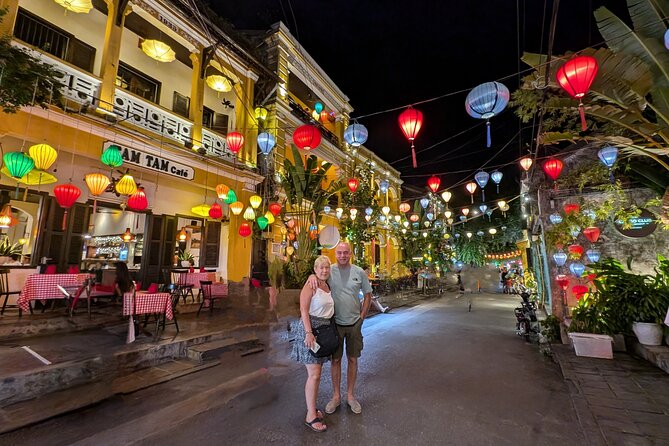
Reviewed · ANCIENT TOWN WALKING TOURS
Hoi An walking Tour – Private Tour
Hoi An makes sense on a guided walk. This private tour strings together five key stops—Hoi An History Museum, Quan Thang House, Phuc Kien Assembly Hall, the Japanese Covered Bridge, and Tan Ky Ancient House—so you’re not just collecting photos. I love the way it starts with Hoi An History Museum first, giving you the big story behind the ancient town. I also love the stop at Japanese Covered Bridge, where the guide connects what you see to the Japanese merchant community in Hoi An.
You’ll get a comfortable pace, and the group stays small (max 10), which helps when you want to ask questions or adjust the flow. One possible drawback: the experience requires good weather, so rain or poor conditions can affect the day.
In This Review
- Key highlights you’ll feel right away
- 2–3 hours in Hoi An: why this format works
- Kicking off at Hoi An History Museum (and why the timing matters)
- Quan Thang House: the 18th-century merchant home angle
- Phuc Kien Assembly Hall and Thien Hau: sea worship made local
- Japanese Covered Bridge (Chùa Cầu): a famous bridge with real context
- Tan Ky Ancient House: typical old-town architecture you can spot
- After the walk: how to use your free afternoon
- Price and value: is $69 worth it?
- Who this tour suits best (and who might not)
- Tips to make the most of your walk in Hoi An
- Should you book this Hoi An walking tour?
- FAQ
- How long is the Hoi An walking tour?
- How much does the private tour cost?
- Is pickup included?
- Is there an entrance ticket or mobile ticket?
- How many people are in the group?
- What places does the tour visit?
- Is the afternoon after the tour free?
- Where does the tour start?
- Will I get confirmation after booking?
- What happens if the weather is bad?
- Is free cancellation available?
Key highlights you’ll feel right away
- Small group size (max 10) keeps the walk relaxed and question-friendly
- Museum kickoff helps you understand the town before you hit the streets
- Merchant-era sites in a tight loop connect Chinese, Japanese, and local traditions
- Chùa Cầu (Japanese Covered Bridge) is treated as a meaningful stop, not a photo break
- Tank-ky style old-town architecture gives you something to “read” as you walk
- Free afternoon after the tour means you can keep exploring on your own
2–3 hours in Hoi An: why this format works
This is a short, focused private walking tour built for people who want structure without burning half a day. In about 2 to 3 hours, you move through the parts of Hoi An that help explain how the town grew as a trading hub.
With a maximum of 10 travelers, you’re less likely to feel swallowed by a big group. That matters in Hoi An, where sidewalks can get crowded and the best conversations usually happen when the guide can actually pause.
If you’re trying to decide between a “see everything” plan and a “get it explained” plan, this one leans toward the second. You’ll come away with a clearer sense of why each stop exists, not just that it’s famous.
Deeper into the yellow-walled lanes on foot
- Hoi An: Ancient Town Guided Walking Tour★ 4.9 · 766 reviews
- Hoi An Ancient Town Walking Tour with a Local★ 5.0 · 517 reviews
- The Lantern Lady: Traditional Lantern Class in Old Town★ 4.9 · 444 reviews
- Hoi An Ancient Town – Walking Tour with Local Guide★ 4.9 · 385 reviews
Kicking off at Hoi An History Museum (and why the timing matters)
The tour starts at the Hoi An History Museum. Expect a historical and cultural overview right at the beginning, plus a brief security meeting as part of the museum visit. This opening step is quietly important.
Instead of wandering the old town with only guidebook captions, you begin with context: how the town developed and what kinds of cultures and trade links shaped it. It’s a useful warm-up because nearly every later stop on the walk connects back to that trading-port story.
Practical tip: use this time to ask quick questions about dates, names, or how the town links to different communities. Getting those straight early makes the rest of the walk easier to follow.
Quan Thang House: the 18th-century merchant home angle
Next up is Quan Thang House at 77 Tran Phu. The key detail here is the house’s backstory: it was built in the 18th century and was originally owned by a Chinese captain and merchant.
For me, that’s the value of this stop. Instead of treating an old house like a museum object, you’re nudged to see it as a living clue. A merchant home tells you how wealth, work, and international connections showed up in everyday building styles and ownership.
What to watch for (without overthinking it): think about the difference between a home that’s mainly for family life versus one connected to trade. Even with limited time, the guide’s framing should help you connect the dots between the building and the people who ran business through the region.
A consideration: if you’re hoping for a long, in-depth look at interiors, this tour is compact by design. You’ll get a good overview, but you won’t linger all afternoon in one place.
Phuc Kien Assembly Hall and Thien Hau: sea worship made local
Then you head to Phuc Kien Assembly Hall at 46 Tran Phu Street. This site is dedicated to Thien Hau, the goddess of the sea.
This stop adds an important layer to the trading-port story. When communities live off ships, weather, and crossings, you often find religious and cultural practices built around the sea. In this case, Thien Hau is the center of that idea.
I like how this kind of stop gives you a break from “just buildings.” You’re also seeing how belief systems traveled with communities, and how they rooted themselves in Hoi An. The guide’s job here is to connect the dedication to what it meant for people whose lives depended on waterways.
Practical tip: if you’re visiting during a busy time of day, move slowly through crowded areas so you can still listen. This is one of those stops where the meaning matters more than speed.
Hoi An at a stroll, more routes





Japanese Covered Bridge (Chùa Cầu): a famous bridge with real context
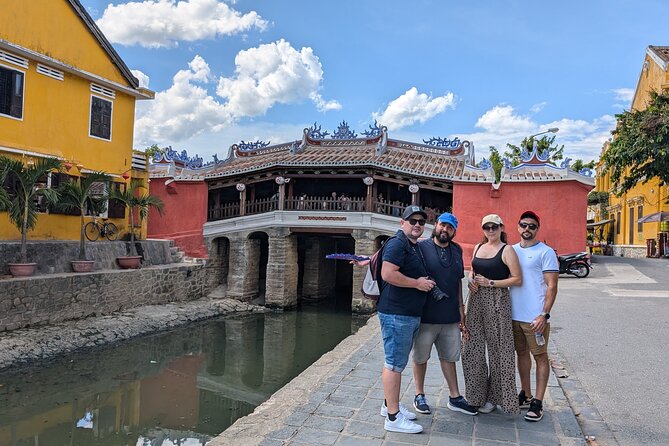
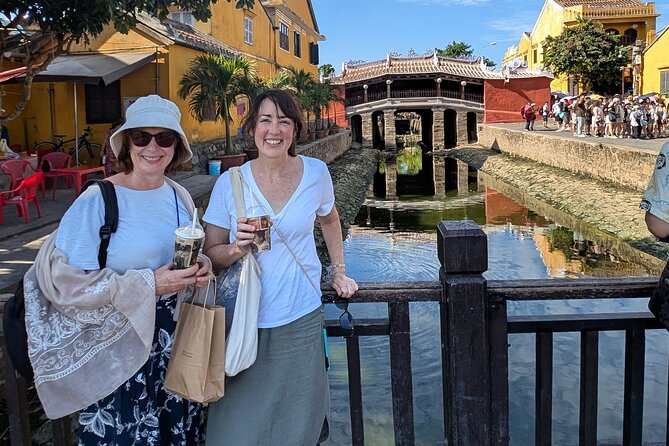
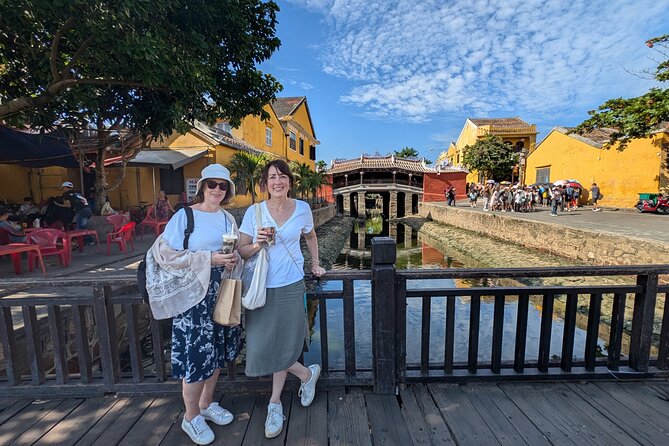
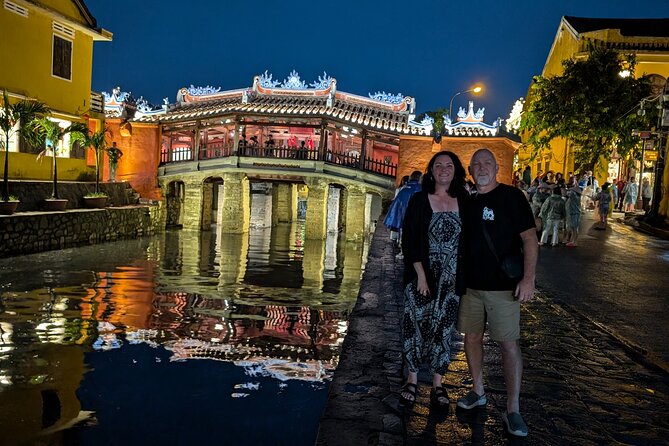
No Hoi An walk feels complete without Japanese Covered Bridge, also called Chùa Cầu. Here, the tour points out that it was built by Japanese craftsmen who were part of a larger community of Japanese merchants active in Hoi An.
If you’ve seen the bridge in photos, you already know it looks special. The difference on this tour is that you don’t stop at aesthetics. You get the human side of the structure: why Japanese merchants would invest in a bridge in this exact spot, and how their presence became part of the town’s physical identity.
This is also where many guides shine, and the reviews back that up: the guide quality really shows at the stops that need explanation. Several past guests specifically praised Hai for clear English, a friendly style, and making the history easy to follow (and even fun).
Don’t rush this one. Even if you only have a few minutes, take a moment to orient yourself around the bridge. You’ll understand more if you see it as a piece of town planning rather than a single landmark.
Tan Ky Ancient House: typical old-town architecture you can spot
The final listed stop is Tan Ky Ancient House. It’s not described as the oldest house in Hoi An, but it’s noted as having among the most typical architecture in the area.
That “typical” detail matters. Instead of chasing the oldest or the most extreme, you get a version of architecture that helps you understand the broader look and feel of the old town. By the time you reach Tan Ky, you’ll be noticing patterns more easily because earlier stops set the cultural and trade context.
Try this simple approach while you’re there: mentally compare what you’ve seen at the previous merchant-related sites. Does it feel like the same “language” of design? That’s the kind of connection the guide’s commentary should help you make.
After the walk: how to use your free afternoon
After the tour, you get free time in the afternoon. That’s a good setup in Hoi An because it lets you choose your pace.
If you want more temple-and-house time, you can return to one of the stops from earlier and spend longer there. If you’d rather shift gears, use the open window to wander side streets, browse small shops, or simply take a slow break.
My practical advice: don’t overbook the rest of the day right after a walking tour. Hoi An can be hot and humid, and the streets can be crowded. Give yourself room to snack and cool down.
Price and value: is $69 worth it?
At $69 per person for a private 2 to 3 hour walk, you’re paying for three things:
- a guided route that hits the main interpretive stops
- someone to translate the town’s “why” behind each site
- the convenience factor (including pickup offered and a mobile ticket)
This isn’t priced like a full-day, multi-vehicle tour. Instead, it’s closer to paying for focus. If you already enjoy history and want the town connected rather than scattered, the cost makes sense.
One more value clue: the tour has strong guest satisfaction, with a 5-star average across 53 reviews and nearly universal recommendation. People highlight the guide’s English, humor, and ability to explain the history in a way that feels personal rather than like a lecture.
A fair consideration: if you hate walking or want to spend lots of time inside each stop, the 2 to 3 hour structure might feel tight. In that case, you may prefer a longer guided experience with fewer stops.
Who this tour suits best (and who might not)
This works best for you if:
- you want a guided orientation to Hoi An in a short window
- you like seeing how different communities shaped the town
- you appreciate a small-group feel and the ability to ask questions
It might be less ideal if:
- you want only “must-see photos” with no talk or context
- you’re looking for a long, slow museum-style pacing
- weather is uncertain (the experience needs good weather)
Tips to make the most of your walk in Hoi An
Because this is a walking route in an old town, you’ll enjoy it more with a few simple moves:
- Wear comfortable shoes with grip. Old streets can be uneven.
- Bring water and plan for shade breaks. Even a short tour adds up in warm weather.
- If you’re taking photos, pause often. Stops like Chùa Cầu benefit from a slow look.
- If your schedule allows, plan the rest of your day lightly. Your afternoon is free, so use it for what you actually feel like doing.
Also, if you care about language and explanation quality, this tour is the kind where your guide can make or break the experience. The fact that Hai is repeatedly praised for English and friendliness is a great sign.
Should you book this Hoi An walking tour?
I’d book it if you want your Hoi An day to feel organized and meaningful without taking over your whole schedule. The museum start helps you connect everything that follows, and the route covers the big “trading port” ideas through Quan Thang House, Phuc Kien Assembly Hall, Chùa Cầu, and Tan Ky Ancient House.
If you’re going on a day with good weather and you’re okay with a brisk walk between stops, this is a smart value play at $69. If you’d rather wander slowly on your own and skip history framing, you might find it more satisfying to explore independently.
FAQ
How long is the Hoi An walking tour?
The tour lasts about 2 to 3 hours.
How much does the private tour cost?
It costs $69.00 per person.
Is pickup included?
Pickup is offered.
Is there an entrance ticket or mobile ticket?
You’ll have a mobile ticket.
How many people are in the group?
The tour has a maximum of 10 travelers.
What places does the tour visit?
You’ll visit Hoi An History Museum, Quan Thang House, Phuc Kien Assembly Hall, Japanese Covered Bridge (Chùa Cầu), and Tan Ky ancient house.
Is the afternoon after the tour free?
Yes, the afternoon is free.
Where does the tour start?
It starts in Hội An, Quảng Nam, Vietnam.
Will I get confirmation after booking?
Confirmation is received at the time of booking.
What happens if the weather is bad?
The experience requires good weather. If it’s canceled due to poor weather, you’ll be offered a different date or a full refund.
Is free cancellation available?
Yes, free cancellation is available, and you can cancel up to 24 hours in advance for a full refund.
More Tours in Hoi An
- From Hoi An: Market Tour, Basket Boat Ride and Cooking Class
★ 4.8 · 2,208 reviews - Hoi An: Basket Boat with Lantern-Making & Cooking Class Tour
★ 4.9 · 1,444 reviews - Coconut Jungle Eco & Hoi An City Tour With Boat Ride
★ 5.0 · 800 reviews - Hoi An: Ancient Town Guided Walking Tour
★ 4.9 · 766 reviews - Hai Van Pass Motorbike Private Tour with Mister T Easy Rider
★ 5.0 · 742 reviews - Hoi An Countryside: Guided Morning or Afternoon Bicycle Tour
★ 4.9 · 686 reviews
More Tour Reviews in Hoi An
- Hoi An: Basket Boat Ride in the Coconut Forest
★ 4.9 · 4,956 reviews - Hoi An: Vietnamese Coffee Culture and Coffee Making Class
★ 4.9 · 4,006 reviews - Hoi An: Vietnamese Foldable Lantern Making Class
★ 4.9 · 3,742 reviews - Cooking Class Hoi An:Local Market, Basket Boat, Fishing & Cooking
★ 5.0 · 3,660 reviews - Hoi An Cooking Class(Market,BasketBoat Crabfishing&Cooking Class)
★ 5.0 · 3,386 reviews - Hoi An: My Son Sanctuary Early Morning w. Champa Food Brunch
★ 4.9 · 2,750 reviews
The Ancient Town on Foot, Continued
- Hoi An: Ancient Town Guided Walking Tour
★ 4.9 · 766 reviews - Hoi An Ancient Town Walking Tour with a Local
★ 5.0 · 517 reviews - The Lantern Lady: Traditional Lantern Class in Old Town
★ 4.9 · 444 reviews - Hoi An Ancient Town – Walking Tour with Local Guide
★ 4.9 · 385 reviews - Hoi An Street Food Walking Tour with Tastings
★ 5.0 · 317 reviews - Hoi An Walking Tour
★ 5.0 · 269 reviews
Just Reviewed: Fresh Hoi An Trips





Ancient Town Walking Tours, compared.
 ★ 4.9Ancient Town Guided Walking TourFrom $2766 reviews
 ★ 5.0Hoi An Ancient Town Walking Tour with a LocalFrom $9517 reviews
 ★ 4.9The Lantern Lady: Traditional Lantern Class in Old TownFrom $6444 reviews
 ★ 4.9Hoi An Ancient Town – Walking Tour with Local GuideFrom $14385 reviews
 ★ 5.0Hoi An Street Food Walking Tour with TastingsFrom $35317 reviews
 ★ 5.0Hoi An Walking TourFrom $69269 reviews
 ★ 5.0Hoi An Night Market – Ancient Town street food tours by NightFrom $45165 reviews
 ★ 4.5Hoi An Ancient Town – Night Market Street Food Tours By NightFrom $55161 reviews
Browse the lists this tour appears in