

Reviewed · CITY TOURS
Hoi An City Tour (Private Tour)
Lantern streets start the story fast. This half-day Hoi An City Tour strings together the Ancient Town’s top sights with enough pause time for photos and a relaxed stroll through the old lanes, not a breathless sprint. I love the iconic Japanese Covered Bridge and the layered architecture you can actually see at Tan Ky Old House.
The main consideration is pacing: it’s about 4 hours, with five structured stops, so you’ll want to keep your expectations realistic about how long you can linger in each place—especially in the theatre and at the market.
In This Review
- Key things to know before you go
- Hoi An for four hours: what a private city loop really means
- Meeting point to market drop-off: plan your afternoon
- Stop 1: Japanese Covered Bridge and the 17th-century connection
- Stop 2: Phuc Kien (Fukian) Assembly Hall and Thien Hau
- Stop 3: Tan Ky Old House—blended styles you can see up close
- Stop 4: Hoi An Traditional Art Performance Theatre as a cool-down
- Stop 5: Hoi An Cloth Market—shopping with a guide who knows the layout
- Street food and drinks: what’s included vs what you pay for
- Your guide matters: English help and names like Theim and Fin
- Price and value: $50 with entrances handled
- Who this tour suits best (and who should skip it)
- Should you book this Hoi An City Tour?
- FAQ
- How long is the Hoi An City Tour (Private Tour)?
- How much does the tour cost?
- What’s included in the tour price?
- What’s not included?
- Where do I meet the tour, and where do I get dropped off?
- Is the tour ticket digital?
- Is the group small?
- What should I know about weather and timing?
Key things to know before you go
- Entrance fees are handled for the Old Town sites on the route, which is a big part of the value.
- You get built-in photo time at every stop, so you’re not stuck listening the whole visit.
- A rest break is scheduled at the Hoi An Traditional Art Performance Theatre in an air-conditioned hall.
- Street food and drinks are optional and paid locally, so budget a little extra if you plan to sample.
- Small group size (up to 15) keeps the flow calmer than big-group tours.
Hoi An for four hours: what a private city loop really means
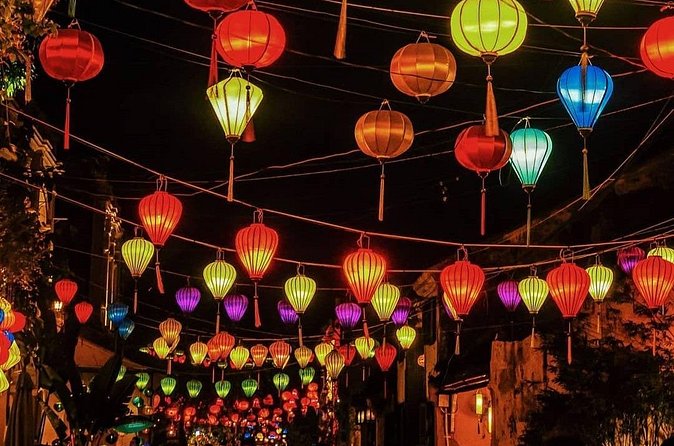
This is designed as a classic, efficient “first taste of Hoi An” route. You’ll focus on the landmarks that define the Ancient Town, plus the indoor theatre stop that can be a lifesaver when the heat or humidity spikes.
Because it’s organized, you also get something you can’t easily DIY: an order that makes sense. You move from major icons to the story-rich buildings, then you step into a show, and you end in the shopping-and-snack zone around the market.
Wider sweeps of the old town and beyond
- Coconut Jungle Eco & Hoi An City Tour With Boat Ride★ 5.0 · 800 reviews
- Da Nang/Hoi An: Hue Imperial City via Hai Van Pass & Lunch★ 4.7 · 753 reviews
- From Hoi An/Da Nang: Hue Imperial City Tour via Hai Van Pass★ 4.5 · 156 reviews
- Basket Boat Tour, Hoi An city, boat trip and lantern release★ 5.0 · 138 reviews
Meeting point to market drop-off: plan your afternoon
You start at Chùa Pháp BảoV8HG+CPQ on Phan Chu Trinh Street, and you finish with a drop-off outside Hoi An Market (so you can keep exploring on your own). That matters because Hoi An is best when you can stay flexible after the tour.
My advice: treat the end point as your second window. After the guide hands off to free time, you’ll be in the right area to do quick browsing, snack stops, and follow-on wandering without backtracking.
Also note: you get a mobile ticket, which keeps your check-in smooth when you’re moving around the old streets.
Stop 1: Japanese Covered Bridge and the 17th-century connection
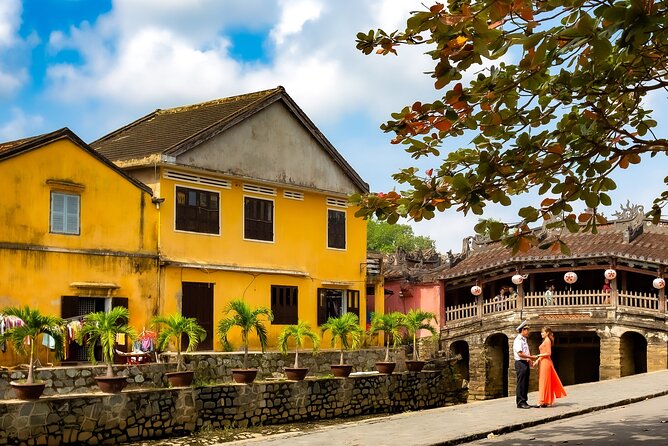
Your first big photo moment is the Japanese Covered Bridge, built by Japanese communities in the 17th century. It’s a wooden bridge with a roofed walkway for shelter and a small temple integrated into the structure.
What I like about starting here is that it sets the tone. Hoi An’s old-town identity isn’t just Vietnamese—it’s a mix of traders, faiths, and craft, and this bridge is the visual shorthand for that blend.
The tour includes admission and gives you about 20 minutes. Use that time wisely: step inside the covered section, look closely at carvings, and take a few angles from both sides before you move on.
Stop 2: Phuc Kien (Fukian) Assembly Hall and Thien Hau
Next up is the Fukian Assembly Hall (Phuc Kien), originally built by Chinese merchants from Fujian in the late 17th century. The hall is dedicated to Thien Hau, the goddess of the sea, who protects sailors.
This stop is valuable because the building isn’t just pretty. It’s tied to how Hoi An worked historically—port life, maritime belief, merchant communities, and a need for shared places of worship and gathering.
You’ll have around 30 minutes here, with admission included. If you like details, focus on the entrance area and the formal architectural rhythm—assembly halls are meant to project order and respect.
A car and guide for your group alone





Stop 3: Tan Ky Old House—blended styles you can see up close
The Old House of Tan Ky is where you slow down a bit and look at architecture like it’s a document. The house has been standing for over 200 years, built by a Vietnamese merchant family, and it blends Vietnamese, Chinese, and Japanese influences.
You can see this kind of mixing in the structure and ornamentation, not just in a description. The tour highlights carved wooden beams and period features inside, so even if you’re not an architecture person, you’ll likely find something eye-catching.
You get about 30 minutes at this stop, with admission included. My practical tip: take 10 minutes to look carefully first, then spend the rest on photos from the spots where you can capture depth—not just the front doorway.
Stop 4: Hoi An Traditional Art Performance Theatre as a cool-down
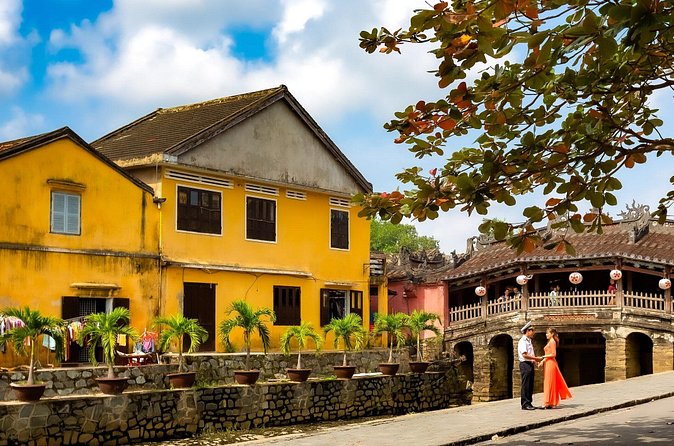
After walking through outdoor sights, you head to the Hoi An Traditional Art Performance Theatre for a planned show. The hall is air-conditioned, and there are restrooms, which makes this part feel like a reset rather than another “stand and wait” stop.
The performance itself is described as local traditional arts—dances, plays, songs, and folk games. If you enjoy cultural context, this is a good bridge between “what you see on the street” and “what people used to entertain and teach.”
Expect around 45 minutes. The practical move here is to arrive ready to sit back. You’re not doing heavy sightseeing during the show, so if you want photos, do them outside before you go in.
Stop 5: Hoi An Cloth Market—shopping with a guide who knows the layout

Your final stop is the Hoi An Cloth Market, where stalls are grouped by category: food and vegetables, souvenirs, and items like silk and leather goods. Your guide takes you on a short walk to introduce the different sections and what’s typically sold where.
Why this ending works: it’s a natural place to convert the morning into the rest of your day. Once you know the layout, you can return later and browse faster—or just buy snacks and small souvenirs without getting turned around.
You’ll have about 30 minutes here. Keep it light and fun, because markets can eat time if you get stuck comparing every thread and stitching style.
Street food and drinks: what’s included vs what you pay for
This tour builds in the chance to taste local street food and refreshing drinks, but those are paid locally. The inclusion is the opportunity and guidance—what to look for, when to try it, and how to fit it into the route.
My take on value: paying locally for food is normal and often worth it in Hoi An. Just keep a small cash buffer so you’re not deciding on the spot with your wallet feeling nervous.
If you have dietary restrictions, you’ll want to mention them to the guide early so they can steer you toward safer options when the food moment comes.
Your guide matters: English help and names like Theim and Fin
For a private or semi-private city tour, the guide is half the product. This one is built around an English-speaking tour guide, and the standout theme from real experiences is how engaging and supportive the guides can be.
Names like Theim and Mr. Fin show up with the same pattern: fluent English, thoughtful explanations, and a caring attitude. One account also notes extra flexibility when plans started late, plus help with a train-ticket issue—exactly the kind of problem-solving that turns a tour into a travel day.
What you should look for in the guide’s approach: they don’t just recite facts. They help you move through the Old Town confidently, then give you room to enjoy the sights at your own speed.
Price and value: $50 with entrances handled
At $50 per person for about 4 hours, the value comes from what’s already covered. You get the entrance fees for the Ancient Town sites listed in the route, plus bottled water and an English-speaking guide.
That’s important because entrance fees in heritage areas add up quickly. If you were to DIY the route, you’d still end up paying for tickets, and you’d spend extra time figuring out the best order and where to go next.
So the fair way to judge this price is: it’s not “cheap,” but it’s structured. You’re buying organization, time efficiency, and a guide who can explain what you’re looking at while the tour keeps moving.
Who this tour suits best (and who should skip it)
This works especially well if:
- It’s your first time in Hoi An and you want the core highlights in one half-day.
- You prefer guided context but still want time to wander and take photos.
- You like indoor cultural stops as a break from heat.
You might want a different option if:
- You hate scheduled theatre or you want purely outdoor time.
- You’re the type who wants to spend an hour in a single house or buy everything in the market. This tour is designed to cover multiple landmarks, not linger endlessly.
The good news: ending outside the market means you can stretch the day yourself if you find a stop you love.
Should you book this Hoi An City Tour?
I’d book it if you want a smart, classic Ancient Town route with entrance fees included and a guide who’s known for being fluent and flexible. It’s especially practical for a first visit because the lineup hits the big icons—bridge, assembly hall, merchant house—then ends in the market zone for easy follow-up.
Skip it or compare first if you’re chasing a slower, more niche experience. This one is designed to be efficient, with a set show time and a set number of stops.
If your goal is to get your bearings fast and leave with photos plus context, this is a solid match—and the market drop-off gives you a natural second act.
FAQ
How long is the Hoi An City Tour (Private Tour)?
It’s about 4 hours.
How much does the tour cost?
The price is $50.00 per person.
What’s included in the tour price?
It includes entrance fees for the Old Town sites on the itinerary, bottled water, and an English-speaking tour guide.
What’s not included?
Personal expenses and any services not mentioned are not included. Street food and refreshing drinks are available but paid locally.
Where do I meet the tour, and where do I get dropped off?
You start at Chùa Pháp Bảo V8HG+CPQ, Đ. Phan Chu Trinh, Phường Minh An, Hội An. You end with a drop-off outside Hoi An Market at 21 Hoàng Diệu, Cẩm Châu, Hội An.
Is the tour ticket digital?
Yes, you receive a mobile ticket.
Is the group small?
Yes. The maximum group size is 15 travelers.
What should I know about weather and timing?
The experience requires good weather. If it can’t run due to poor weather, you’ll be offered a different date or a full refund.
The Old Town, Corner to Corner
- Coconut Jungle Eco & Hoi An City Tour With Boat Ride
★ 5.0 · 800 reviews - Da Nang/Hoi An: Hue Imperial City via Hai Van Pass & Lunch
★ 4.7 · 753 reviews - From Hoi An/Da Nang: Hue Imperial City Tour via Hai Van Pass
★ 4.5 · 156 reviews - Basket Boat Tour, Hoi An city, boat trip and lantern release
★ 5.0 · 138 reviews - Hoi An/Da Nang : Private Day Trip to Imperial City – Hue
★ 5.0 · 125 reviews - From Hoian & Danang: Hue City Tour with HaiVan Pass
★ 4.5 · 98 reviews
More Tours in Hoi An
- From Hoi An: Market Tour, Basket Boat Ride and Cooking Class
★ 4.8 · 2,208 reviews - Hoi An: Basket Boat with Lantern-Making & Cooking Class Tour
★ 4.9 · 1,444 reviews - Coconut Jungle Eco & Hoi An City Tour With Boat Ride
★ 5.0 · 800 reviews - Hoi An: Ancient Town Guided Walking Tour
★ 4.9 · 766 reviews - Hai Van Pass Motorbike Private Tour with Mister T Easy Rider
★ 5.0 · 742 reviews - Hoi An Countryside: Guided Morning or Afternoon Bicycle Tour
★ 4.9 · 686 reviews
More Tour Reviews in Hoi An
- Hoi An: Basket Boat Ride in the Coconut Forest
★ 4.9 · 4,956 reviews - Hoi An: Vietnamese Coffee Culture and Coffee Making Class
★ 4.9 · 4,006 reviews - Hoi An: Vietnamese Foldable Lantern Making Class
★ 4.9 · 3,742 reviews - Cooking Class Hoi An:Local Market, Basket Boat, Fishing & Cooking
★ 5.0 · 3,660 reviews - Hoi An Cooking Class(Market,BasketBoat Crabfishing&Cooking Class)
★ 5.0 · 3,386 reviews - Hoi An: My Son Sanctuary Early Morning w. Champa Food Brunch
★ 4.9 · 2,750 reviews
Just Reviewed: Fresh Hoi An Trips




City Tours, compared.
 ★ 5.0Coconut Jungle Eco & Hoi An City Tour With Boat RideFrom $42800 reviews
 ★ 4.7Hue Imperial City via Hai Van Pass & LunchFrom $9753 reviews
 ★ 4.5Hue Imperial City Tour via Hai Van PassFrom $45156 reviews
 ★ 5.0Basket Boat Tour, Hoi An city, boat trip and lantern releaseFrom $39138 reviews
 ★ 5.0Private Day Trip to Imperial City – HueFrom $19125 reviews
 ★ 4.5From Hoian & Danang: Hue City Tour with HaiVan PassFrom $4098 reviews
 ★ 5.0Hue City Tour From Hoi An- Hue Day Tour From Hoi AnFrom $11593 reviews
 ★ 4.5Hue city tour 1 day from Da Nang / Hoi AnFrom $6992 reviews
Browse the lists this tour appears in