
Reviewed · RICE FARMING & WATER BUFFALO
Farming with the Local Famers
Hoi An is famous, but this is local farming. In about 3 hours, the Tra Que Herb Village outing lets you get close to how vegetables actually grow, including the clever seaweed-to-fertilizer cycle. I also like that lunch and round-trip pickup from Hoi An are part of the deal, so the day stays easy. One thing to consider: it’s outdoors and activity-based, so if weather turns sour, the experience may be moved or refunded.
You’ll start with welcome drinks and a guided loop through the village’s farms, ponds, and gardens, plus a look at how the place works as a living riparian ecosystem. Guides with names you might see attached to this tour include Spring, Xuan, Trang, and Kun, and the consistent theme is patient teaching—especially when you’re getting hands-on.
In This Review
- Key highlights worth prioritizing
- Tra Que Herb Village: farm life you can understand fast
- Price and logistics: what you’re really paying for
- From Tra Que Water Wheel to welcome drinks
- Farms, ponds, and gardens: the riparian ecosystem lesson
- Bamboo basket boat and buffalo ride: farm scenery with a story
- Joining the local farmers: planting, making beds, and watering
- The massage pause: head-shoulder-foot reset
- Lunch and the traditional meal: where the day closes
- Group size and vibe: small, guided, and hands-on
- Weather matters: when to expect a change of plan
- Who this tour suits best
- Should you book Farming with the Local Famers at Tra Que Herb Village?
- FAQ
- How long is the Farming with the Local Famers tour?
- Where is the tour located?
- What does the tour cost?
- Do you get lunch on this tour?
- Is pickup from Hoi An offered?
- How big is the group?
- What rides and activities are included?
- Will I need a ticket on my phone?
- What happens if the weather is bad?
- What is the cancellation window?
Key highlights worth prioritizing
- Seaweed becomes fertilizer: you learn how local farmers turn harvested seaweed into plant nutrition
- Farms + ponds + gardens: you’re not just walking fields—you see the full water ecosystem
- Bamboo basket boat + buffalo ride: two classic Tra Que moments, with real farm scenery
- Join the planting work: you help with tasks like making beds, transplanting, and watering
- Head-shoulder-foot massage: a built-in reset before lunch
- Small group size: capped at 15 travelers, which helps you actually interact
Tra Que Herb Village: farm life you can understand fast
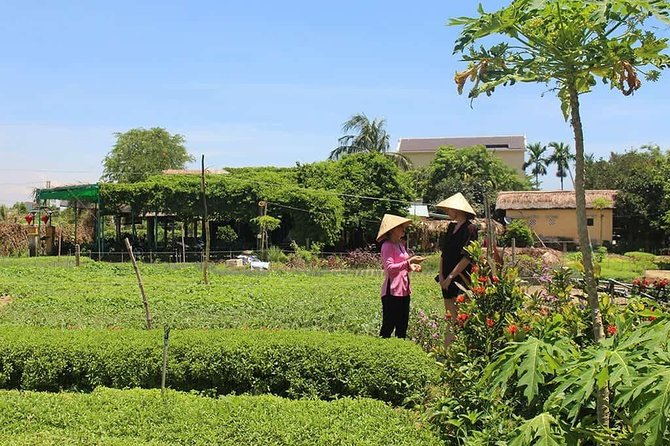
Tra Que Herb Village sits on the outskirts of Hoi An, and the big advantage of this tour is focus. You’re not touring a factory or watching a staged performance. You’re learning how the village’s farmland and waterways support each other—so when you later see a vegetable bed, it makes sense why it looks the way it does.
I especially like that the guide connects the dots: seaweed harvested for fertilizer, ponds that support fish, and day-to-day farm routines that include animals like buffalo and birds. That “system” view is what makes it more than a quick countryside stroll.
The other strong point is pace. You get transportation from Hoi An, a planned sequence (including the Tra Que Water Wheel stop), and included lunch. That matters because in Hoi An, the temptation is to stack tours and end up feeling rushed. This one builds in downtime with the massage, so you leave feeling like you had a real half-day activity, not just a checklist.
Ankle-deep in the paddies with the buffalo
- Funny day cycling, Buffalo riding and Basket boat★ 4.9 · 141 reviews
- BUFFALO RIDING -BASKET BOAT & BIKE TOUR-HOI AN★ 4.7 · 124 reviews
- Hoi An countryside cycling Tour,Basket Boat-organic farming-lunch★ 5.0 · 85 reviews
- Farming & Cooking Class in Hoi An – Small Group Tour★ 5.0 · 71 reviews
Price and logistics: what you’re really paying for
At $40 per person for roughly 3 hours, this is priced like a focused experience: not just sightseeing, but rides, farm participation, and food.
What makes the value practical:
- Pickup offered from Hoi An (so you’re not figuring out transport on your own)
- Lunch included, which saves money and time
- Mobile ticket, which keeps the start of the day simple
- Small-group limit (up to 15), so you’re less likely to feel lost in a crowd
If you’re the kind of traveler who likes structured time—short, meaningful, and with clear activities—this price can feel fair. If you’re looking for a long, independent countryside day where you control every stop, this tour might feel a bit “planned.” But that planning is also the point.
From Tra Que Water Wheel to welcome drinks
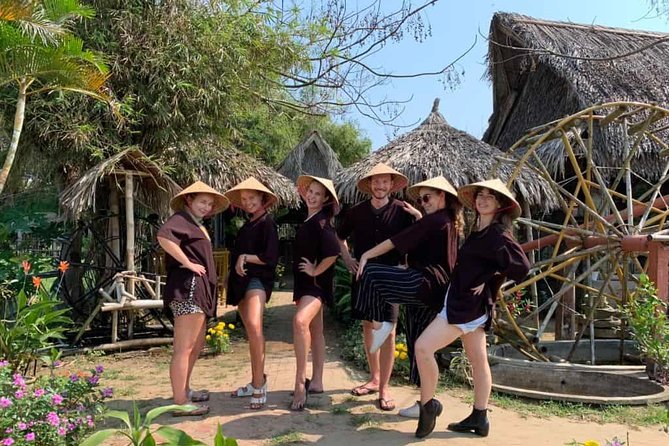
The tour’s flow starts with Stop 1: Tra Que Water Wheel, which is a nice way to orient yourself right away. A water wheel isn’t just a photo stop; it signals that this area is built around water management. In a farming village, that’s not decoration—it’s infrastructure.
Next comes the welcome drinks. It sounds small, but it’s a smart touch in a heat-heavy region. You’re about to be outside, walking through farms and gardens, and learning hands-on tasks—so a quick drink before you start matters more than it seems.
Then the guide brings you into the village story: where the herb farm life fits in historically, and how today’s farming practices rely on the surrounding ponds and gardens. This is the part that helps you see beyond the obvious green scenery.
Farms, ponds, and gardens: the riparian ecosystem lesson
Here’s where the tour becomes genuinely different from a standard market-and-museum day. You’ll visit farms, ponds, and vegetable gardens on the outskirts of Hoi An, guided in a way that connects farming to water.
You’ll see how locals use seaweed as fertilizer and how the farming environment works like a system:
- Seaweed harvested to fertilizer for vegetables
- Ponds and fish as part of the ecosystem
- Animals included in the working rhythm, with buffalo, chicken, and duck mentioned in the experience
This matters because herb farming isn’t just planting seeds. It’s shaping soil, feeding plants, managing water, and keeping the ecosystem balanced. When your guide explains the cause-and-effect, the tasks you do later feel less random—and more like you’re participating in a real workflow.
A few more Hoi An trips worth weighing before you book:


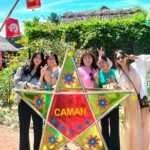
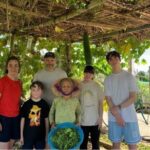
Bamboo basket boat and buffalo ride: farm scenery with a story
One of the fun reasons to pick this tour is that it doesn’t stop at walking. You get farm-focused rides that match the setting.
Expect both:
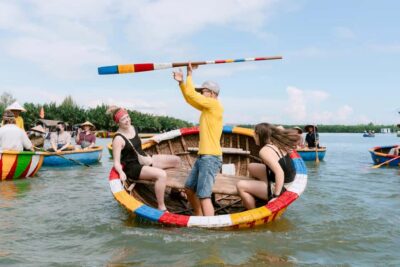
- A bamboo basket boat ride (rowed on the water)
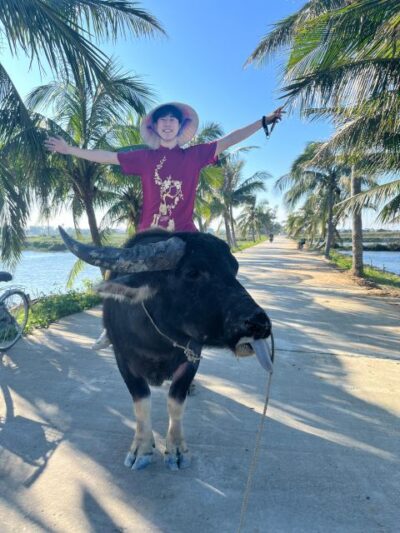
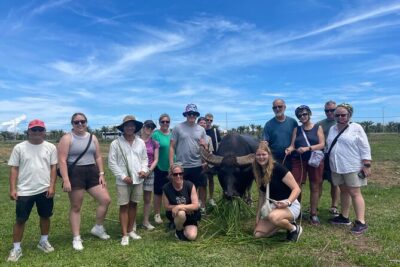
- A buffalo ride
These moments do two things. First, they show you the village from the water and from the animal perspective, not just from a path. Second, they keep energy up during the middle of the day, when you might otherwise get tired.
Practical tip from the nature of the activities: you’ll likely be handling your day with “outdoor stamina” in mind. Comfortable shoes and clothes you don’t stress about are a safe idea since you’re participating in farm tasks and moving through fields.
Joining the local farmers: planting, making beds, and watering
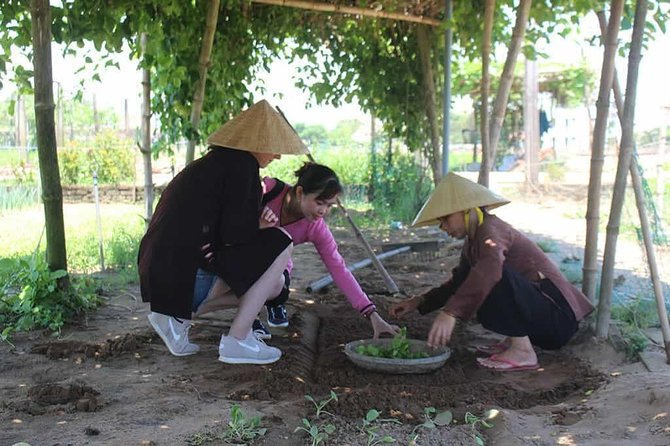
The hands-on part is where this tour earns its high satisfaction. You don’t just watch. You join in farm activities tied to the local method.
You may take part in tasks like:
- Using seaweed for fertilizer
- Digging and land boarding (bed shaping)
- Making beds
- Transplanting vegetables
- Watering the plants
This is a great fit if you want to come home with understanding, not just photos. There’s something oddly satisfying about doing small physical work that directly links to what you’ll eat later.
If you’re traveling with kids, this kind of activity often lands well because it’s interactive. If you’re traveling with limited mobility, you’ll want to consider how comfortable you are with outdoor walking and hands-on tasks—because this isn’t a “stand still and look” experience.
The massage pause: head-shoulder-foot reset
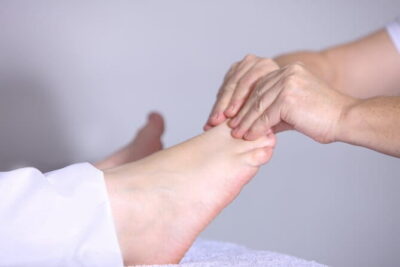
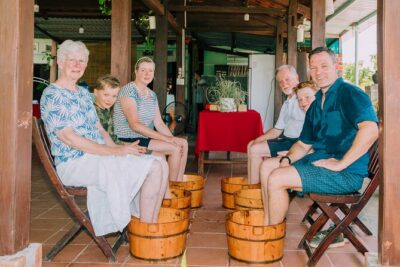
Before lunch, the tour includes a head-shoulder-foot massage. After farming activities, biking around countryside (if offered in your specific session), and water rides, this is the built-in recovery moment.
I like this placement. It prevents the “end of tour crash,” so you can actually enjoy lunch instead of feeling drained. It also turns the day into a rhythm: activity, learning, physical reset, then food.
Lunch and the traditional meal: where the day closes
Lunch is included, so you don’t have to plan food mid-tour. The experience ends with a traditional meal, which is a nice payoff after all that farming context.
This is also where you’ll see why the earlier explanations mattered. You’re not just eating vegetables—you’ve heard how they’re grown, fertilized, and cared for in this local system.
If you’re the type who gets annoyed by “tour lunch” food that feels generic, this part is worth noting: the meal is positioned as part of the farm-and-village day, not a rushed restaurant stop.
Group size and vibe: small, guided, and hands-on
With a maximum of 15 travelers, the tour tends to feel more personal than big-bus day trips. That’s important when you’re doing activities like planting, because people need time to try, ask questions, and keep moving at a farm pace.
In past outings, guides like Spring, Xuan, Trang, and Kun have been associated with the experience, and that diversity of names still points to one thing: the guiding style is built around teaching and helping people participate.
Weather matters: when to expect a change of plan
This tour requires good weather. If it’s canceled due to poor weather, you’ll be offered a different date or a full refund. That’s the kind of clarity you want with an outdoor farm experience.
If you’re visiting Hoi An on a tight schedule, it’s smart to book this for a day you can shift a little if nature doesn’t cooperate.
Who this tour suits best
You’ll likely enjoy this most if you want:
- A short Hoi An countryside day that stays focused on one place
- Hands-on learning about vegetable farming practices
- A mix of scenery (ponds and gardens) plus working activities
- Included lunch and pickup so you don’t lose half the day to logistics
It can also work well as a family outing, since the experience includes interactive activities and time to relax with the massage.
If you want a quiet, purely scenic tour with minimal participation, this one may feel too hands-on. But if you like doing, asking, and learning, it fits.
Should you book Farming with the Local Famers at Tra Que Herb Village?
Yes—if your ideal Hoi An day includes real farm life, not just photo stops. The best reasons to book are practical: round-trip pickup, lunch included, small group size, and a lineup that moves beyond walking into bamboo water time, buffalo riding, and actual planting.
Skip it only if outdoor weather and physical participation make you uneasy. Since the day runs for about 3 hours and is activity-based, you’ll get the most out of it when you’re ready for hands-on countryside work and you don’t mind being outdoors.
If you’re looking for a memorable way to understand where Hoi An’s local food comes from, this is one of the cleaner, more meaningful half-day choices.
FAQ
How long is the Farming with the Local Famers tour?
It runs for about 3 hours.
Where is the tour located?
It takes place in Hoi An, Vietnam, around Tra Que Herb Village on the outskirts of the city.
What does the tour cost?
The price is $40.00 per person.
Do you get lunch on this tour?
Yes. Lunch is included.
Is pickup from Hoi An offered?
Yes, round-trip transportation from Hoi An is offered.
How big is the group?
The tour has a maximum of 15 travelers.
What rides and activities are included?
The experience includes a buffalo ride and a bamboo basket boat ride, plus guided farm activities and a head-shoulder-foot massage.
Will I need a ticket on my phone?
Yes. It uses a mobile ticket.
What happens if the weather is bad?
If it’s canceled due to poor weather, you’ll be offered a different date or a full refund.
What is the cancellation window?
You can cancel up to 24 hours in advance for a full refund. If you cancel less than 24 hours before the experience starts, the amount you paid won’t be refunded.
More Farms in Hoi An
- Cocolocal Farm Cooking Class with market tour and basket boat
★ 5.0 · 231 reviews - Hoi An countryside cycling Tour,Basket Boat-organic farming-lunch
★ 5.0 · 85 reviews - Rural Hoi An Cycling, Cooking Class at Organic Farm
★ 5.0 · 72 reviews - Farming & Cooking Class in Hoi An – Small Group Tour
★ 5.0 · 71 reviews - Rural Cycle, Market Tour, Basket Boat & Organic Farm Cooking
★ 5.0 · 64 reviews - Cooking Class Hoi An – Organic Garden – Farming Tour-Handicrafts
★ 5.0 · 56 reviews
More Tour Reviews in Hoi An
- Hoi An: Basket Boat Ride in the Coconut Forest
★ 4.9 · 4,956 reviews - Hoi An: Vietnamese Coffee Culture and Coffee Making Class
★ 4.9 · 4,006 reviews - Hoi An: Vietnamese Foldable Lantern Making Class
★ 4.9 · 3,742 reviews - Cooking Class Hoi An:Local Market, Basket Boat, Fishing & Cooking
★ 5.0 · 3,660 reviews - Hoi An Cooking Class(Market,BasketBoat Crabfishing&Cooking Class)
★ 5.0 · 3,386 reviews - Hoi An: My Son Sanctuary Early Morning w. Champa Food Brunch
★ 4.9 · 2,750 reviews
A Day in the Rice Fields
- Funny day cycling, Buffalo riding and Basket boat
★ 4.9 · 141 reviews - BUFFALO RIDING -BASKET BOAT & BIKE TOUR-HOI AN
★ 4.7 · 124 reviews - Hoi An countryside cycling Tour,Basket Boat-organic farming-lunch
★ 5.0 · 85 reviews - Farming & Cooking Class in Hoi An – Small Group Tour
★ 5.0 · 71 reviews - Cooking Class Hoi An – Organic Garden – Farming Tour-Handicrafts
★ 5.0 · 56 reviews - Hoi An Farming And Fishing Life
★ 5.0 · 45 reviews
Just Reviewed: Fresh Hoi An Trips

Rice Farming & Water Buffalo, compared.
 ★ 4.9Funny day cycling, Buffalo riding and Basket boatFrom $27141 reviews
 ★ 4.7BUFFALO RIDING -BASKET BOAT & BIKE TOUR-HOI ANFrom $29124 reviews
 ★ 5.0organic farming-lunchFrom $3785 reviews
 ★ 5.0Farming & Cooking Class in Hoi An – Small Group TourFrom $3871 reviews
 ★ 5.0Cooking Class Hoi An – Organic Garden – Farming Tour-HandicraftsFrom $3356 reviews
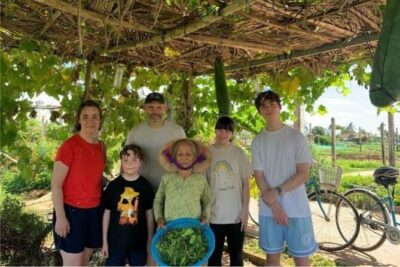 ★ 5.0Hoi An Farming And Fishing LifeFrom $4445 reviews
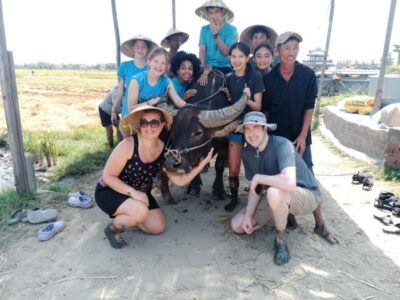 ★ 4.9Countryside by Cycling, Buffalo Riding & Do FarmingFrom $3436 reviews
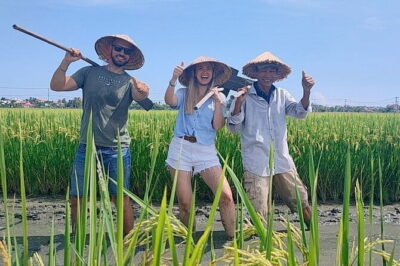 ★ 5.0Small Group Bicycle Tour with Farming and Fishing ExperienceFrom $3131 reviews
Browse the lists this tour appears in