
Reviewed · HOI AN COOKING CLASSES
Farming- Market- Coffee- Cooking (JHA1)
There’s something satisfying about turning ingredients into dinner. This Hoi An class strings together organic farming time, a market run, a coffee break, and then cooking 4 typical dishes at a local home. It’s built for hands-on learning, with plenty of time to ask questions and actually see how ingredients move from soil to plate.
I like the small-group feel and the host-led pacing. The tour is capped at max 2 travelers, which means you’re not stuck listening from the back row. I also like that it’s not just theory: you shop for what you’ll cook, then you cook it yourself at Jolie’s place, with passion fruit juice and filtered water included.
One possible drawback: it’s weather-dependent and it runs about 5 hours. If you’re hoping for a flexible, stop-anywhere kind of day, you’ll want to plan around the set timing.
In This Review
- Key things I’d circle on your map
- How this 5-hour experience actually feels in Hoi An
- Tra Que Vegetable Village: learning what farmers do, not just what you eat
- The Hoi An market run: choosing ingredients that match your cooking plan
- Coffee break at a local café: energy reset and story time
- Jolie’s home kitchen: welcome drink, local stories, then cooking 4 dishes
- The practical structure that makes it work
- Vegetarian setup
- What you might take home
- Drinks and meal value: what’s included and why it matters
- Price and logistics: is $60 a fair deal for what you get?
- Who this tour fits best (and who might prefer something else)
- Final take: should you book Farming-Market-Coffee-Cooking?
- FAQ
- How long is the Farming-Market-Coffee-Cooking experience?
- What does the price include?
- Where do I meet the tour?
- Are vegetarians welcome?
- How many dishes will I cook?
- Is coffee included?
- What’s the group size?
- Is pickup included?
- FAQ
- What if the weather is bad?
- Can I cancel for a full refund?
- Is there an extra fee on public holidays?
Key things I’d circle on your map
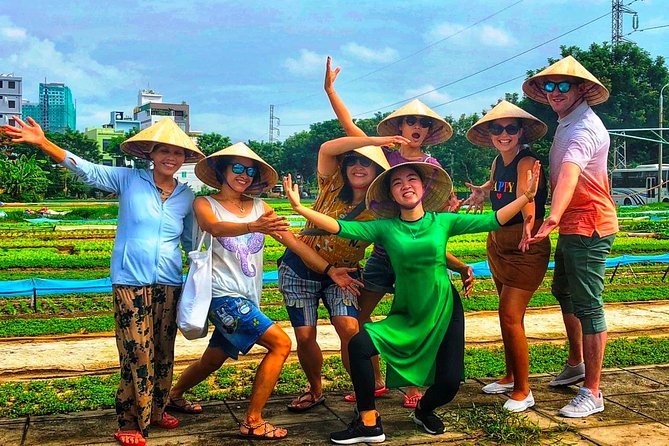
- Tra Que vegetable village farming time: about 30 minutes learning from local farmers
- Market shopping with purpose: you buy ingredients specifically for your cooking session
- Coffee break in a local shop: a short pause to reset and swap stories
- Cooking at Jolie’s home: welcome drink, local-life stories, then hands-on cooking of 4 dishes
- Real drinks included: free-flow passion fruit juice and filtered water, plus a welcome drink
- A music moment: there’s piano/guitar time if you can play
How this 5-hour experience actually feels in Hoi An
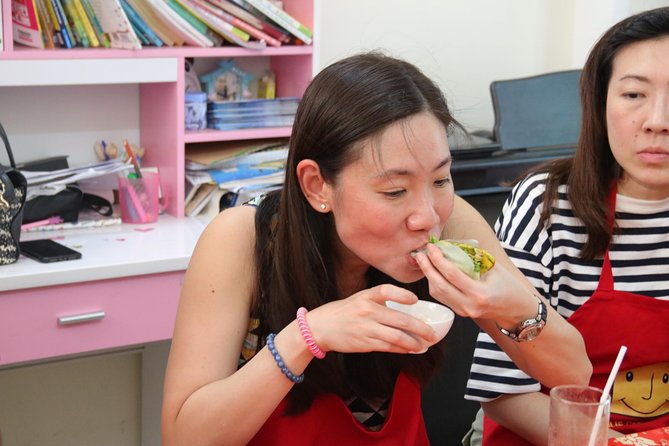
This is a full “food day,” not a quick demo. The flow is simple: you start away from town with the farming side, you return to Hoi An for the market and coffee, and you end at a home kitchen where you cook and eat. For me, that matters because it connects the steps instead of making them feel random.
You’ll also get a close-up view of everyday Vietnamese routines. The day includes time to talk with local farmers, then a market session focused on how Vietnamese shops work, not just what to buy. Even the break at the coffee shop is part social, part orientation.
The hosts are central to the tone. Jolie is specifically mentioned as the person welcoming you and sharing local-life stories. In one recent review, Rosie is praised for guiding guests through how things are grown, where to shop, and then cooking the meals—so expect a warm, personal vibe rather than a strict classroom lecture.
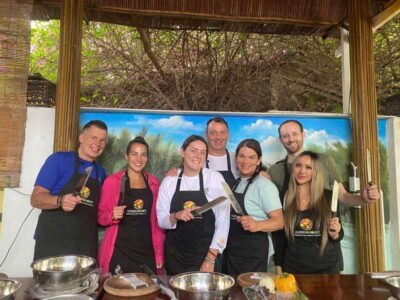
Aprons on for another Hoi An kitchen
- Cooking Class Hoi An:Local Market, Basket Boat, Fishing & Cooking★ 5.0 · 3,660 reviews
- Hoi An Cooking Class(Market,BasketBoat Crabfishing&Cooking Class)★ 5.0 · 3,386 reviews
- From Hoi An: Market Tour, Basket Boat Ride and Cooking Class★ 4.8 · 2,208 reviews
- Hoi An: Basket Boat with Lantern-Making & Cooking Class Tour★ 4.9 · 1,444 reviews
Tra Que Vegetable Village: learning what farmers do, not just what you eat
Your morning begins at 53 Dinh Tiên Hoàng in Sơn Phong, then heads to an organic garden in Hoi An. You’ll spend about 30 minutes with local farmers to understand real life on Vietnamese farms.
This part is valuable because it answers a quiet question most people never ask: why do vegetables taste the way they do? When you see farming practices up close, the ingredients in your market basket start making more sense. You’re not just buying herbs and greens because they look right—you’re learning how they’re raised and why they’re chosen.
What to watch for here: gardens and rural paths can involve walking on uneven ground, depending on the farm area. Comfortable shoes help. Also, mornings can be cooler, but you may still want light sun protection.
One more practical point: because the farming stop is short (about 30 minutes), you’ll get the key ideas, but you won’t have hours to roam. That’s a good fit if you want a compact, efficient day that still feels authentic.
The Hoi An market run: choosing ingredients that match your cooking plan
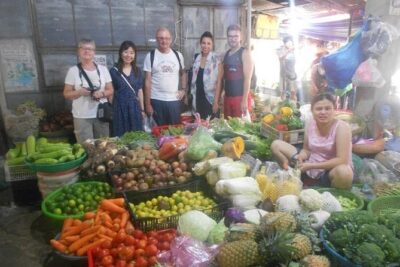
After the farm time, you head to the local market in Hoi An to buy fresh products for the class. The key detail is that this shopping isn’t generic sightseeing. You’re choosing ingredients for what you’ll cook later, and you’ll learn how Vietnamese shopping works along the way.
Why that’s worth your time: markets are where you learn the “why” behind taste. You’ll notice how vendors display items, how produce is selected, and how recipes adapt to what’s available and fresh. Even if you’ve cooked Vietnamese food at home before, buying the ingredients in context usually improves your results.
Also, this is where small-group size helps. With up to 2 travelers, you’re more likely to ask practical questions like ingredient swaps, spice levels, or what to do if you can’t find a specific item back home.
If you have dietary needs: the class welcomes vegetarians with vegetarian ingredients. That means you can still enjoy the same structure—farm-to-market selection—without feeling like you’re on the side.
Coffee break at a local café: energy reset and story time
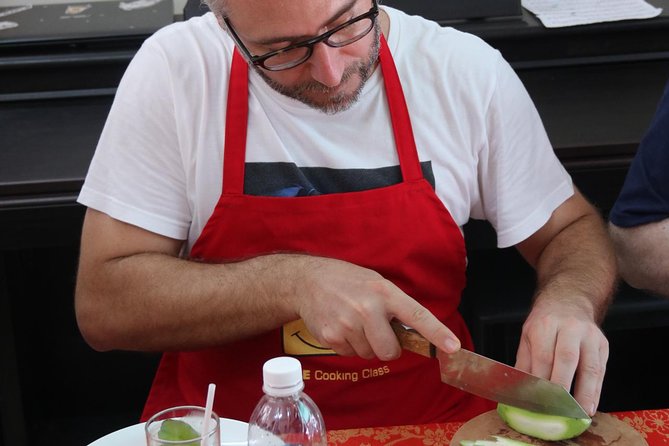
Around 9:45, there’s a break for coffee at a local coffee shop. You’ll also get time to share stories with others.
This matters more than it sounds. By the time you reach cooking, your brain needs a pause so the later steps stick. Coffee breaks also give you a casual chance to learn how locals talk about food—what’s seasonal, what people eat at home, and which flavors are considered normal in daily life.
You’re not committing to a long café detour here. It’s a short reset, then you move on to Jolie’s home, so you still get a full cooking block afterward.
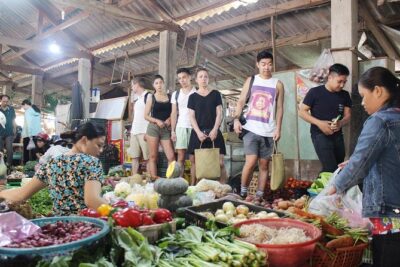
Baskets and haggling at the morning market
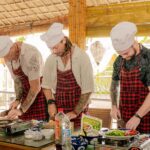


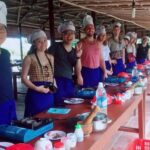
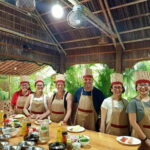
Jolie’s home kitchen: welcome drink, local stories, then cooking 4 dishes
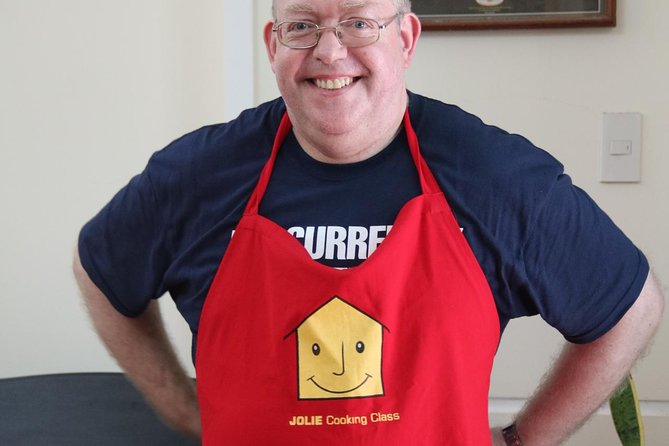
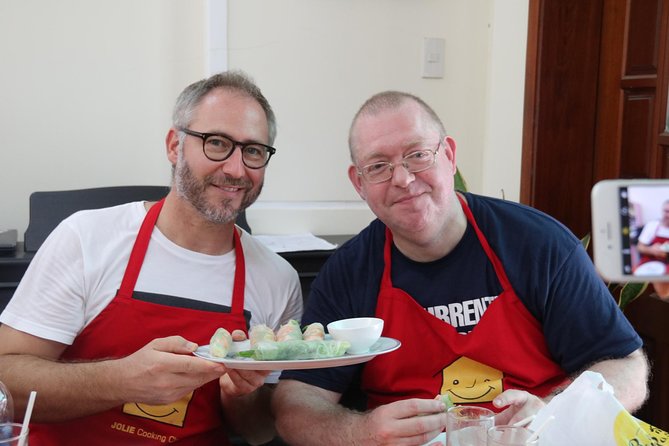
You’ll head to Jolie’s home for a welcome drink, then listen to stories about local life. After that, it’s time to cook—using the ingredients you bought earlier.
This is the heart of the experience. A lot of cooking classes stop at chopping and tasting. Here, the day is built around a progression: learn where ingredients come from, pick them at the market, then cook them in the same story. That makes the food feel like something you earned.
The practical structure that makes it work
- You get a welcome drink first, so the mood shifts from tour mode into host mode.
- Then you cook 4 typical dishes, and the tour includes a meal around 12:30 when you enjoy what you made.
- After lunch, there’s a small window for a playful send-off: playing guitar if you can (piano/guitar is mentioned as being available), before you’re returned toward your accommodation with a free drop-off service.
Vegetarian setup
The tour explicitly welcomes vegetarians with vegetarian ingredients. That’s important because it signals you won’t just be handed a sad version of the meal. You should expect the same class flow—market selection and cooking—adjusted for vegetarian eating.
What you might take home
Even without exact recipe details listed, the value is in technique and decision-making. By cooking with your selected ingredients, you’ll likely learn:
- how herbs and greens are handled in Vietnamese dishes,
- how balance is built using common flavor anchors,
- and how to think about substitutes.
If you like to cook at home, this is the kind of experience that gives you repeatable habits, not just memories.
Drinks and meal value: what’s included and why it matters
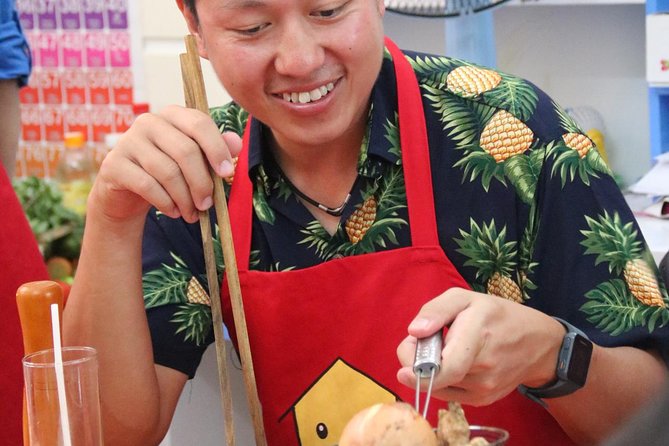
The tour includes lunch or dinner depending on your option (the schedule shown includes eating at 12:30). On top of that, you get drinking water.
It also includes free-flow fresh passion fruit juice and filtered water during the experience. There’s also a welcome drink at Jolie’s home.
Value note: food experiences in Hoi An can add up quickly when you pay for snacks, drinks, and meals separately. Here, the class builds in the meal and drinks, so you’re paying one price for the whole day’s feeding and instruction.
Price and logistics: is $60 a fair deal for what you get?
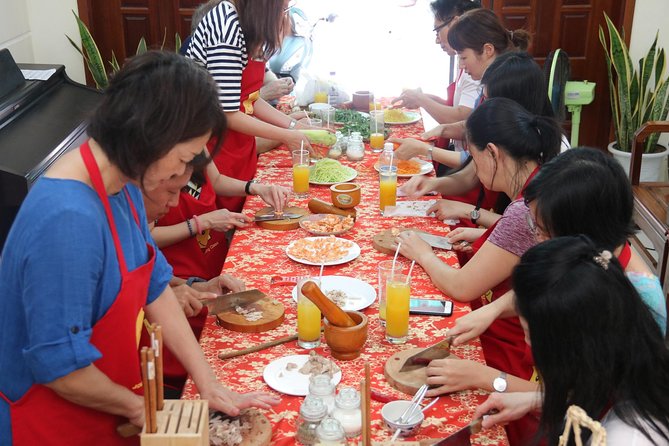
At $60 per person for around 5 hours, this is priced like a small-group, host-led cooking day, and the included parts make the math reasonable. You get:
- farming time with local farmers,
- market shopping,
- coffee break,
- welcome drink and stories,
- hands-on cooking of 4 dishes,
- and the meal plus drinks (passion fruit juice, filtered water).
Also, the tour caps at 2 travelers, which is a big deal for value because it reduces the “everyone watches while someone cooks” problem. You should get more personal attention per minute.
Logistics are fairly simple, but there’s a catch to keep in mind: pick up and drop off aren’t included as listed, yet the itinerary mentions returning via a free drop-off service. In practice, you should expect to meet at the starting address (53 Dinh Tiên Hoàng) rather than being collected from your hotel. Then you’ll likely be returned nearby.
One more cost consideration: if your date falls on a public holiday, there’s a USD 9 per person surcharge payable on site.
Who this tour fits best (and who might prefer something else)
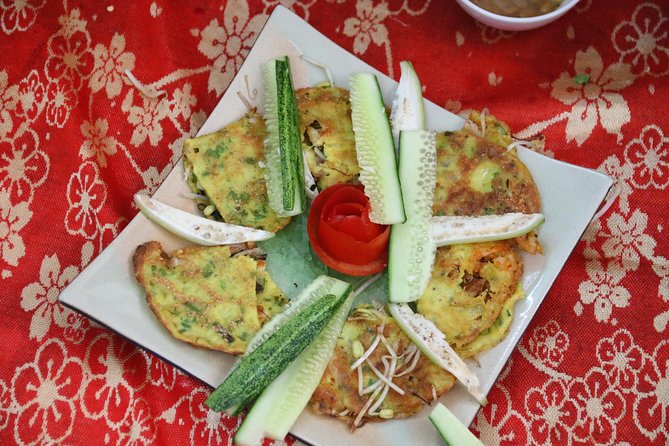
This is a great fit if you:
- want a hands-on cooking experience (not a passive tasting tour),
- like food days that connect farming, shopping, and cooking,
- enjoy small-group conversations where you can ask questions,
- are traveling solo or as a couple and want attention from the host.
It also works for vegetarians, which is still not true for many cooking classes.
You might skip it if you:
- dislike set schedules,
- need fully guaranteed outcomes in bad weather (the experience requires good weather),
- or want a long, self-paced market wander instead of a guided shopping list.
Final take: should you book Farming-Market-Coffee-Cooking?
If you want one clear, value-heavy way to learn Vietnamese cooking in Hoi An, this is a strong choice. The combination of Tra Que farming time, market ingredient buying, and then cooking 4 dishes at Jolie’s home gives you a story you can taste. Add in included drinks and a small group size, and it feels like you’re paying for access, not just food.
I’d book it if you’re the type who likes to understand where ingredients come from and then use that knowledge at home. Just plan for the weather, wear comfortable shoes for the farm stop, and come with a light appetite—you’ll be eating what you make.
FAQ
How long is the Farming-Market-Coffee-Cooking experience?
It lasts about 5 hours.
What does the price include?
The price includes lunch or dinner (depending on the option), fun included, drinking water, and free-flow fresh passion fruit juice plus filtered water.
Where do I meet the tour?
You meet at 53 Đinh Tiên Hoàng, Sơn Phong, Hội An, Quảng Nam 51308, Vietnam.
Are vegetarians welcome?
Yes. All vegetarians are welcome with vegetarian ingredients.
How many dishes will I cook?
You will cook 4 typical dishes.
Is coffee included?
Yes. You’ll take a break to have a cup of coffee at a local coffee shop.
What’s the group size?
The tour/activity has a maximum of 2 travelers.
Is pickup included?
Pick up is not included. You start at the meeting point, and the tour returns via a free drop-off service.
FAQ
What if the weather is bad?
The experience requires good weather. If it’s canceled due to poor weather, you’ll be offered a different date or a full refund.
Can I cancel for a full refund?
Yes. You can cancel up to 24 hours in advance for a full refund. If you cancel less than 24 hours before the start time, the amount paid is not refunded.
Is there an extra fee on public holidays?
Yes. A surcharge of USD 9 per person applies if your tour date is on a public holiday, payable onsite.
Hoi An by the Cup
- Hoi An: Vietnamese Coffee Culture and Coffee Making Class
★ 4.9 · 4,006 reviews - Early Morning My Son Sanctuary Trip w. Champa Food & Coffee
★ 5.0 · 629 reviews - Vietnamese Culture and Coffee Making Class
★ 5.0 · 497 reviews - Hoi An: My Son Early Morning with Banh My and Coffee 6 am
★ 4.7 · 205 reviews - Hoi An: Vietnamese Coffee Making Workshop at Local Roastery
★ 4.8 · 174 reviews - Hoi An: Lantern and Coffee Making Class
★ 5.0 · 154 reviews
Morning Markets by the River
- Cooking Class Hoi An:Local Market, Basket Boat, Fishing & Cooking
★ 5.0 · 3,660 reviews - Hoi An Cooking Class(Market,BasketBoat Crabfishing&Cooking Class)
★ 5.0 · 3,386 reviews - From Hoi An: Market Tour, Basket Boat Ride and Cooking Class
★ 4.8 · 2,208 reviews - Hoi An Cooking Class(Local market,Basket Boat,Fishing & Cooking)
★ 5.0 · 1,323 reviews - Hoi An: Market Experience with Optional Fishing and Cooking
★ 4.7 · 928 reviews - Hoi An Eco Tour Cooking Class & Fishing (Local market,basket boat,learn cooking)
★ 5.0 · 567 reviews
Cook It Yourself: More Hoi An Kitchens
- Cooking Class Hoi An:Local Market, Basket Boat, Fishing & Cooking
★ 5.0 · 3,660 reviews - Hoi An Cooking Class(Market,BasketBoat Crabfishing&Cooking Class)
★ 5.0 · 3,386 reviews - From Hoi An: Market Tour, Basket Boat Ride and Cooking Class
★ 4.8 · 2,208 reviews - Hoi An: Basket Boat with Lantern-Making & Cooking Class Tour
★ 4.9 · 1,444 reviews - Hoi An Cooking Class(Local market,Basket Boat,Fishing & Cooking)
★ 5.0 · 1,323 reviews - Hoi An: Market Experience with Optional Fishing and Cooking
★ 4.7 · 928 reviews
Just Reviewed: Fresh Hoi An Trips



Hoi An Cooking Classes, compared.
 ★ 5.0Cooking Class Hoi An:Local Market, Basket Boat, Fishing & CookingFrom $283,660 reviews
 ★ 5.0Hoi An Cooking Class(Market,BasketBoat Crabfishing&Cooking Class)From $283,386 reviews
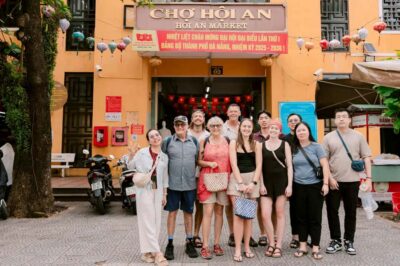 ★ 4.8Market Tour, Basket Boat Ride and Cooking ClassFrom $172,208 reviews
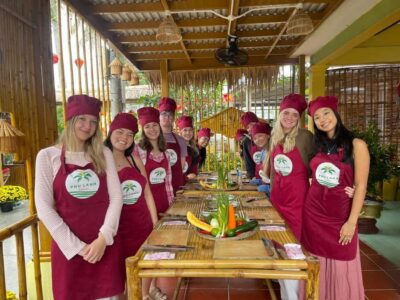 ★ 4.9Basket Boat with Lantern-Making & Cooking Class TourFrom $301,444 reviews
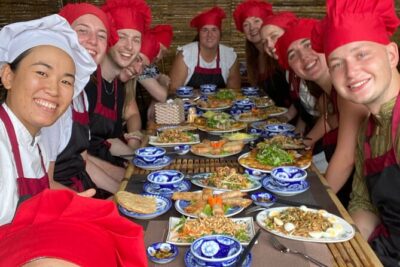 ★ 5.0Hoi An Cooking Class(Local market,Basket Boat,Fishing & Cooking)From $281,323 reviews
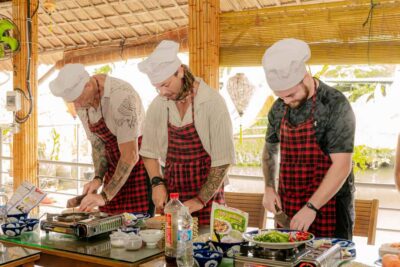 ★ 4.7Market Experience with Optional Fishing and CookingFrom $4928 reviews
 ★ 4.9Basket Boat Ride, Cooking Class by HangcoconutFrom $19802 reviews
 ★ 5.0Hoi An Eco Tour Cooking Class & Fishing (Local market,basket boat,learn cooking)From $29567 reviews