
Smell herbs. Then ride to the rice fields.
This Hoi An experience turns Tra Que Vegetable Village into a hands-on food lesson, starting at a real local market where you learn what produce is called and what it’s used for, including local medicine uses. I like that the teaching comes from a family setup run by young farmers who studied and worked in restaurants for years, so the vibe is both practical and proudly local.
I also love the calm countryside cycling and the way the day mixes food with small, everyday farming details like buffalo grazing and rice growing. During stops, guides such as Duyen and Hai can keep things easy and friendly, even when kids get hungry, and you still get the point of the day: learn, taste, and get confident cooking.
One thing to consider: the whole experience is about 3 hours, so it’s an active, packed morning rather than a slow, linger-all-day outing. If you dislike biking or want lots of downtime, you might feel a bit rushed.
In This Review
- Key things to know before you go
- From Hoi An market to ingredient names you’ll actually remember
- Biking through rice fields, shrimp farms, and buffalo sightings
- Tra Que vegetable methods: organic habits you can copy
- Carving and table styling: learning the edible details
- The cooking class: 4 dishes, real confidence, and a meal you finish
- Herbal foot massage and the end-of-class fun factor
- Price and logistics: does $35 feel fair?
- Who should book this Hoi An market-and-countryside cooking day
- Should you book Quintessence of Vietnamese Cuisine Learn with a Local Family?
- FAQ
- What time does the tour start?
- How long is the experience?
- How big is the group?
- Is pickup and transportation included?
- What meals are included?
- Are drinks included?
- Do you get a foot massage?
- Is there a cooking class?
Key things to know before you go
- Market-first start so you understand ingredients before you cook
- Tra Que Village focus on vegetables and how locals grow them
- Countryside cycling on quiet roads with views of rice, shrimp, and ducks
- Table decoration lesson with edible-carving ideas like carrot and tomato flowers
- Hands-on cooking learning to make 4 typical Vietnamese dishes
- Herbal foot massage plus a pancake fire show for a fun, memorable finish
From Hoi An market to ingredient names you’ll actually remember
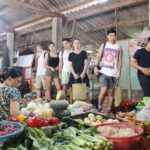
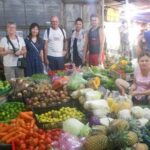
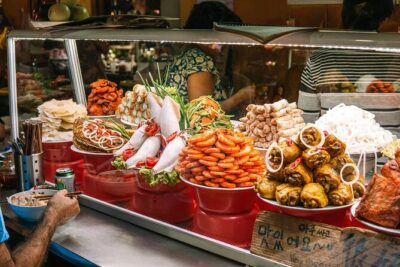
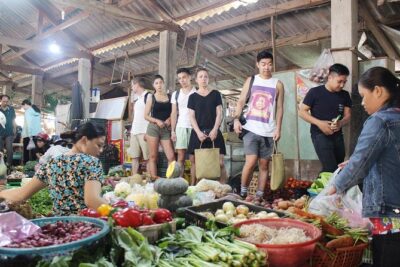
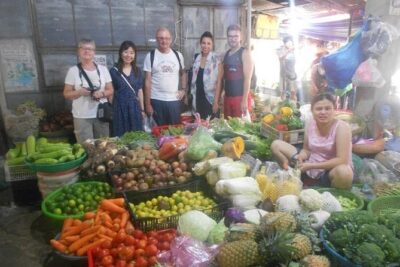
This class doesn’t start in a kitchen. It starts in the market, where you walk through the sights and smells and get the names of fruits and vegetables, plus what locals use them for. That matters, because in Vietnamese cooking, the ingredient you choose and how you treat it changes everything.
As you move through the stalls, you learn more than just what goes into a recipe. You also get the logic behind certain produce choices, including local medicine uses tied to herbs and plant ingredients. It’s the kind of knowledge that sticks because you’re seeing the real items right in front of you, not just reading off a worksheet.
Then the day pivots toward food you can build at home. By the time you reach the cooking part, you’re not guessing. You’re recognizing. That’s the big advantage of doing a market start: it makes the later lessons feel grounded, and you leave with better habits than just a list of dishes.
Aprons on for another Hoi An kitchen
- Cooking Class Hoi An:Local Market, Basket Boat, Fishing & Cooking★ 5.0 · 3,660 reviews
- Hoi An Cooking Class(Market,BasketBoat Crabfishing&Cooking Class)★ 5.0 · 3,386 reviews
- From Hoi An: Market Tour, Basket Boat Ride and Cooking Class★ 4.8 · 2,208 reviews
- Hoi An: Basket Boat with Lantern-Making & Cooking Class Tour★ 4.9 · 1,444 reviews
Biking through rice fields, shrimp farms, and buffalo sightings
Once you’re done with the market, you head out by bike on small winding roads with no noisy chaos. The point isn’t extreme cycling; it’s seeing the countryside at a slower pace. You can expect scenes like buffaloes eating grass, farmers working in rice fields, and farms raising shrimp and ducks.
This quiet travel style changes how you taste later. When you see farming up close, the menu stops feeling like a random selection and starts feeling like a system: what grows locally becomes what people cook locally. Even if you’ve had Vietnamese food before, you’ll notice how ingredient freshness and farming methods shape flavor.
The route also keeps the day from feeling like a classroom. You’re moving outdoors, watching daily work, and then returning to food with your appetite ready. With a small group size (maximum 10), the pace stays manageable, and the guide can keep the momentum without turning it into a sprint.
Tra Que vegetable methods: organic habits you can copy
A standout part of the day is the education tied to vegetable growing. You get introduced to manual vegetable growing methods, including using organic fertilizers and pesticides, and you learn how this connects to the flavor on the plate.
That might sound technical, but it lands in a useful way. You’re basically being taught how locals think about growing: treat the soil, use organic approaches, and let plants develop the taste that people want. When you later cook dishes built around herbs and greens, you’ll understand why fresh greens matter and why certain flavors show up repeatedly.
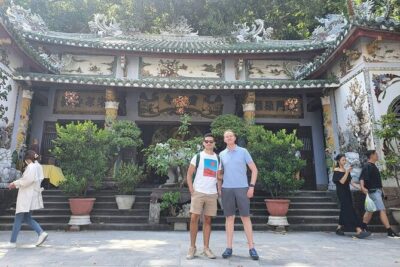
You also visit one of the traditional craft villages tied to the growing tradition (it’s part of the long-standing village system around Hoi An). These stops help explain why vegetable culture is such a central part of Hoi An food. It’s not just a trend; it’s a local routine.
If you’re the type of traveler who likes learning by observation, this is where it pays off. You’ll come away with ideas you can apply even if you don’t have a garden. For instance, you’ll know what to prioritize when choosing vegetables back home.
Carving and table styling: learning the edible details
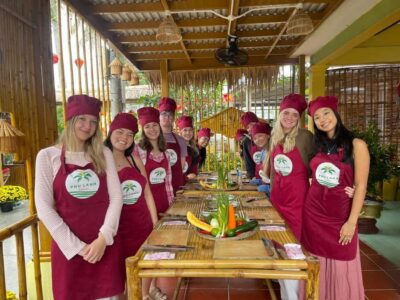
The class doesn’t treat food as only taste. It also treats food as presentation. Before cooking takes over fully, you learn how to decorate the table, including making flowers from ingredients like carrots and tomatoes.
This part is genuinely fun, and it also gives you a practical skill. When you learn how to shape vegetables, you start thinking differently about texture and bite size. It’s not about performing for Instagram; it’s about making dishes look appealing and staying organized while you cook.
It also reinforces what you learned earlier about ingredients. You’re handling produce again, this time with purpose. And because you’re doing it in a casual, family-led setting, it feels doable even if you’re not a kitchen artist.
If you like interactive lessons, this is one of those moments where time seems to fly. It breaks up the day, keeps energy high, and turns the meal into something you can participate in from start to finish.

The cooking class: 4 dishes, real confidence, and a meal you finish
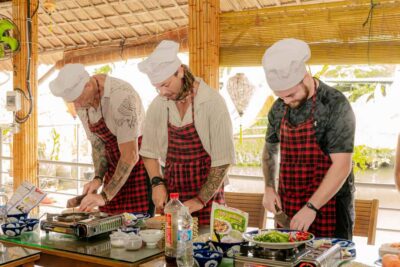
The cooking portion is built around 4 typical Vietnamese dishes, taught by a local chef and family hosts. You don’t just watch. You cut, prepare, and cook, with step-by-step guidance so you can recreate the basics later.
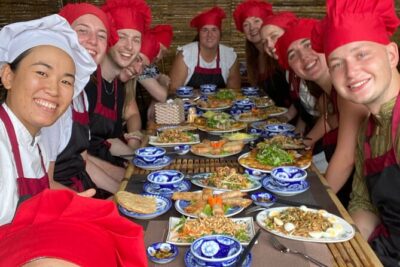
Lunch includes a full spread of what you make and what you eat, including Vietnamese pancake, Hoi An spring roll, green papaya and banaba flower salad, and chicken in clay pot. You also get morning glory stir-fried with garlic, rice, and dessert. That’s a lot of food for a short morning, and it’s also a smart mix: crispy, fresh, savory, and sweet.
Here’s why I think this menu choice is valuable. It covers key Vietnamese flavors without sending you home with 20 recipes. You taste the range, and you learn the core techniques behind them. By the end, you’re not only full; you’re more capable.
And yes, there’s a performance element tied to pancakes and a fire pan moment, plus juggling pancakes. Even if you’re not into shows, it adds a bit of theatre to help the day feel special, not scripted.
Herbal foot massage and the end-of-class fun factor
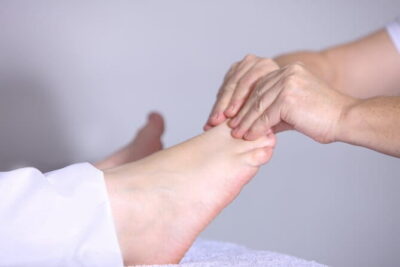
After the cooking and eating, you get a foot massage using herbal leaves such as lemongrass, ginger, and basil leaves. This isn’t just a relaxation add-on. It’s a nice way to close the loop: herbs you learned about earlier show up again in a practical, body-level experience.
It also helps you reset after a morning outdoors and in a cooking pace. You’re on your feet, moving around, and handling ingredients, so a massage is a welcome finale that makes the whole day feel complete rather than just ending at lunch.
The overall vibe is light and friendly, with hosts and guides keeping things warm and easy. Guides like Duyen and Hai are part of why the experience works for different groups, including families who need small adjustments to keep kids comfortable while still finishing the program.
Price and logistics: does $35 feel fair?
At $35 per person for about 3 hours, this is one of those deals that works best when you compare it to what you’d pay for a market tour plus a legit cooking class plus lunch elsewhere. Here, you’re getting a packaged day with private transportation, pickup offered, an English-speaking local guide, and included food.
You also get bottled water, cold towels, and a welcome drink (listed as É water). Coffee and/or tea are not included, and alcohol and soda/pop aren’t included either, so plan on sticking to water with the meal unless you bring a habit you prefer.
The small group size (maximum 10) matters for value. It usually means you can ask questions and get help with cooking steps. If you’ve been stuck in cooking classes where you can’t get close to the action, this is the opposite.
Also, it’s held at a start time of 9:00 am, and it’s near public transportation, which can help if you don’t want to rely only on pickup. A mobile ticket is included, so you’ll want your phone ready for check-in.
Who should book this Hoi An market-and-countryside cooking day
This tour fits best if you want a real local rhythm. You like food learning that starts with ingredients, not just recipes. You enjoy gentle activity, like cycling on quiet roads, and you don’t mind being active for a few hours.
It’s also a good pick if you want to go beyond common “eat here” sightseeing. The day includes vegetables, farming methods, traditional village stops, and cooking skills you can use later. You’ll come away with more than taste memories; you’ll bring home techniques and ingredient awareness.
If you’re traveling with kids, the family approach helps, and the program can adapt to hungry moments. If your group needs a strict schedule with no surprises, ask questions ahead of time, but the general feel here is flexible and friendly.
If you’re very sensitive to physical activity, consider whether you’re comfortable with biking and moving between stops. The roads are described as small winding routes with no busy traffic, which suggests it’s not chaotic, but it still is cycling and being outdoors in the morning.
Should you book Quintessence of Vietnamese Cuisine Learn with a Local Family?
I’d book it if your goal in Hoi An is practical food knowledge and a countryside feel without a long trek. For $35, you’re getting a market start, village and farming context, 4 dish cooking instruction, a full lunch spread, plus herbal foot massage. That’s a lot of value packed into a half-morning window.
Skip it if you want a slower day, lots of free time to roam on your own, or a purely sightseeing-focused outing with minimal kitchen involvement. This is a working food experience, and the schedule reflects that.
If you’re deciding between multiple food activities in Hoi An, this one is strong when you want to leave with confidence. Not just the ability to order dishes, but the ability to make them.
FAQ
What time does the tour start?
It starts at 9:00 am.
How long is the experience?
It runs for about 1 day 3 hours (approx.).
How big is the group?
The experience has a maximum of 10 travelers.
Is pickup and transportation included?
Pickup is offered, and private transportation is included.
What meals are included?
Lunch is included, featuring Vietnamese pancake, Hoi An spring roll, green papaya & banaba flower salad, chicken in clay pot, morning glory stir with garlic, rice, and dessert.
Are drinks included?
Bottled water is included. Coffee and/or tea, alcohol, and soda/pop are not included.
Do you get a foot massage?
Yes. You’ll have a foot massage using herbal leaves such as lemongrass, ginger, and basil leaves.
Is there a cooking class?
Yes. You’ll learn to cook 4 typical Vietnamese dishes as part of the class with a chef at a local’s house.
More Tour Reviews in Hoi An
- Hoi An: Basket Boat Ride in the Coconut Forest
★ 4.9 · 4,956 reviews - Hoi An: Vietnamese Coffee Culture and Coffee Making Class
★ 4.9 · 4,006 reviews - Hoi An: Vietnamese Foldable Lantern Making Class
★ 4.9 · 3,742 reviews - Cooking Class Hoi An:Local Market, Basket Boat, Fishing & Cooking
★ 5.0 · 3,660 reviews - Hoi An Cooking Class(Market,BasketBoat Crabfishing&Cooking Class)
★ 5.0 · 3,386 reviews - Hoi An: My Son Sanctuary Early Morning w. Champa Food Brunch
★ 4.9 · 2,750 reviews
Cook It Yourself: More Hoi An Kitchens
- Cooking Class Hoi An:Local Market, Basket Boat, Fishing & Cooking
★ 5.0 · 3,660 reviews - Hoi An Cooking Class(Market,BasketBoat Crabfishing&Cooking Class)
★ 5.0 · 3,386 reviews - From Hoi An: Market Tour, Basket Boat Ride and Cooking Class
★ 4.8 · 2,208 reviews - Hoi An: Basket Boat with Lantern-Making & Cooking Class Tour
★ 4.9 · 1,444 reviews - Hoi An Cooking Class(Local market,Basket Boat,Fishing & Cooking)
★ 5.0 · 1,323 reviews - Hoi An: Market Experience with Optional Fishing and Cooking
★ 4.7 · 928 reviews
Just Reviewed: Fresh Hoi An Trips


Hoi An Cooking Classes, compared.
 ★ 5.0Cooking Class Hoi An:Local Market, Basket Boat, Fishing & CookingFrom $283,660 reviews
 ★ 5.0Hoi An Cooking Class(Market,BasketBoat Crabfishing&Cooking Class)From $283,386 reviews
 ★ 4.8Market Tour, Basket Boat Ride and Cooking ClassFrom $172,208 reviews
 ★ 4.9Basket Boat with Lantern-Making & Cooking Class TourFrom $301,444 reviews
 ★ 5.0Hoi An Cooking Class(Local market,Basket Boat,Fishing & Cooking)From $281,323 reviews
 ★ 4.7Market Experience with Optional Fishing and CookingFrom $4928 reviews
 ★ 4.9Basket Boat Ride, Cooking Class by HangcoconutFrom $19802 reviews
 ★ 5.0Hoi An Eco Tour Cooking Class & Fishing (Local market,basket boat,learn cooking)From $29567 reviews
Browse the lists this tour appears in