
Reviewed · HOI AN COOKING CLASSES
My Grandma’s Home Cooking Class in Hoi An
Cooking in Grandma’s garden beats any restaurant meal. I love the river-delta boat ride to the island village and the hands-on rice paper lesson that leads into Hoi An classics like banh xeo, green papaya salad, grilled pork skewers, and fish. One thing to consider: this is a lot of food, so skip a big breakfast.
With a small 12-person max and the friendly English of Thom, you get real instruction at a kitchen set up that feels practical and lived-in, not staged. You also leave with a recipe book, which makes the day easier to repeat at home.
In This Review
- Key highlights to know
- A Hoi An cooking class that actually feels like visiting
- How the morning starts: 61 Ngô Quyền and a boat across the delta
- Island village time: fruit juice, countryside stories, and meeting Grandma
- Rice paper making: the skill that ties the dishes together
- Cooking the real Hoi An lineup: banh xeo, pork skewers, papaya salad, and fish
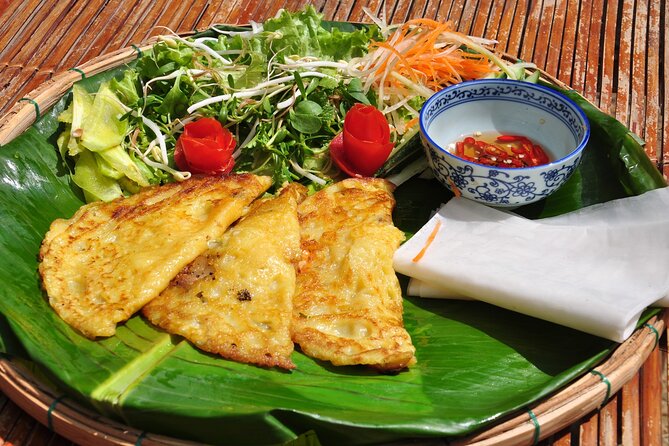
- Bánh Xèo (small rice flour crepes)
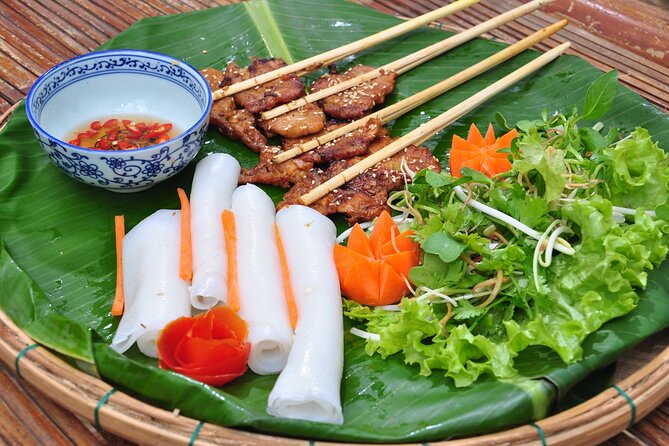
- Grilled, marinated pork brochettes with special sauce
- Green papaya salad
- Fish prepared according to a local recipe
- Vegetarian option that doesn’t feel tacked on
- Lunch in Grandma’s garden: pumpkin soup and Xí Mà
- Price and value: what $35 buys you (and why it’s fair)
- Small group logistics: 12 people, English support, and clean stations
- What to pack and how to time your Hoi An day
- Is it too long or too much food?
- Should you book My Grandma’s Home Cooking Class in Hoi An?
- FAQ
- How long is My Grandma’s Home Cooking Class in Hoi An?
- Where do I meet for the class?
- What is included in the $35 price?
- Do you offer a vegetarian menu?
- What group size should I expect?
- Is there a cancellation policy or weather risk?
Key highlights to know
- A 35-minute boat crossing that turns the countryside from scenery into part of the experience
- Rice paper making, not just watching—your hands do the work
- Hoi An specialties you can name, cook, and taste right away: banh xeo and papaya salad
- Garden-lunch style dining, with pumpkin soup and Xí Mà to end the meal
- Vegetarian menu on request, built from local flavors rather than an afterthought
A Hoi An cooking class that actually feels like visiting
If you’re chasing an authentic Hoi An cooking class, this one makes sense fast. You don’t just show up, chop a few things, and leave. The day starts with the setting—boat ride, island home, countryside stories—then moves into real cooking skills you’ll understand and remember.
I like that it’s family-focused. You’re learning from the household that keeps these recipes alive, with Grandma as the heart of the whole setup. In the reviews, you also see why the vibe works: Thom (Grandma’s granddaughter) keeps the group comfortable, translates the process clearly, and makes sure everyone can follow along at their own station.
The value at $35 per person is strong for what you get: a full cooking session, a set lunch you help create, boat transport, and a take-home recipe book. It’s not a quick snack of a class—it’s a proper half-day meal-and-skills experience.
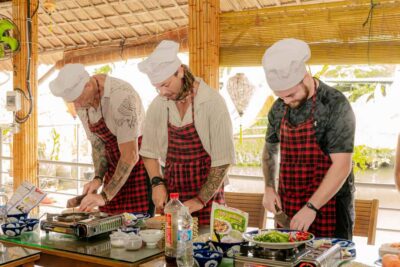
Aprons on for another Hoi An kitchen
- Cooking Class Hoi An:Local Market, Basket Boat, Fishing & Cooking★ 5.0 · 3,660 reviews
- Hoi An Cooking Class(Market,BasketBoat Crabfishing&Cooking Class)★ 5.0 · 3,386 reviews
- From Hoi An: Market Tour, Basket Boat Ride and Cooking Class★ 4.8 · 2,208 reviews
- Hoi An: Basket Boat with Lantern-Making & Cooking Class Tour★ 4.9 · 1,444 reviews
How the morning starts: 61 Ngô Quyền and a boat across the delta
The day runs from 9:30am to about 3:00pm, and it begins at 61 Ngô Quyền, Phường Minh An, Hội An. I recommend planning your morning around that, because once you arrive, the schedule moves steadily.
The big early payoff is the boat trip—about 35 minutes—to join the village on a small island in the river delta. This is more than transport. It’s a gentle way to shift your mindset away from Old Town traffic and into the quieter rhythm of the countryside. You’ll likely feel the breeze, and it’s one of those simple moments that makes the whole class feel less like a routine activity.
When you return, you end back at the meeting point, so you can line up the rest of your afternoon without a complicated relocation plan. Also, the meeting point is near public transportation, which helps if you’re bouncing around Hoi An by bus or motorbike taxi.
Island village time: fruit juice, countryside stories, and meeting Grandma
After the boat ride, you’re welcomed with a fresh fruit juice—a typical Vietnamese fruit-based drink that sets the tone for the afternoon. While you sip, you get context: what daily life looks like in the countryside, how the family lives, and what matters about food here beyond taste.
This is also where you meet Grandma. In the reviews, the key detail is that Grandma is very old (100), so she may not come out much these days. That doesn’t reduce the feeling of authenticity. You still learn her recipes and hear her story through Thom, and the whole home setting makes it clear this class is about preservation, not performance.
I find this kind of cultural framing important because it changes what you cook. When you understand why rice paper and rice-based techniques matter here, banh xeo and the pork sauce stop being just menu items. They become part of a system—ingredients, tools, and habits.
Rice paper making: the skill that ties the dishes together
The core hands-on skill is rice paper preparation, which matters more than you might think at first. Rice paper isn’t just a texture—it’s linked to how this region handles rice and how dishes get built.
You’ll learn how rice paper is prepared for use in fried eggroll styles (the class explains how it connects to the flavorful eggroll you’ll associate with the menu). Even if you’ve eaten Vietnamese spring-roll-style food before, this step can feel like a behind-the-scenes look at the process.
The instruction is geared so you can actually do the steps yourself. And since the group is small, you’re not stuck watching from the back. You’ll be able to ask questions as you go and adjust your technique if something doesn’t look right.
This is also where the day becomes satisfying for food people. If you like cooking, the “why this step matters” part tends to stick. If you’re not a cook, the method still makes sense because it’s taught in a practical way: do this, then that, then taste and adjust through the recipe flow.
More hours at the Hoi An stove
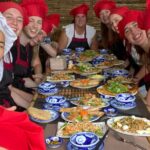

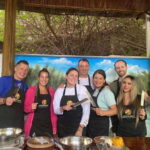

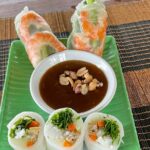
Cooking the real Hoi An lineup: banh xeo, pork skewers, papaya salad, and fish
Your cooking lesson includes several classic dishes from this region. The menu isn’t vague, and that’s a big reason the experience holds up: you know exactly what you’re making and how it fits together.
Bánh Xèo (small rice flour crepes)
This Hoi An specialty is one of the stars. You’ll learn how the batter and cooking style shape the final texture. The best part is that you cook it as part of a full meal, not as a standalone demo.
Grilled, marinated pork brochettes with special sauce
You’ll handle the marinating and cooking steps that give the pork its flavor. The class emphasizes sauce, so you’re not just learning “how to grill,” but how local flavor is built.
Green papaya salad
Papaya salad is one of those dishes where the balance matters—crunch, tang, and seasoning. Cooking it in this setting makes it feel less like a recipe you copy and more like a taste you can recreate.
Fish prepared according to a local recipe
Fish gets treated as a local, not generic, dish. That’s important if you’re trying to cook Vietnamese food at home without turning it into bland “translation food.”
In the reviews, people consistently call out that the food turns out delicious and that the process is clean and well organized. You’re not stuck in an awkward shared kitchen where you’re waiting for space. You’ll have a setup that supports everyone actively cooking.
Vegetarian option that doesn’t feel tacked on
If you request it in advance, there’s a vegetarian menu option built from local favorites. That matters because not all vegetarian adaptations are equal.
The vegetarian menu includes:
- Bánh Xèo
- Grilled eggplant
- Green papaya salad
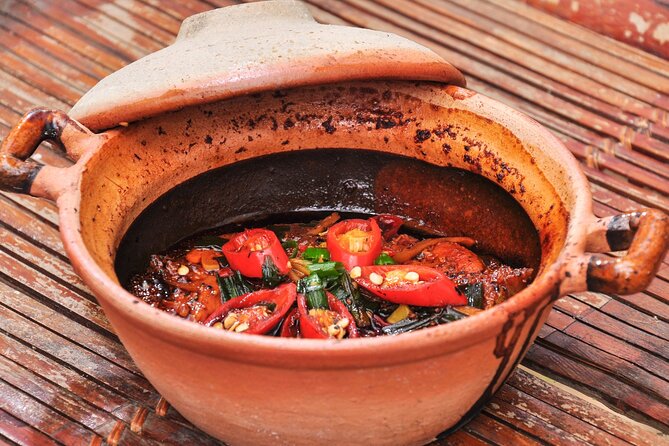
- Mushroom and tofu clay pot
Even without eating meat, you still get the salad, the savory main, and a hearty clay-pot style dish. You won’t feel like you’re receiving a watered-down substitute. For vegetarians, this is one of the strongest reasons to book, because you still get a full afternoon meal rather than a compromise plate.
Lunch in Grandma’s garden: pumpkin soup and Xí Mà
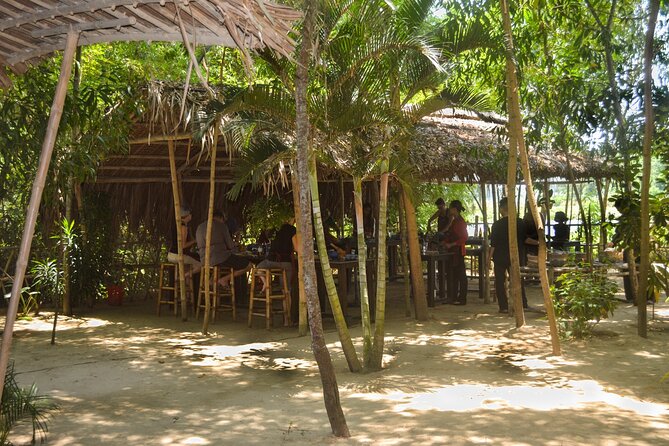
Once the dishes are made, you eat the meal in Grandma’s garden. This is where the day clicks into place. You’re not eating on the run or in a noisy dining hall. It feels like you’re sitting down as part of the household.
In addition to the dishes you cook, you’re served pumpkin soup and dessert: Xí Mà, a black sesame pudding. Dessert here isn’t an afterthought. It gives the meal a clear finish and makes the whole day feel like a complete local course set.
One practical tip: go hungry. The cooking is generous, and the portion sizes add up fast. Several people suggest skipping breakfast because there’s simply a lot of food by the time you’re done. If you’re the type who snacks all day, consider adjusting that so you can enjoy everything without feeling overloaded.
Price and value: what $35 buys you (and why it’s fair)
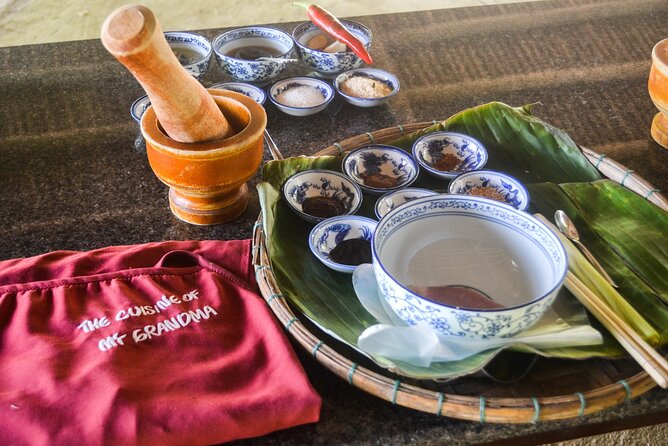
At $35 per person, you’re paying for more than “a cooking class.” You’re getting a full half-day experience with multiple included items:
- Lunch (the meal you help prepare)
- Bottled water
- Boat trip
- Welcome drink
- Recipe book
For many visitors, the biggest value is the combo of transport + learning + meal. You’re not just learning techniques; you’re also transported out to the river delta island setting and fed what you cook.
It’s also a value win for groups. The maximum of 12 travelers keeps the day personal, and the small size typically means you’re not waiting around for your turn. In a city full of tours that feel crowded or rushed, this one avoids that problem by design.
The only thing you don’t get is insurance. So if that’s a must-have for you, check what your trip policy already covers.
Small group logistics: 12 people, English support, and clean stations
This class runs with a maximum of 12 travelers, which is a sweet spot. Large enough to feel social, small enough that you aren’t lost in the crowd.
Thom is the main guide/instructor, and the reviews repeatedly highlight that her English is clear and that she teaches patiently. That matters because cooking has a rhythm. If you miss one step early on, the rest can feel confusing. With a small group and a guide who can explain well, you get fewer bottlenecks.
Another plus is the practical setup. People describe the space as clean and authentic, with cooking stations that let you work without constantly bumping into other people. The result is a cooking class that feels like actual skill-building rather than a casual “hands-on for a minute” photo opportunity.
What to pack and how to time your Hoi An day
You’re outside for parts of the day, and you’ll be on a boat, so dress for comfort. Light layers are smart, and bring something you can wear easily while cooking. Comfortable shoes also help, since you’ll move between the boat, the household area, and the garden meal spot.
Timing-wise, this tour is designed to take over the morning and early afternoon. Since it ends back at the meeting point around 3:00pm, you can plan a late lunch or coffee afterward, or you can head toward the river area in the afternoon when the heat softens.
If you’re doing other Hoi An activities, avoid scheduling something right at the start time. Give yourself a little buffer to get to 61 Ngô Quyền without stress.
Also, if you care about food timing, this is where you should think ahead. Skip a big breakfast. Hydrate beforehand. The welcome drink and bottled water help, but you’ll want to enjoy the full menu without feeling stuffed before you even start cooking.
Is it too long or too much food?
Most people say the day is “just long enough,” but it does have an intense food pace. The class includes multiple dishes plus pumpkin soup and Xí Mà dessert, so you’ll likely eat a lot. That’s a feature for many people and a drawback for a few.
If you’re someone who gets bored with long explanations, you might notice that some moments feel slower near the end of the process. That’s not unusual in cultural cooking sessions—some teaching time is part of the point—but it’s worth knowing if you prefer short and punchy classes.
My practical advice: treat it like a full meal you build from scratch. Don’t come to “taste a little.” Come ready to cook, then eat everything.
Should you book My Grandma’s Home Cooking Class in Hoi An?
Book it if you want an authentic Hoi An cooking class that goes beyond recipes. You’ll get:
- a real countryside setting by boat
- hands-on rice paper learning
- multiple local dishes cooked in a household kitchen
- a garden lunch with dessert
- a recipe book to carry the experience home
Don’t book it if you want a short, light activity or if you’re trying to keep food intake minimal. Also, if you’re expecting Grandma to be the active teacher in the room, remember she may not come out often due to age—Thom is the key instructor and the bridge to Grandma’s recipes.
If you’re flexible and you like learning through doing, this is one of the best ways to spend a few hours in Hoi An that doesn’t feel touristy. It’s practical, it tastes local, and it gives you something you can cook again later.
FAQ
How long is My Grandma’s Home Cooking Class in Hoi An?
It runs for about 5 hours 30 minutes. The schedule starts at 9:30am and returns around 3:00pm.
Where do I meet for the class?
You meet at 61 Ngô Quyền, Phường Minh An, Hội An, Quảng Nam, Vietnam.
What is included in the $35 price?
The price includes lunch, bottled water, a boat trip, a welcome drink, and a recipes book.
Do you offer a vegetarian menu?
Yes. Vegetarian options are available on request, including Bánh Xèo, grilled eggplant, green papaya salad, mushroom, and tofu clay pot.
What group size should I expect?
The tour has a maximum of 12 travelers, so it stays small.
Is there a cancellation policy or weather risk?
There is free cancellation up to 24 hours in advance for a full refund. The experience also requires good weather, and if it’s canceled due to poor weather, you’ll be offered another date or a full refund.
Learn Another Vietnamese Dish
- Cooking Class Hoi An:Local Market, Basket Boat, Fishing & Cooking
★ 5.0 · 3,660 reviews - Hoi An Cooking Class(Market,BasketBoat Crabfishing&Cooking Class)
★ 5.0 · 3,386 reviews - From Hoi An: Market Tour, Basket Boat Ride and Cooking Class
★ 4.8 · 2,208 reviews - Hoi An: Basket Boat with Lantern-Making & Cooking Class Tour
★ 4.9 · 1,444 reviews - Hoi An Cooking Class(Local market,Basket Boat,Fishing & Cooking)
★ 5.0 · 1,323 reviews - Hoi An: Market Experience with Optional Fishing and Cooking
★ 4.7 · 928 reviews
More Tour Reviews in Hoi An
- Hoi An: Basket Boat Ride in the Coconut Forest
★ 4.9 · 4,956 reviews - Hoi An: Vietnamese Coffee Culture and Coffee Making Class
★ 4.9 · 4,006 reviews - Hoi An: Vietnamese Foldable Lantern Making Class
★ 4.9 · 3,742 reviews - Cooking Class Hoi An:Local Market, Basket Boat, Fishing & Cooking
★ 5.0 · 3,660 reviews - Hoi An Cooking Class(Market,BasketBoat Crabfishing&Cooking Class)
★ 5.0 · 3,386 reviews - Hoi An: My Son Sanctuary Early Morning w. Champa Food Brunch
★ 4.9 · 2,750 reviews
Cook It Yourself: More Hoi An Kitchens
- Cooking Class Hoi An:Local Market, Basket Boat, Fishing & Cooking
★ 5.0 · 3,660 reviews - Hoi An Cooking Class(Market,BasketBoat Crabfishing&Cooking Class)
★ 5.0 · 3,386 reviews - From Hoi An: Market Tour, Basket Boat Ride and Cooking Class
★ 4.8 · 2,208 reviews - Hoi An: Basket Boat with Lantern-Making & Cooking Class Tour
★ 4.9 · 1,444 reviews - Hoi An Cooking Class(Local market,Basket Boat,Fishing & Cooking)
★ 5.0 · 1,323 reviews - Hoi An: Market Experience with Optional Fishing and Cooking
★ 4.7 · 928 reviews
Just Reviewed: Fresh Hoi An Trips



Hoi An Cooking Classes, compared.
 ★ 5.0Cooking Class Hoi An:Local Market, Basket Boat, Fishing & CookingFrom $283,660 reviews
 ★ 5.0Hoi An Cooking Class(Market,BasketBoat Crabfishing&Cooking Class)From $283,386 reviews
 ★ 4.8Market Tour, Basket Boat Ride and Cooking ClassFrom $172,208 reviews
 ★ 4.9Basket Boat with Lantern-Making & Cooking Class TourFrom $301,444 reviews
 ★ 5.0Hoi An Cooking Class(Local market,Basket Boat,Fishing & Cooking)From $281,323 reviews
 ★ 4.7Market Experience with Optional Fishing and CookingFrom $4928 reviews
 ★ 4.9Basket Boat Ride, Cooking Class by HangcoconutFrom $19802 reviews
 ★ 5.0Hoi An Eco Tour Cooking Class & Fishing (Local market,basket boat,learn cooking)From $29567 reviews
Browse the lists this tour appears in