
Reviewed · BASKET BOAT & COCONUT VILLAGE
Hoi An: Traditional Cooking Class & meal w Cam Thanh Family
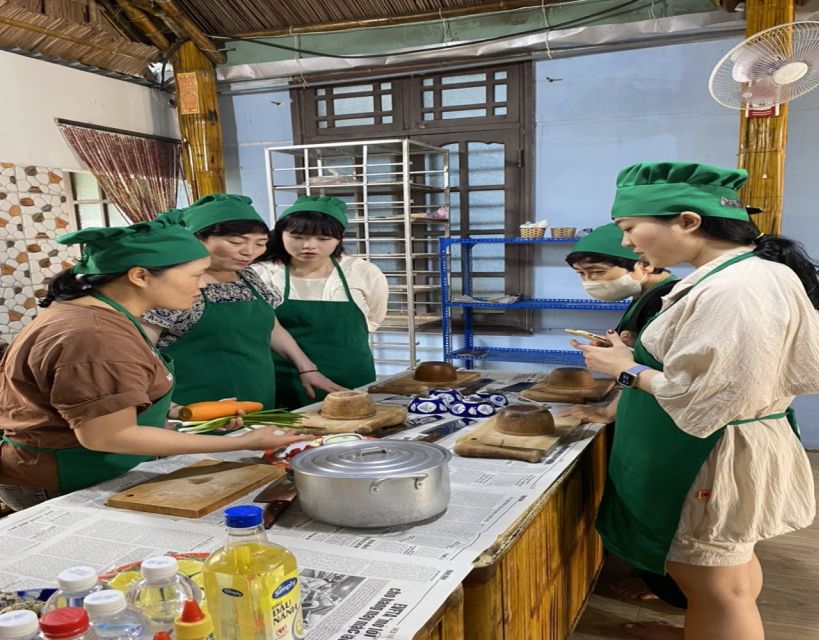
Cooking with locals turns food into a story. This hands-on Hoi An class in Cam Thanh teaches you 4 traditional dishes using the real methods locals use at home, with an English-speaking chef who keeps it light and fun. I especially like the practical, step-by-step instruction and the family-style feeling that makes the whole experience more than a demo. One thing to consider: it’s a group tour (around 10 people), so the pace isn’t private and the schedule can shift slightly.
You start with pickup in the Cam Thanh Coconut Village area, settle in with a welcome drink, then get to the cooking. You’ll cook your own meal, add side dishes, and sit down to eat what you made—plus you can usually take the recipe guidance home, which is the best part for practicing later. The price at $23 per person feels fair because ingredients and your meal are included, though you’ll want to plan for any drinks you might want.
In This Review
- Quick reasons to go
- Cam Thanh Coconut Village: More than a backdrop
- Price and what’s actually included at $23
- Pickup, welcome tea, and getting into the flow
- Learning to cook Hoi An: the method beats the memorizing
- The four dishes you’ll actually make
- Pancake (Hoi An style)
- Spring rolls
- Papaya salad
- Chicken with lemongrass
- Why the family-style meal matters (and what you gain for home)
- The guide energy: Nhung’s the kind of teacher you want
- Group size, timing, and who it fits best
- Practical tips so you cook confidently
- Book it or pass? My honest take
- FAQ
- Where is the meeting point for the cooking class?
- What time are the pickups?
- How long does the experience last?
- What dishes will I cook?
- Is lunch or dinner included?
- What’s included in the price?
- Are drinks included?
- Can you arrange a vegan or vegetarian menu?
- Is there an extra cost for public holidays?
- Is the experience wheelchair accessible, and are pets allowed?
Quick reasons to go
- Cam Thanh setting: you get a closer look at rural life beyond the main city streets
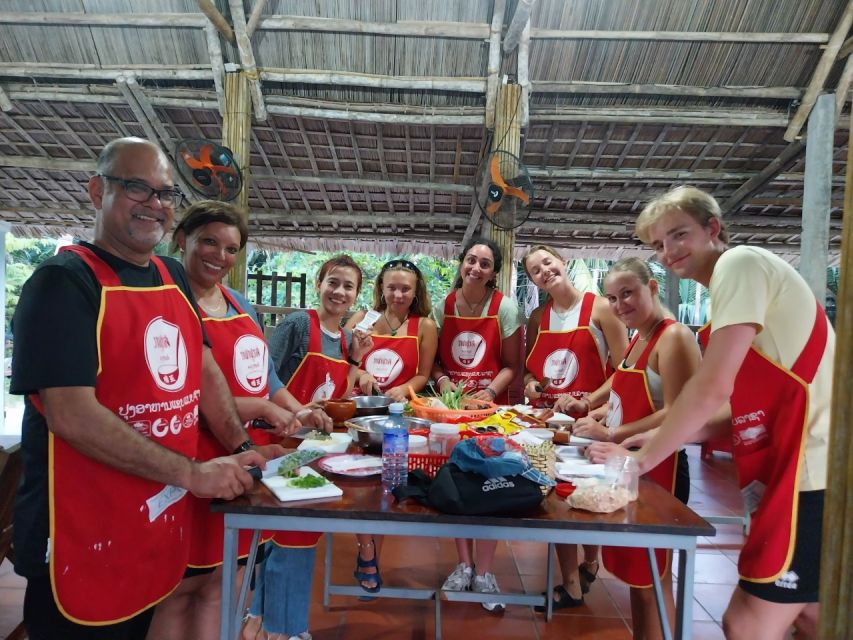
- Hands-on cooking: you actively make the dishes, not just watch
- 4 Hoi An favorites: pancake, spring rolls, papaya salad, and chicken with lemongrass
- English instruction: a live English-speaking chef guides the whole process
- Eat what you made: the end of class is a real meal at the table
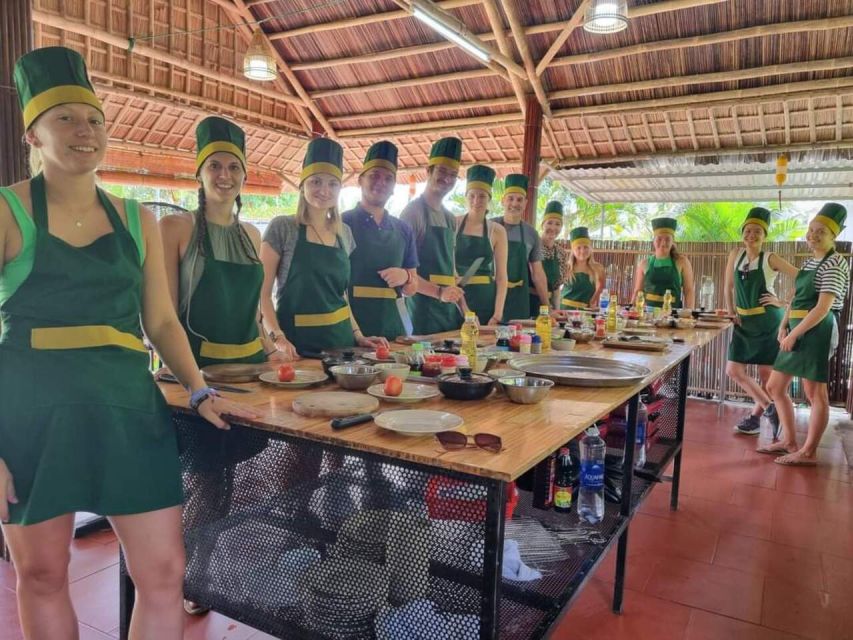
- Small group format: limited to about 10 participants, so you’re not lost in a crowd
Cam Thanh Coconut Village: More than a backdrop
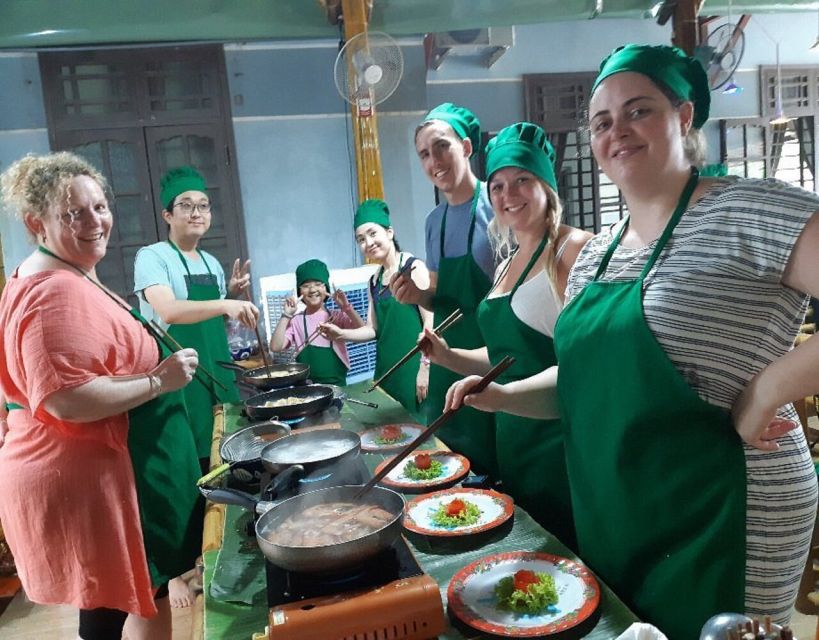
This class takes place in the Cam Thanh area, the kind of place where you’ll feel the slower rhythm of rural Vietnam. Instead of treating food like a tourist checklist, the experience frames cooking as everyday life—family routines, market flavors, and technique.
What I like for practical reasons: the setting makes the food make sense. When you’re learning papaya salad or spring rolls, it’s easier to understand why certain ingredients are treated the way they are. You’re not just memorizing recipes—you’re picking up logic.
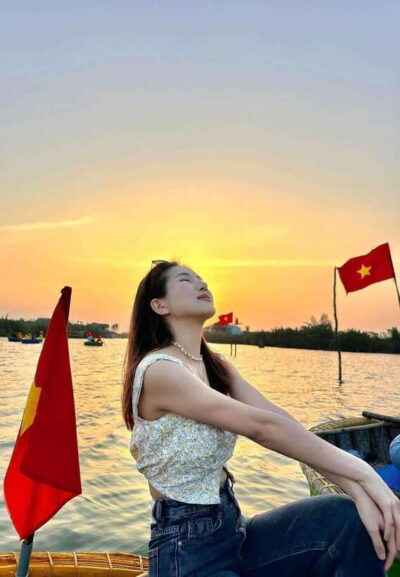
Spin the round basket boat through the palms
- Hoi An: Basket Boat Ride in the Coconut Forest★ 4.9 · 4,956 reviews
- From Hoi An: Market Tour, Basket Boat Ride and Cooking Class★ 4.8 · 2,208 reviews
- Hoi An: Basket Boat with Lantern-Making & Cooking Class Tour★ 4.9 · 1,444 reviews
- Hoi An: Coconut Basket Boat Ride by Hangcoconut★ 4.8 · 1,364 reviews
Price and what’s actually included at $23
At $23 per person for a 210-minute experience, the real value comes from what you get bundled in. You’re not paying only for instruction; you’re also paying for the ingredients, the English-speaking host, a welcome tea, and your meal at the end (lunch for the morning slot, dinner for the afternoon slot).
Here’s how I think about it: cooking classes can feel expensive when you’re only watching someone cook. This one works because you cook your own dishes and eat them afterward. That’s time well spent, especially if you’re the kind of person who wants to go home with usable skills.
Two small cost notes to keep in mind:
- Drinks aren’t included, so you may pay extra if you want something beyond tea.
- If you book on a Vietnamese public holiday, there’s an extra 200,000 VND paid by cash.
Pickup, welcome tea, and getting into the flow
The day starts with pickup near Hoi An Village Experience in Cam Thanh. There are two schedule windows, and they matter because they affect what meal you’ll have:
- 10:20 pickup for the morning slot, class ends around 13:30
- 16:20 pickup for the afternoon slot, class ends around 19:30
After you’re collected, you move to the coconut village cooking area. You’ll have a welcome tea and a chance to rest at the restaurant before the class begins. I appreciate this buffer because it keeps the experience from feeling rushed—you’re fed, oriented, and then you start cooking.
The only catch: the provider notes that the schedule can change slightly. In real life, that usually means small timing adjustments, so don’t plan anything tight right after the end time.
Learning to cook Hoi An: the method beats the memorizing
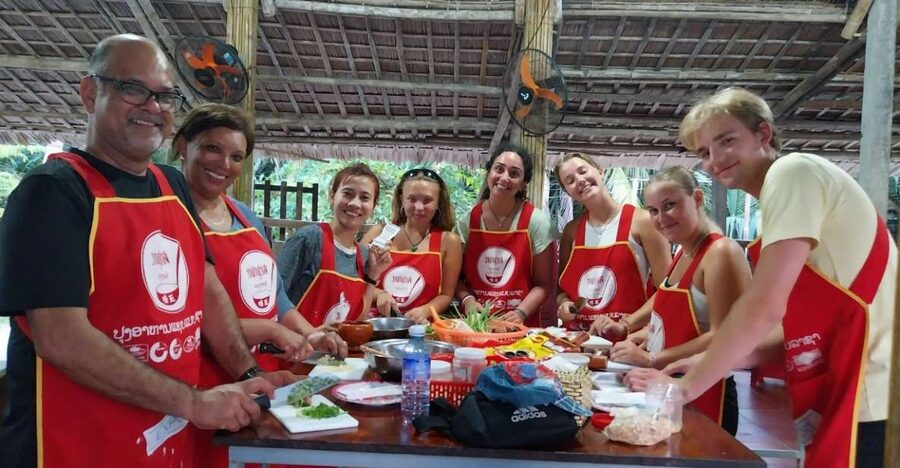
The core idea is simple: a local chef shows traditional methods, then you cook. Everything starts with ingredients prepared in advance, so you spend your energy on technique, not chopping from scratch while you’re still learning what each step should look like.
You’ll be guided to cook 4 local dishes and also prepare side dishes. That combination is smart. Side dishes teach the balance of a meal—how cooling, crunch, herbs, and acidity work alongside the main plates.
English-speaking instruction helps a lot here. With food, you want the little cues: how something should smell, how it should look as it cooks, and what to do if the first try doesn’t match the expected result.
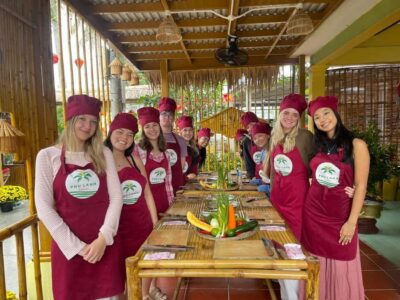
Aprons on for another Hoi An kitchen


The four dishes you’ll actually make
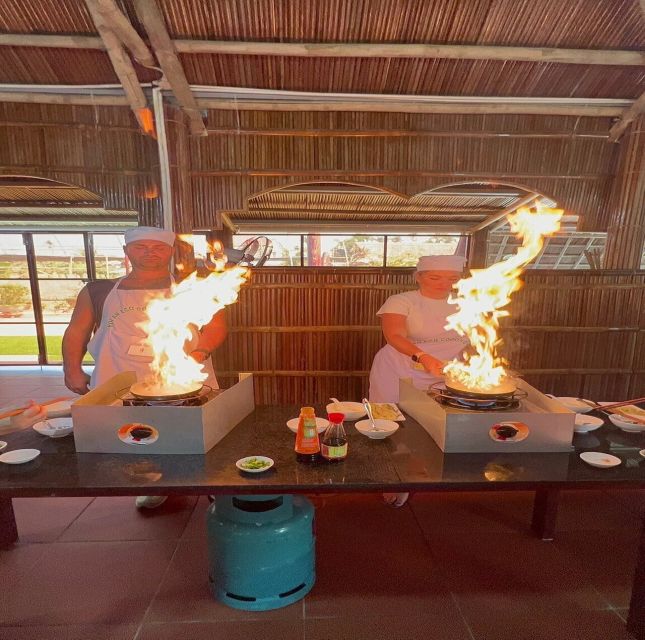
This is the menu that gives the class its structure. You’ll cook each dish yourself with guidance, so you’re building confidence across different techniques—frying, mixing, seasoning, and cooking meat with aromatics.
Pancake (Hoi An style)
A pancake class sounds basic until you learn the texture expectations. This dish gives you a base skill: how to manage heat and consistency so the pancake cooks evenly and doesn’t turn rubbery or soggy. You’ll learn traditional method timing and how to adjust as you go.
The value isn’t just the pancake. It’s the technique you can reuse for other Vietnam-inspired savory snacks.
Spring rolls
Spring rolls are all about the details: filling balance, rolling tightness, and frying/setting so they don’t split or go greasy. This part is great if you’ve never rolled before, because you’ll be taught the approach and supported while you do it.
If you like making finger food at home, spring rolls are a good “practice later” dish because you can scale it up or down depending on how many people you’re feeding.
Papaya salad
Papaya salad is where flavor chemistry becomes real. You’re learning how the mix of sour, salty, sweet, and heat should feel. Even if you can follow a recipe at home, the real win is understanding how to season in a way that tastes right—not just how to add ingredients.
This dish also helps you learn Vietnam’s balance style, which will carry over to other dishes you try later.
Chicken with lemongrass
Chicken with lemongrass is all about aroma and seasoning depth. You’ll learn the traditional approach to using lemongrass so it flavors the meat without taking over. It’s also a confidence-builder because meat dishes can feel intimidating—until you see how straightforward the method can be.
When you go back home, this is the dish you’ll probably cook again first, because lemongrass seasoning is memorable and adaptable.
Why the family-style meal matters (and what you gain for home)
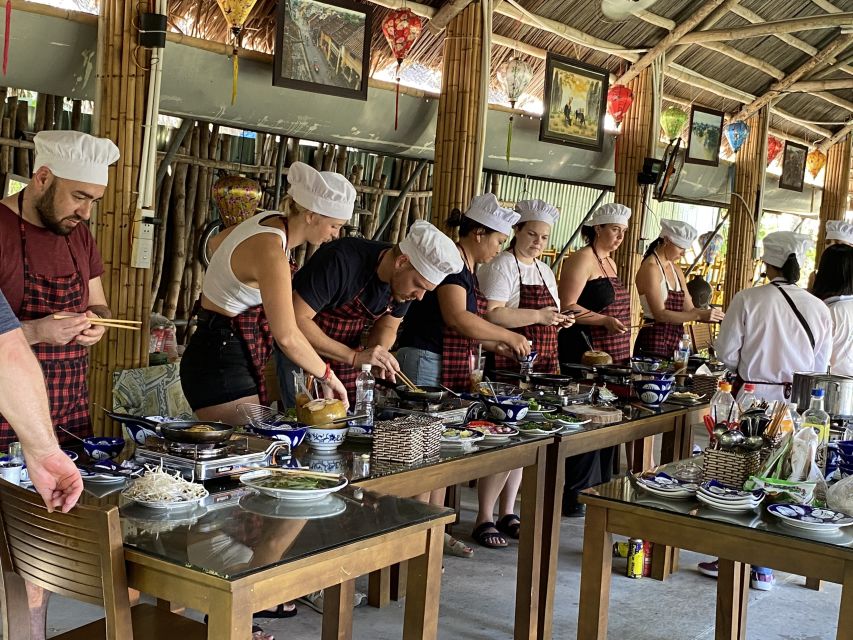
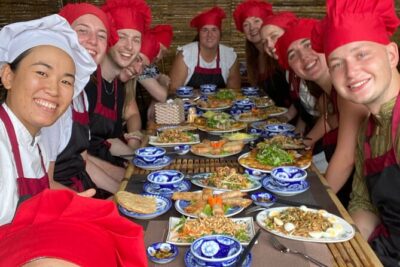
After the cooking part, you eat what you made. This is a big deal. A lot of classes end with a small tasting plate. Here, you sit down for a meal with the dishes and side items you prepared.
That means you can evaluate your own cooking. Did your papaya salad hit the right level of punch? Did your spring rolls crisp properly? Was your chicken fragrant but not overpowering? You get feedback just by tasting.
One review detail that stuck with me: people appreciate that recipe guidance is available at the end. That’s exactly what you need if you want to repeat the experience later instead of only remembering the flavors as a blur.
The guide energy: Nhung’s the kind of teacher you want
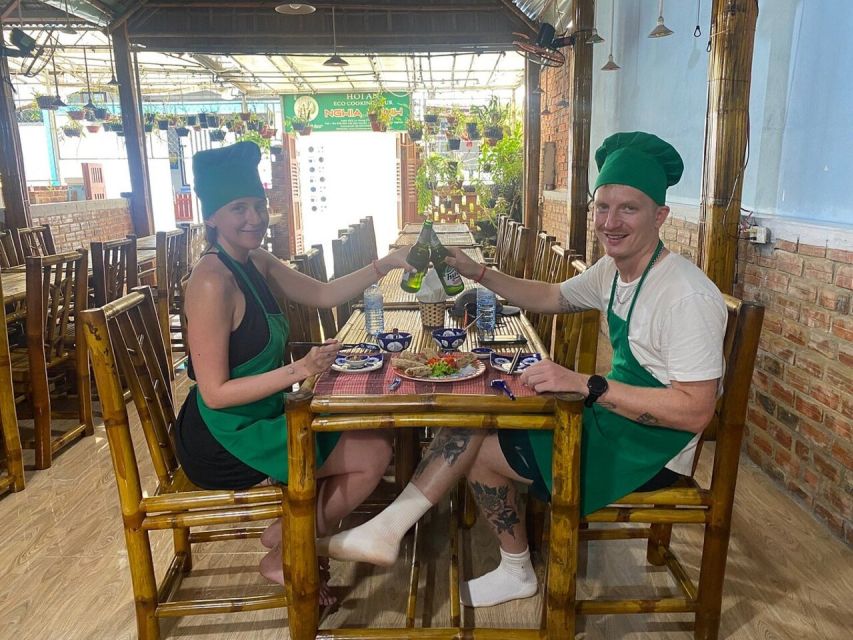
A big part of why this class works is the tone. One of the standout instructor experiences shared is with Nhung, described as fun and humorous, and making it feel like a real family affair.
You’ll notice this in how the chef teaches. When the energy stays relaxed, you’re more willing to try again if a step doesn’t go perfectly. That’s the difference between a class you enjoy and a class that actually changes how you cook afterward.
If you’re worried you’ll be stuck translating everything in your head, don’t. The class is run in English, so you can follow the process without playing catch-up.
Group size, timing, and who it fits best
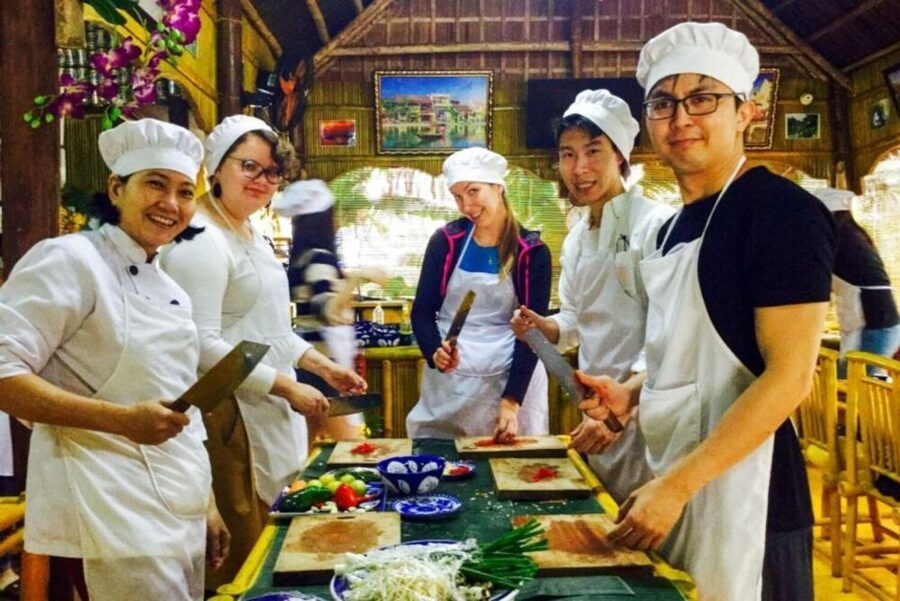
The tour is a group tour with small group size, limited to around 10 participants. That has practical pros:
- You get personal attention without waiting in line for every step
- The experience is social, but not so crowded that it turns chaotic
The drawback is also straightforward: it’s not a private class. If you want one-on-one corrections all the time, you might find the group pace a little limiting. For most people, though, the structure helps—you cook as a team and keep moving.
Who this class is best for:
- Food lovers who want hands-on practice, not a lecture
- People who like learning through doing
- Anyone interested in Hoi An beyond the old town postcard view
- Couples or small groups who want a shared activity that ends with a meal
Practical tips so you cook confidently
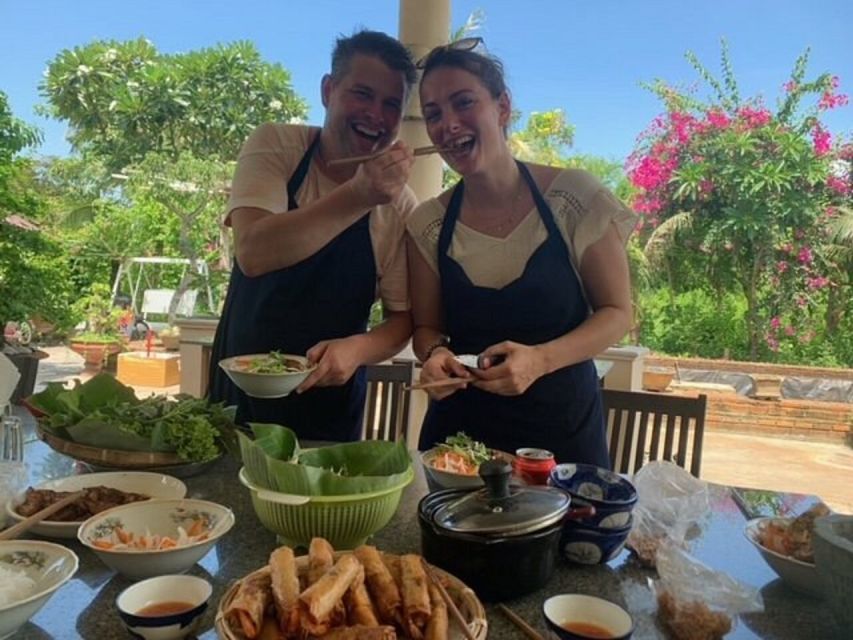
Here are the small things that make a noticeable difference in a class like this.
- Arrive a bit early to avoid stress. Pickup is timed (10:20 or 16:20), and you’ll want a calm start before cooking begins.
- Take notes on what your food looks like. Because you’re cooking in real time, visual cues matter more than written instructions.
- Taste and adjust, don’t just follow. For papaya salad and seasoning-heavy dishes, your palate is your guide.
- Be ready to cook with your hands. This is the kind of class where you’re involved, so loose clothes can be helpful.
- Plan for drinks if you want them. Tea is included, but drinks aren’t, and you may want to budget a little if you pick up something extra with the meal.
Book it or pass? My honest take
I’d book this Hoi An cooking class if you want a hands-on experience with real village context and you care about taking skills home, not just eating well for an afternoon. The included meal, ingredients, and English instruction make the $23 price feel practical, especially for a 3+ hour activity that doesn’t rely on fancy tour theatrics.
I’d hesitate if you need a private pace, hate group logistics, or you only want a quick tasting. This is designed for learning through cooking, and that’s best when you’re ready to participate.
If you’re flexible and you want to leave Cam Thanh with four dishes under your belt (and the confidence to try again later), this is a strong choice.
FAQ
Where is the meeting point for the cooking class?
The meeting point is at Hoi An Village Experience in Cam Thanh, Hoi An.
What time are the pickups?
Pickup times are 10:20 for the morning slot and 16:20 for the afternoon slot.
How long does the experience last?
The total duration is 210 minutes.
What dishes will I cook?
You’ll cook 4 local dishes: pancake, spring rolls, papaya salad, and chicken with lemongrass.
Is lunch or dinner included?
Yes. Lunch is included for the morning slot, and dinner is included for the afternoon slot.
What’s included in the price?
Included items are an English-speaking chef, welcome tea, all ingredients, and the lunch or dinner based on your slot.
Are drinks included?
No. Drinks are not included.
Can you arrange a vegan or vegetarian menu?
Yes, a vegan or vegetarian menu can be arranged if you request it.
Is there an extra cost for public holidays?
Yes. There is an extra charge of 200,000 VND paid by cash for booking on Vietnamese public holidays.
Is the experience wheelchair accessible, and are pets allowed?
Wheelchair accessibility is listed as available. Pets are not allowed.
More Tour Reviews in Hoi An
- Hoi An: Basket Boat Ride in the Coconut Forest
★ 4.9 · 4,956 reviews - Hoi An: Vietnamese Coffee Culture and Coffee Making Class
★ 4.9 · 4,006 reviews - Hoi An: Vietnamese Foldable Lantern Making Class
★ 4.9 · 3,742 reviews - Cooking Class Hoi An:Local Market, Basket Boat, Fishing & Cooking
★ 5.0 · 3,660 reviews - Hoi An Cooking Class(Market,BasketBoat Crabfishing&Cooking Class)
★ 5.0 · 3,386 reviews - Hoi An: My Son Sanctuary Early Morning w. Champa Food Brunch
★ 4.9 · 2,750 reviews
Cook It Yourself: More Hoi An Kitchens
- Cooking Class Hoi An:Local Market, Basket Boat, Fishing & Cooking
★ 5.0 · 3,660 reviews - Hoi An Cooking Class(Market,BasketBoat Crabfishing&Cooking Class)
★ 5.0 · 3,386 reviews - From Hoi An: Market Tour, Basket Boat Ride and Cooking Class
★ 4.8 · 2,208 reviews - Hoi An: Basket Boat with Lantern-Making & Cooking Class Tour
★ 4.9 · 1,444 reviews - Hoi An Cooking Class(Local market,Basket Boat,Fishing & Cooking)
★ 5.0 · 1,323 reviews - Hoi An: Market Experience with Optional Fishing and Cooking
★ 4.7 · 928 reviews
Round Baskets Through the Coconut Palms
- Hoi An: Basket Boat Ride in the Coconut Forest
★ 4.9 · 4,956 reviews - Cooking Class Hoi An:Local Market, Basket Boat, Fishing & Cooking
★ 5.0 · 3,660 reviews - From Hoi An: Market Tour, Basket Boat Ride and Cooking Class
★ 4.8 · 2,208 reviews - Hoi An: Basket Boat with Lantern-Making & Cooking Class Tour
★ 4.9 · 1,444 reviews - Hoi An: Coconut Basket Boat Ride by Hangcoconut
★ 4.8 · 1,364 reviews - Hoi An Cooking Class(Local market,Basket Boat,Fishing & Cooking)
★ 5.0 · 1,323 reviews
Just Reviewed: Fresh Hoi An Trips


Basket Boat & Coconut Village, compared.
 ★ 4.9Basket Boat Ride in the Coconut ForestFrom $34,956 reviews
 ★ 5.0Cooking Class Hoi An:Local Market, Basket Boat, Fishing & CookingFrom $283,660 reviews
 ★ 4.8Market Tour, Basket Boat Ride and Cooking ClassFrom $172,208 reviews
 ★ 4.9Basket Boat with Lantern-Making & Cooking Class TourFrom $301,444 reviews
 ★ 4.8Coconut Basket Boat Ride by HangcoconutFrom $31,364 reviews
 ★ 5.0Hoi An Cooking Class(Local market,Basket Boat,Fishing & Cooking)From $281,323 reviews
 ★ 5.0Coconut Basket Boat Ride in the Coconut ForestFrom $5971 reviews
 ★ 4.9Basket Boat Ride, Cooking Class by HangcoconutFrom $19802 reviews
Browse the lists this tour appears in