
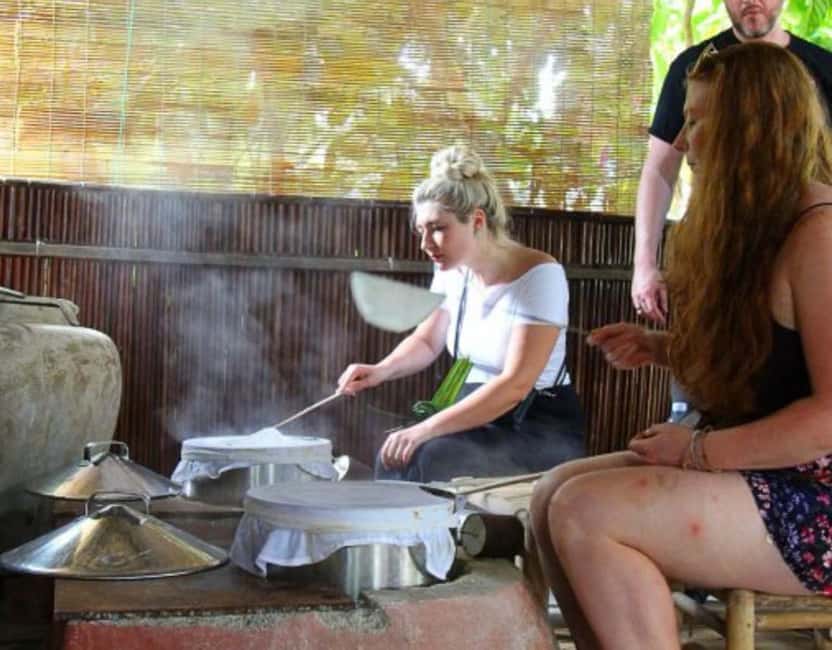
Reviewed · HOI AN COOKING CLASSES
Hoi An: Local Family Cooking Class
Cooking with a Hoi An family feels personal. You learn Hoi An classics by actually making them, not just watching, and you get to taste what you cook as stone-grinder rice milk and the rest of the meal come together. I like that you can also steer the menu toward vegan-friendly or other dietary needs if you tell them ahead of time. The main consideration: this is a group setup with some standing and activity, so it’s not for everyone, especially if you have medical conditions or limited mobility.
The timing is simple: a hotel pick-up from Hoi An ancient town, a short ride to the family home, a welcome drink, then a cooking lesson and a shared lunch or dinner. If you want to take these flavors home, plan to bring your curiosity and comfortable shoes, and be ready to ask questions in clear, practical ways.
In This Review
- Key things to know before you go
- From Hoi An Ancient Town to a Real Family Kitchen
- The Welcome Drink, Then the Lesson Starts
- What You’ll Cook: The Hoi An Menu That Teaches Technique
- Rice Milk (Traditional Stone-Grinder Style)
- Hoi An Pancake
- Hoi An Spring Rolls
- Hoi An Papaya Salad
- Sautéed Chicken (and the swap options)
- Morning Glory or Okra Fried With Garlic and Black Pepper
- How Dietary Needs Are Handled Without Turning It Into a Whole Production
- The Part You’ll Actually Remember: Eating What You Made
- Timing and Transport: Why the 150 Minutes Feel Efficient
- Small-Group Comfort Without Losing the Group Energy
- Price and Value: What $27 Really Buys You
- Who Should Book This Cooking Class (and Who Should Skip)
- What to Bring for a Smooth Experience
- Should You Book This Hoi An Local Family Cooking Class?
Key things to know before you go
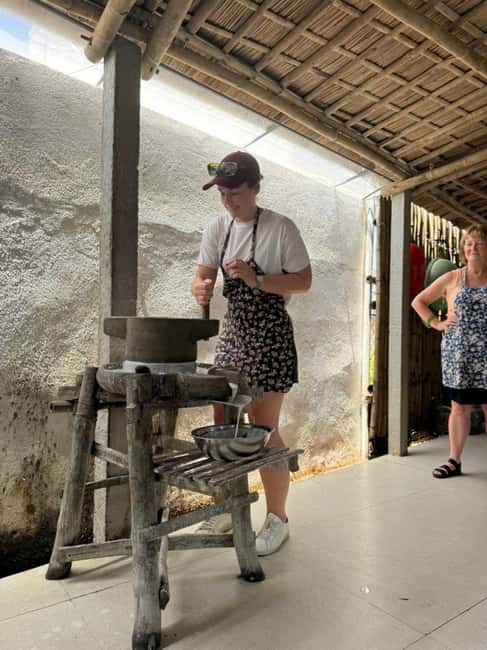
- Stone-grinder rice milk: you’ll learn how it’s made the traditional way, using a unique stone grinder.
- You cook, then you eat: the meal (lunch or dinner) is what you prepare during the lesson.
- Hoi An menu staples: pancake, spring rolls, papaya salad, and a savory stir-fry with steamed rice.
- Diet changes are built in: vegan/vegetarian options are available, and chicken can be swapped for other Vietnamese dishes.
- Small groups: even though it’s a group tour, you’re split into smaller groups of around 12 participants.
- Hotel pickup in Hoi An center: included in most cases, with a note about Da Nang pickup costing extra.
From Hoi An Ancient Town to a Real Family Kitchen
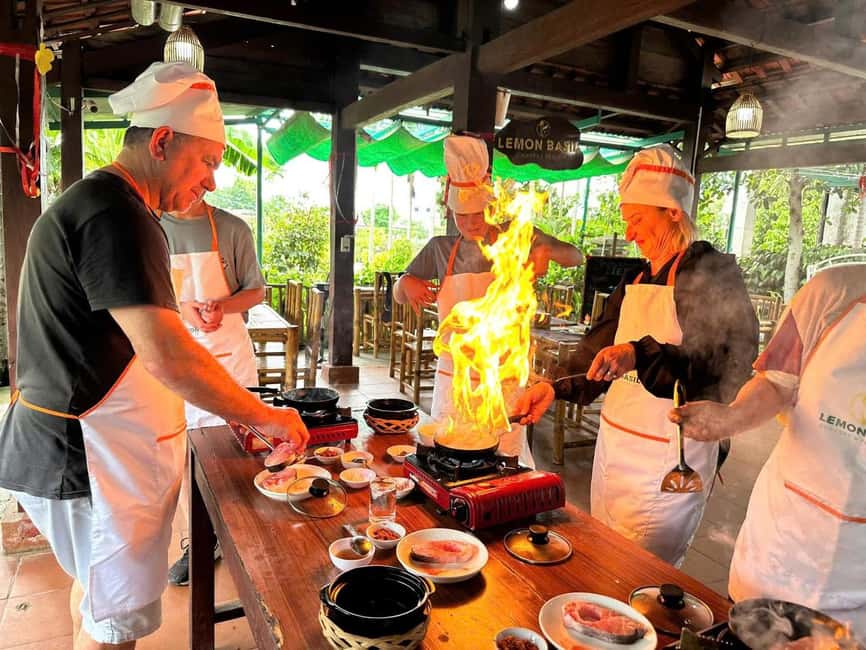
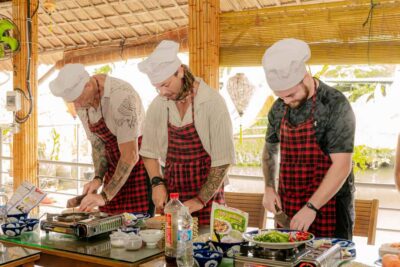
This class is built around one great idea: you cook Vietnamese food in a local home, with local people, and you learn the “why,” not only the “what.” That setting matters. On a street food tour, you taste and move on. In a cooking class, you slow down. You see ingredients up close, learn basic technique, and ask follow-up questions while you’re still holding the pan.
Pickup is included from selected hotels in Hoi An city center. Morning runs from 10:00am to 12:30pm, and the afternoon option runs from 3:45pm to 6:30pm. A family driver meets you at the hotel lobby, then takes you straight to the home. There’s also a welcome drink, followed by a short chance to relax before the lesson starts.
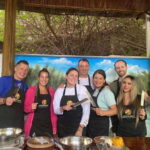
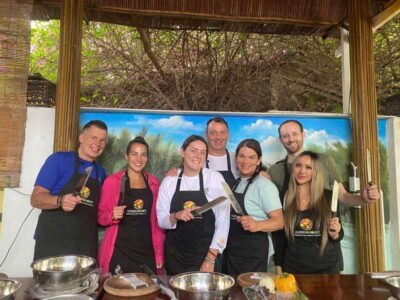
One practical note: this is a group tour. Even so, the organizer splits people into smaller groups of about 12, which usually makes it easier to actually get hands-on time rather than just standing around.
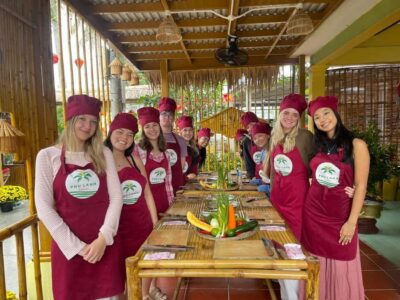
Aprons on for another Hoi An kitchen
- Cooking Class Hoi An:Local Market, Basket Boat, Fishing & Cooking★ 5.0 · 3,660 reviews
- Hoi An Cooking Class(Market,BasketBoat Crabfishing&Cooking Class)★ 5.0 · 3,386 reviews
- From Hoi An: Market Tour, Basket Boat Ride and Cooking Class★ 4.8 · 2,208 reviews
- Hoi An: Basket Boat with Lantern-Making & Cooking Class Tour★ 4.9 · 1,444 reviews
The Welcome Drink, Then the Lesson Starts
Once you arrive, the flow is relaxed but focused. You get a welcome drink from the family and a little decompression time. This is a good buffer if you’re arriving from a busy morning (or if the afternoon heat is still on).
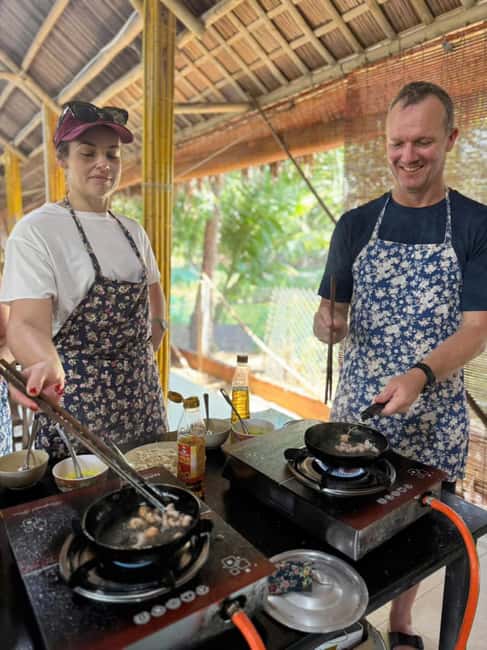
After that, the cooking lesson begins at the home kitchen. You’ll be guided with an English speaking tour guide, and the class is designed for you to walk away with recipes you can replicate later.
If you’re the type who likes to write things down, have a small notebook or notes app ready. The tour includes an explanation of the dishes, but your memory will thank you later.
What You’ll Cook: The Hoi An Menu That Teaches Technique
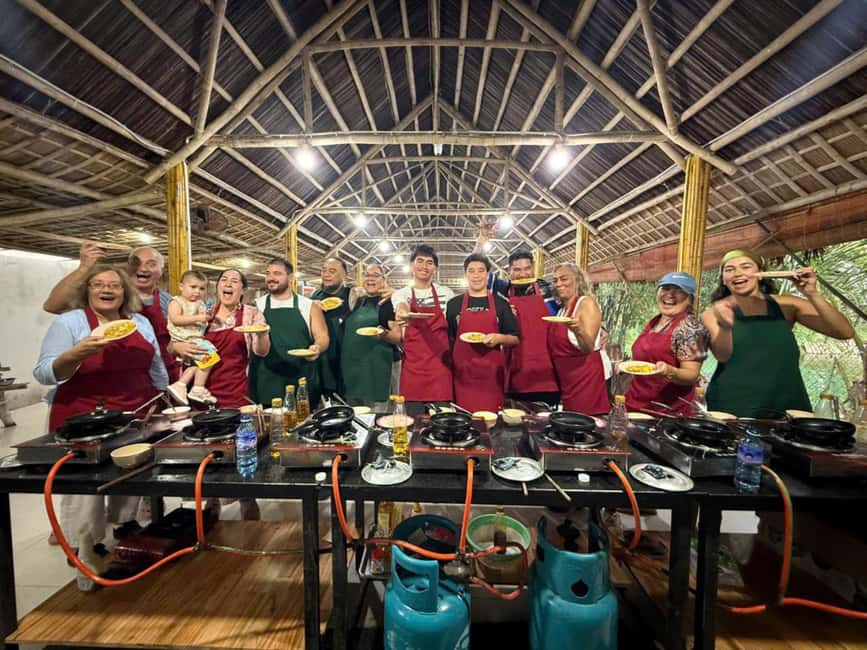
The menu is where the class earns its value. These are not random dishes. They’re Hoi An favorites that build skills across different cooking styles: traditional ferment-and-grind basics, folding and rolling, and balancing flavors in salads and sauces.
Rice Milk (Traditional Stone-Grinder Style)
The class starts with rice milk made the traditional way. You’ll learn how it’s prepared using a stone grinder, which is exactly the kind of step that’s hard to replace at home if you only learn the final result. If you’ve only ever seen rice milk in a carton, you’ll appreciate how different the process feels when you’re making it from scratch.
This also sets the stage for later dishes, since rice milk shows up in the Hoi An pancake recipe.
More hours at the Hoi An stove


Hoi An Pancake
Next up is a Hoi An pancake made with rice milk, plus savory add-ins like pork and shrimp, along with beansprouts. Even if you request dietary changes, the point is the same: you learn how to handle batter and toppings in a way that suits Hoi An-style flavors.
The technique you pick up here is useful beyond this specific dish. Once you understand how the batter works and how toppings behave, you can adapt the recipe at home.
Hoi An Spring Rolls
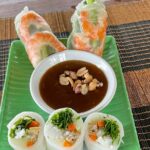
You’ll also make Hoi An spring rolls with a filling that can include mushroom, carrot, spring onion, taro, and pork. Rolling isn’t just a fun hands-on task. It’s how you learn texture control—how much filling goes in, how tight to roll, and how to keep everything intact.
This is one of the recipes where your kitchen confidence tends to jump quickly because success is visible: the roll looks good when it’s sealed right.
Hoi An Papaya Salad
Then comes Hoi An papaya salad, with papaya plus carrot, onion, and banana flowers. A salad might seem simple compared to rolling, but it’s where balance matters. You’ll learn how the ingredients work together and why the flavor develops the way it does.
If you like dishes with a sharp-sweet-sour balance, this is the one to pay close attention to. You can’t fake balance—you have to taste and adjust.
Sautéed Chicken (and the swap options)
You’ll make sautéed chicken with ingredients like onion, garlic, black pepper, spring onion, and mushroom—served with steamed rice. If you don’t eat chicken, the class can swap it for other Vietnamese dishes such as pho (rice noodle with beef), Hoi An Cao Lau, Mi Quang (Quang noodle), or fish.
That flexibility is a big deal. It means you’re not stuck with a bland substitute meal. You’re still learning a dish structure that fits local expectations.
Morning Glory or Okra Fried With Garlic and Black Pepper
The meal is rounded out with morning glory or okra fried with garlic and black pepper, plus steamed rice. This part is about quick flavor-building—simple ingredients treated with care, not just thrown in and forgotten.
If you’ve ever struggled to make vegetables taste like restaurant food, this is the step that helps.
How Dietary Needs Are Handled Without Turning It Into a Whole Production
This class explicitly offers vegan/vegetarian options, and they also say ingredients can be adapted based on whether you’re vegan, vegetarian, prefer gluten-free, or have allergies. That’s reassuring, because cooking at home later only works if you know what changes to make.
Here’s the practical approach I’d take: tell them your needs clearly before you go. They ask you to let them know about food restrictions or allergies, and the recipe list includes options for swapping the chicken component.
Also, note that the dishes listed include pork and shrimp as standard items. So if you have sensitivities, plan to communicate them early rather than assuming it’s automatically handled.
The Part You’ll Actually Remember: Eating What You Made
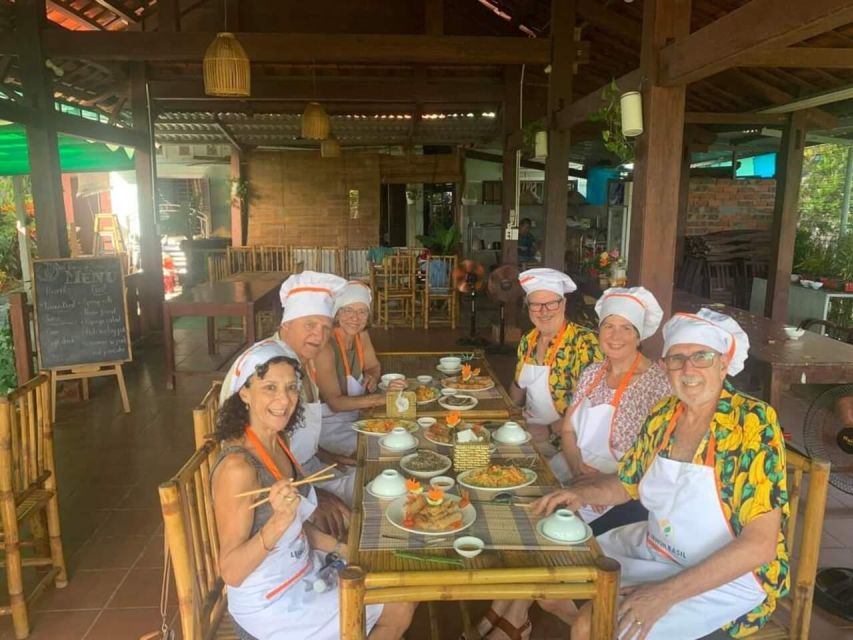
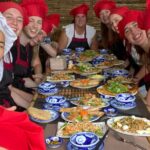
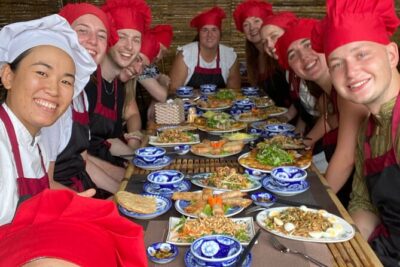
After the lesson, you eat. That’s the payoff. You enjoy the delicious lunch (morning tour) or dinner (afternoon tour) with the family.
This isn’t just about feeding you. It’s about memory. When you taste the final dish right after making it, you learn what the ingredients should taste like at the moment you finish cooking. That makes it much easier to recreate later.
It also keeps the experience social. You’re in someone’s home. You’re not just passing through.
Timing and Transport: Why the 150 Minutes Feel Efficient
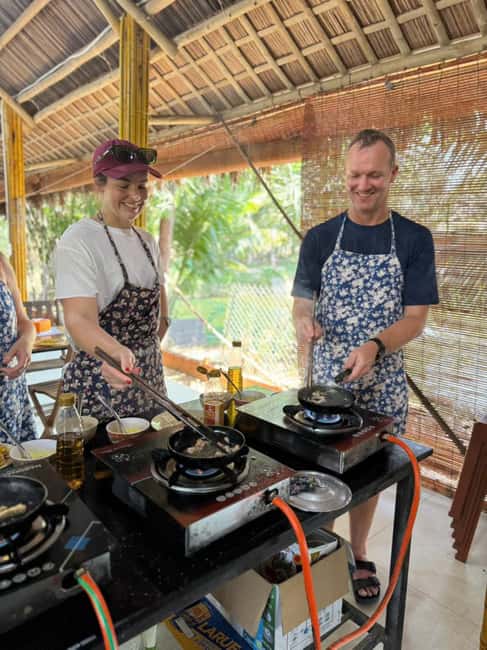
The total duration is listed as 150 minutes, which is tight but doable. It’s long enough to feel hands-on, yet short enough that you’re not stuck waiting for everything to finish.
Pickup and drop-off are included from selected hotels in Hoi An city center. At the end, your guide returns you back to your hotel. If you prefer, the return can be to the Hoi An old town by car instead.
That flexibility is helpful if you want your cooking class to plug directly into your sightseeing plans without extra taxi time.
Small-Group Comfort Without Losing the Group Energy
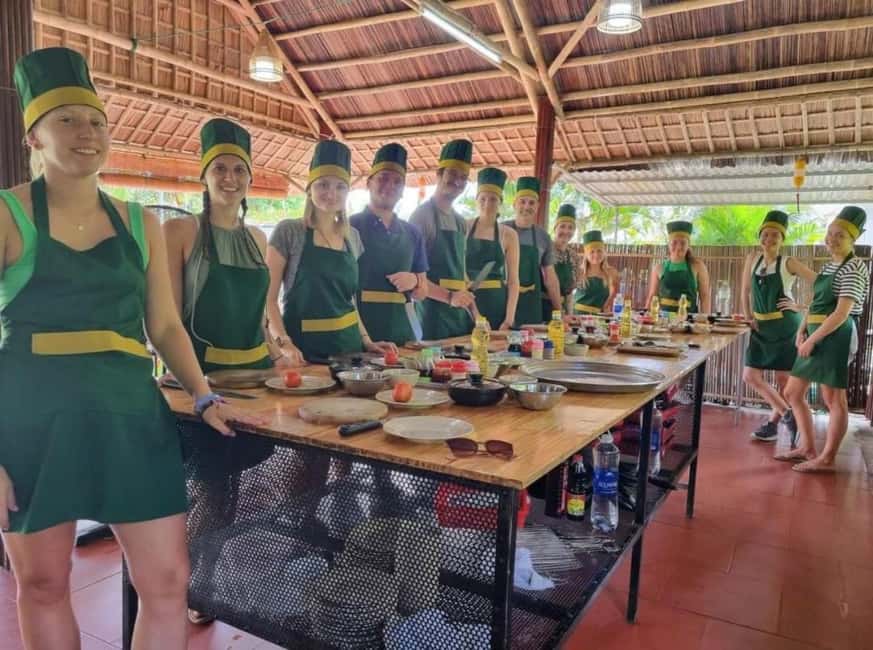
Even though it’s a group tour, it’s not a giant crowd experience. You get split into small groups of around 12 participants. That size usually hits a good sweet spot: enough people to make it lively, but not so many that you feel lost.
In a cooking setting, group size can change everything. Too many people and the kitchen becomes chaotic. Here, the format suggests the goal is to keep you moving through the steps and tasting what you create.
Price and Value: What $27 Really Buys You
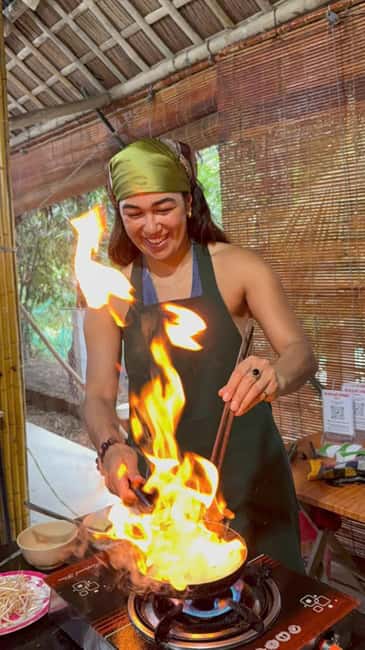
At $27 per person for a 150-minute experience, you’re paying for more than “a cooking class.” The price includes:
- Traditional lunch (morning) or dinner (afternoon)
- Bottled water
- An English speaking guide
- Pick up & drop off at your hotel in Hoi An center
- Entrance fee tickets
If you compare that to the cost of booking a meal plus paying for a guided activity plus transportation, it starts to look like a straightforward deal. You’re also getting a specific menu focus, including techniques like stone-grinder rice milk and multiple Hoi An staples.
One extra cost to be aware of: if you’re staying in Da Nang city or outside Hoi An city center, pickup isn’t included and costs 300,000 VND (about $12.5) one way for 2–3 people sharing. That fee helps you plan your total trip budget.
Who Should Book This Cooking Class (and Who Should Skip)
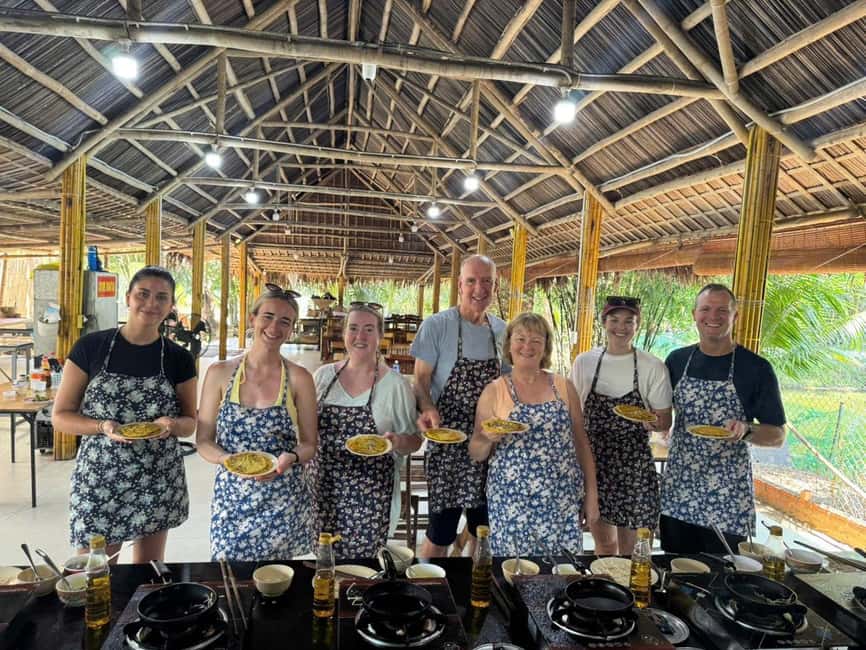
This fits best if you:
- Want a practical way to learn Vietnamese recipes you can repeat later
- Like the idea of cooking in a real home, not a staged studio
- Enjoy hands-on work with rolling, mixing, frying, and salad preparation
- Appreciate dietary flexibility, including vegan/vegetarian options
There are also clear “not for everyone” notes. It’s not suitable for people with heart problems, people with pre-existing medical conditions, or people over 95 years. If any of those apply, it’s worth choosing a lighter activity and checking details with the provider.
What to Bring for a Smooth Experience
You’ll be more comfortable if you come prepared. Plan on:
- Comfortable shoes
- A sun hat
- Camera
- Sports shoes
- Outdoor clothing
- Cash
That cash note can matter in Vietnam for small personal purchases, tips, or extras you might decide on while you’re in town.
Also, if you tend to get warm quickly, bring something breathable. Even though the class happens indoors, you’re also riding and moving between the pickup point and the home.
Should You Book This Hoi An Local Family Cooking Class?
If you want a simple, high-value way to learn Hoi An cooking style, this class is an easy yes. The combination of hands-on instruction, a meal you eat right after cooking, and a menu that teaches multiple techniques makes it feel practical, not just fun.
Book it if you care about replicating recipes at home and you like being in someone’s kitchen for a couple hours. I’d also recommend it if you’re traveling with others who enjoy food experiences, since the small-group format keeps things lively.
Skip it if you have a medical limitation that makes standing or active cooking unsafe for you, or if you’re looking for a purely observational food tour. In that case, you may prefer a lighter sit-and-taste option instead.
If you’re ready to come back with real cooking skills, not only photos, this one is worth your time.
Learn Another Vietnamese Dish
- Cooking Class Hoi An:Local Market, Basket Boat, Fishing & Cooking
★ 5.0 · 3,660 reviews - Hoi An Cooking Class(Market,BasketBoat Crabfishing&Cooking Class)
★ 5.0 · 3,386 reviews - From Hoi An: Market Tour, Basket Boat Ride and Cooking Class
★ 4.8 · 2,208 reviews - Hoi An: Basket Boat with Lantern-Making & Cooking Class Tour
★ 4.9 · 1,444 reviews - Hoi An Cooking Class(Local market,Basket Boat,Fishing & Cooking)
★ 5.0 · 1,323 reviews - Hoi An: Market Experience with Optional Fishing and Cooking
★ 4.7 · 928 reviews
More Tour Reviews in Hoi An
- Hoi An: Basket Boat Ride in the Coconut Forest
★ 4.9 · 4,956 reviews - Hoi An: Vietnamese Coffee Culture and Coffee Making Class
★ 4.9 · 4,006 reviews - Hoi An: Vietnamese Foldable Lantern Making Class
★ 4.9 · 3,742 reviews - Cooking Class Hoi An:Local Market, Basket Boat, Fishing & Cooking
★ 5.0 · 3,660 reviews - Hoi An Cooking Class(Market,BasketBoat Crabfishing&Cooking Class)
★ 5.0 · 3,386 reviews - Hoi An: My Son Sanctuary Early Morning w. Champa Food Brunch
★ 4.9 · 2,750 reviews
Cook It Yourself: More Hoi An Kitchens
- Cooking Class Hoi An:Local Market, Basket Boat, Fishing & Cooking
★ 5.0 · 3,660 reviews - Hoi An Cooking Class(Market,BasketBoat Crabfishing&Cooking Class)
★ 5.0 · 3,386 reviews - From Hoi An: Market Tour, Basket Boat Ride and Cooking Class
★ 4.8 · 2,208 reviews - Hoi An: Basket Boat with Lantern-Making & Cooking Class Tour
★ 4.9 · 1,444 reviews - Hoi An Cooking Class(Local market,Basket Boat,Fishing & Cooking)
★ 5.0 · 1,323 reviews - Hoi An: Market Experience with Optional Fishing and Cooking
★ 4.7 · 928 reviews
Just Reviewed: Fresh Hoi An Trips

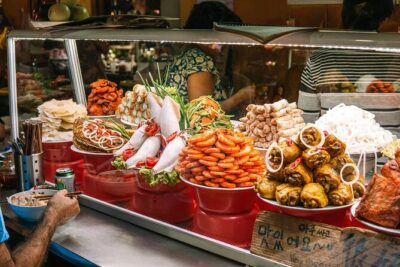

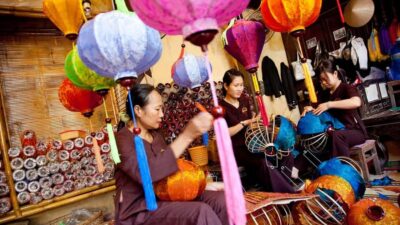


Hoi An Cooking Classes, compared.
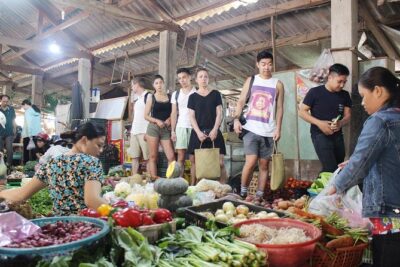 ★ 5.0Cooking Class Hoi An:Local Market, Basket Boat, Fishing & CookingFrom $283,660 reviews
 ★ 5.0Hoi An Cooking Class(Market,BasketBoat Crabfishing&Cooking Class)From $283,386 reviews
 ★ 4.8Market Tour, Basket Boat Ride and Cooking ClassFrom $172,208 reviews
 ★ 4.9Basket Boat with Lantern-Making & Cooking Class TourFrom $301,444 reviews
 ★ 5.0Hoi An Cooking Class(Local market,Basket Boat,Fishing & Cooking)From $281,323 reviews
 ★ 4.7Market Experience with Optional Fishing and CookingFrom $4928 reviews
 ★ 4.9Basket Boat Ride, Cooking Class by HangcoconutFrom $19802 reviews
 ★ 5.0Hoi An Eco Tour Cooking Class & Fishing (Local market,basket boat,learn cooking)From $29567 reviews
Browse the lists this tour appears in