
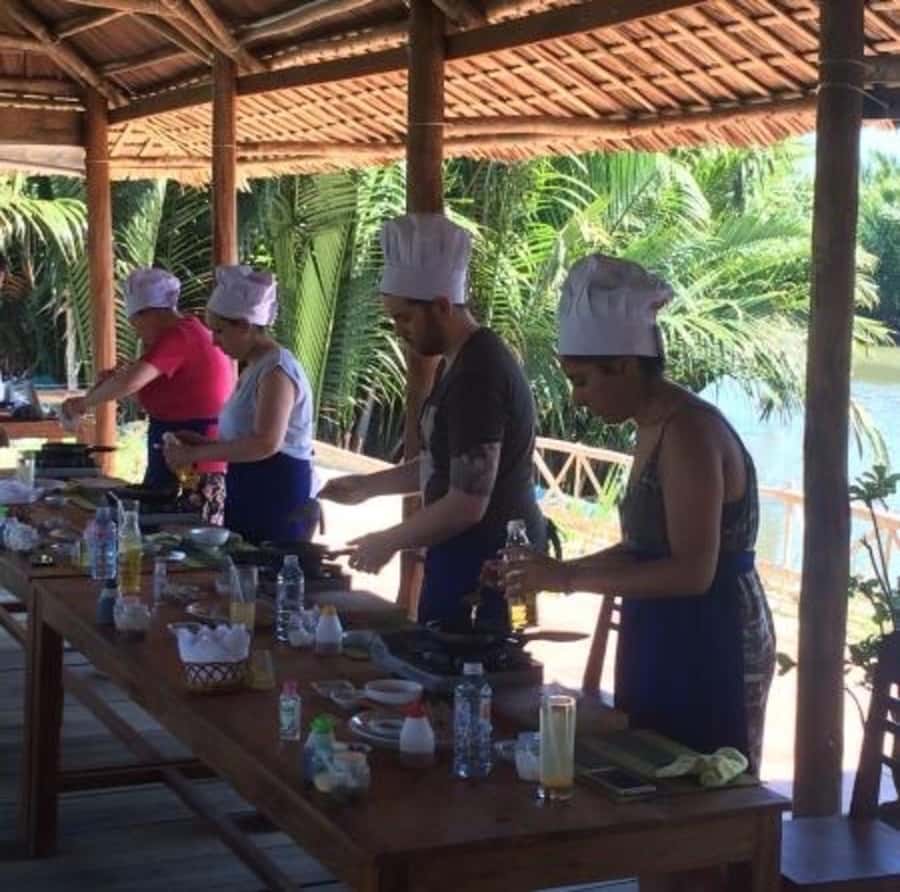
Reviewed · BASKET BOAT & COCONUT VILLAGE
Hoi An: Bay Mau Cooking Class Only and Making Pho
Pho tastes better in a coconut village. In Bay Mau, this small-group class (under 10) feels focused, and you get hands-on practice with traditional rice tools while making things like rice milk and rice paper. It’s a short, practical way to understand why Vietnamese food tastes the way it does, even if your time in Hoi An is limited.
I also love that you cook four specific dishes, including Pho Bo Ha Noi and Banh Xeo, then eat what you made for a proper lunch or dinner. One consideration: there’s no hotel pickup, so you’ll want to get yourself to the meeting point near the Big Dragon Bridge with clear directions.
In This Review
- Key things you’ll notice
- Bay Mau Cooking Class: the fast track to real Hoi An flavor
- Meeting point at Ba Tran Cooking Class, near the Big Dragon Bridge
- Inside the coconut village: where the hands-on part starts
- The rice tools you’ll get to use
- Rice grinding and rice paper: the skills that actually explain the taste
- Cooking four dishes: Bun Bo Nam Bo, Pho Bo Ha Noi, Banh Xeo, Goi Cuon
- Bun Bo Nam Bo (Southern-style beef vermicelli)
- Pho Bo Ha Noi (Hanoi-style beef rice noodle soup)
- Banh Xeo (sizzling Vietnamese crepes)
- Goi Cuon (Vietnamese salad rolls)
- Eating what you cook: lunch or dinner in the same session
- Take-home recipes: the cheat code for cooking later
- Small group under 10: why the class feels personal
- Price and value: why $26 feels fair for a 3-hour experience
- What’s not included: plan around the missing pieces
- Who should book this cooking class (and who might skip it)
- Should you book Bay Mau Cooking Class and Making Pho?
- FAQ
- How long is the Hoi An Bay Mau cooking class?
- Where do I meet the group?
- Is hotel pickup or drop-off included?
- What dishes will I cook?
- Are vegetarian options available?
- Is the experience wheelchair accessible, and are pets allowed?
Key things you’ll notice
- Under-10 group size that keeps questions from getting lost
- Traditional rice tools like a stone mortar, grinder, and wooden pestle
- Pho and rice-paper making in a single 3-hour experience
- Four named local dishes you actually plate, cook, and eat
- Unlimited mineral water and juices, plus souvenirs and take-home recipes
Bay Mau Cooking Class: the fast track to real Hoi An flavor
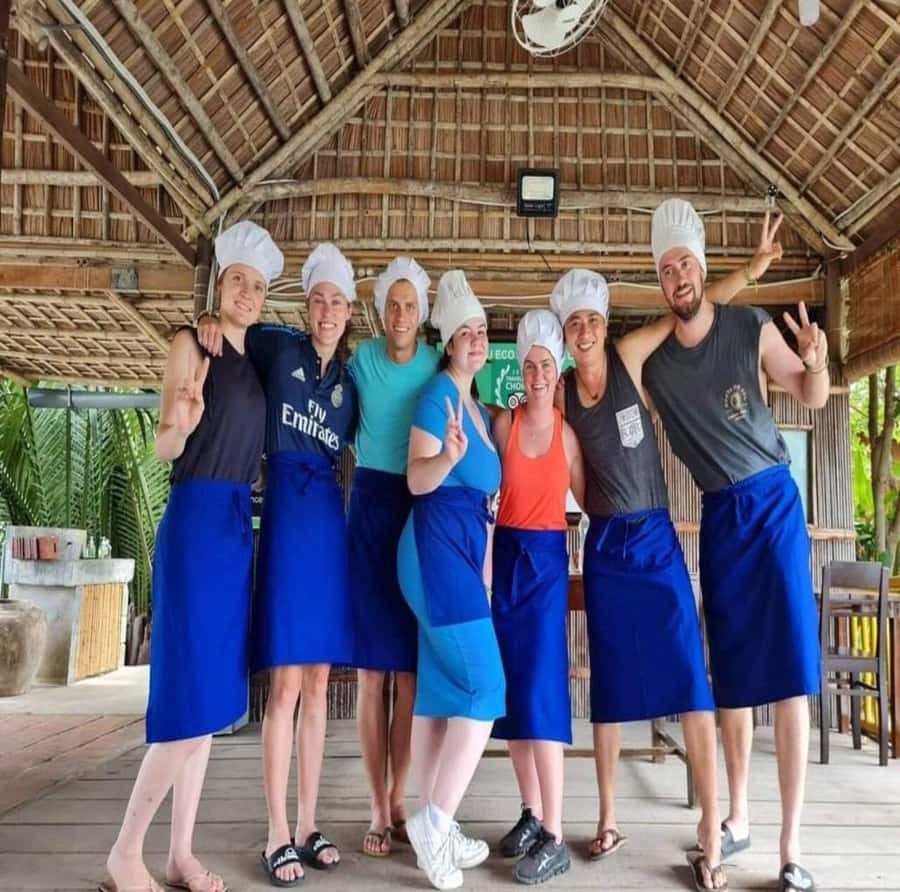
Hoi An has food everywhere, but most experiences rush you through menus and leave you guessing what’s behind the taste. This class takes a different approach: you work with the building blocks first, then turn them into dishes you recognize.
What makes it especially good for a short stay is the time efficiency. In about 3 hours, you’ll go from pounding and grinding rice to cooking and eating four Vietnam classics. That’s the kind of learning you can remember, because your hands were involved and your stomach got proof.
Spin the round basket boat through the palms
- Hoi An: Basket Boat Ride in the Coconut Forest★ 4.9 · 4,956 reviews
- From Hoi An: Market Tour, Basket Boat Ride and Cooking Class★ 4.8 · 2,208 reviews
- Hoi An: Basket Boat with Lantern-Making & Cooking Class Tour★ 4.9 · 1,444 reviews
- Hoi An: Coconut Basket Boat Ride by Hangcoconut★ 4.8 · 1,364 reviews
Meeting point at Ba Tran Cooking Class, near the Big Dragon Bridge
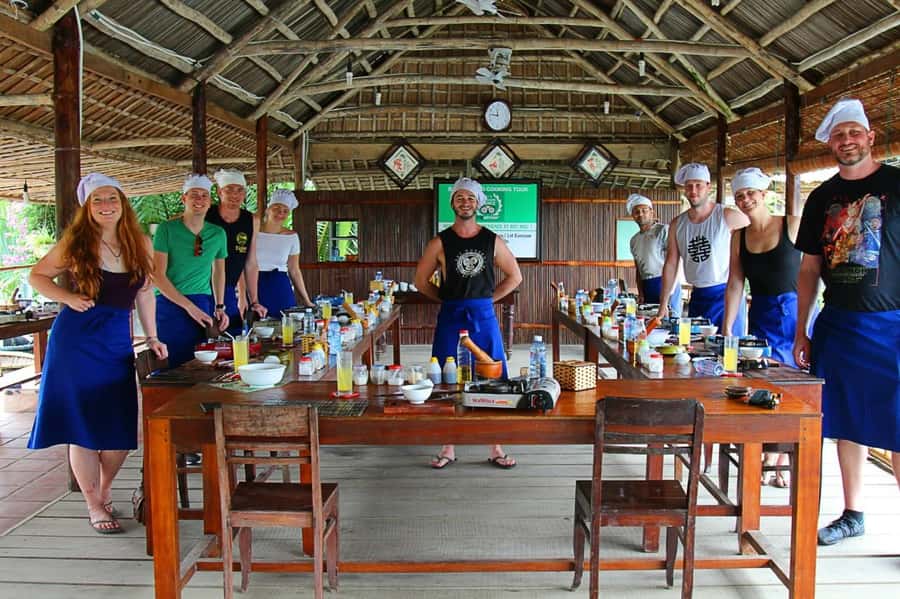
You meet in front of Ba Tran Cooking Class at the Big Dragon Bridge area. From there, your chef meets you and walks the group over to Bay Mau Cooking Class inside the coconut village.
Since there’s no pick-up or drop-off from Hoi An hotels, treat this as a “meet there and go together” experience. If you’re staying a ways from the bridge, plan a little extra time. And if the operator asks for a WhatsApp number for directions, send it—small miscommunications around meeting points can waste time fast.
Also note two practical limits: pets aren’t allowed, and the class isn’t suitable for wheelchair users. If either of those affects you, it’s worth choosing a different format.
Inside the coconut village: where the hands-on part starts
Once you arrive in the coconut village area, the class shifts quickly from watching to doing. You’re not stuck behind a camera angle or listening to a lecture. The chef shows you how the tools work, then you get a turn.
This part matters because Vietnamese cooking isn’t only about herbs and sauces. It’s about texture. When you pound, grind, and process rice yourself, you start to understand why certain dishes feel light, chewy, or silky.
The rice tools you’ll get to use
You’ll use traditional equipment such as:
- a stone mortar and grinder
- a wooden pestle
- the kinds of setups used to pound and separate rice
You’ll also go through rice-based steps like:
- pounding and separating rice
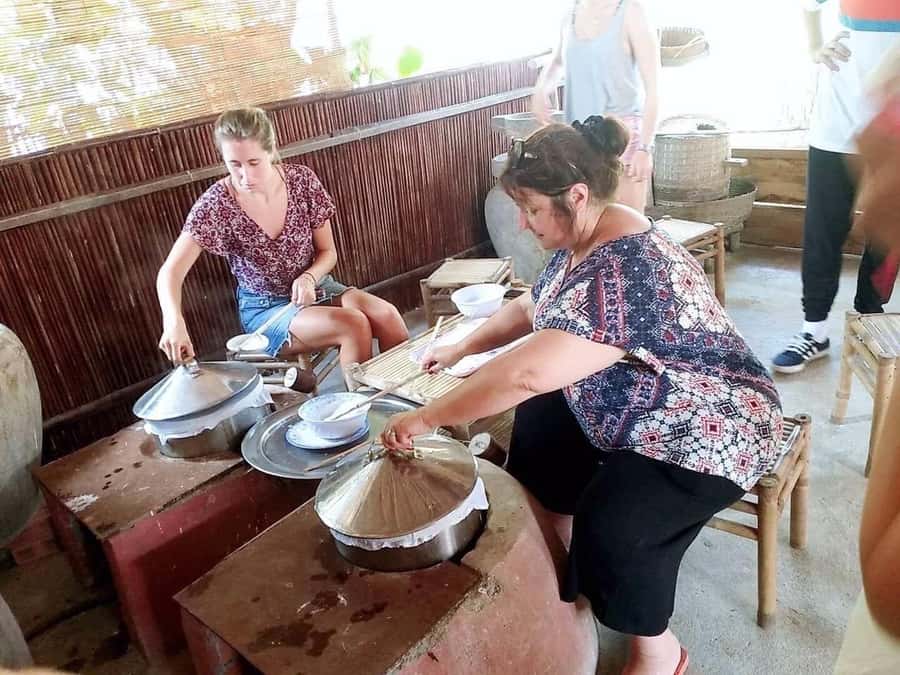
- grinding rice to make rice milk
- making rice paper
If you’re the type who likes to cook at home later, this is the best section to pay attention to. Small differences in grind size and timing show up in the final texture, especially for rice-paper-style items.
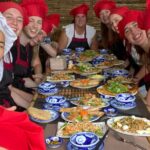
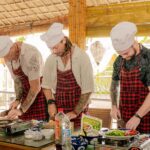
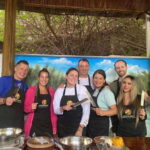
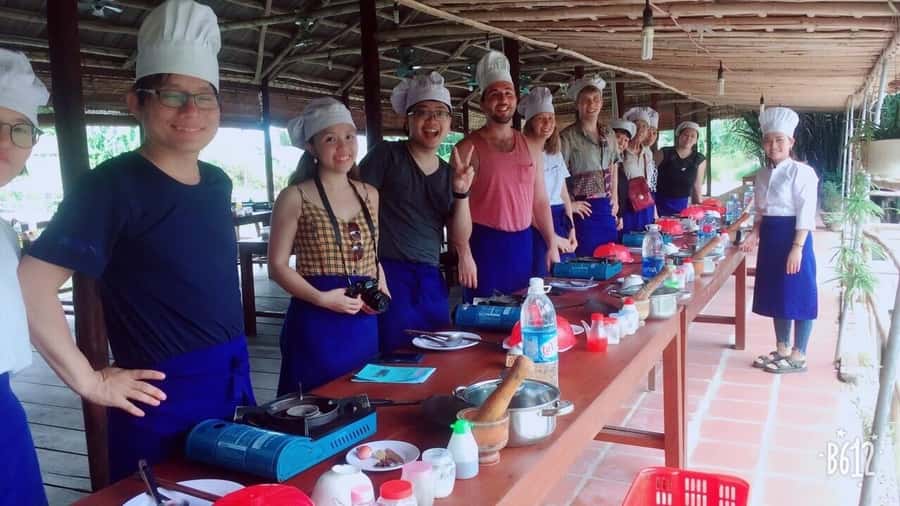
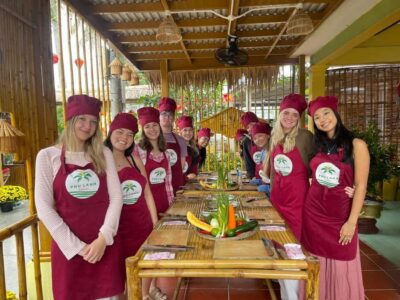
Aprons on for another Hoi An kitchen

Rice grinding and rice paper: the skills that actually explain the taste
In Vietnam, rice isn’t just a side dish. It’s a system. Here you see that system up close.
When you pound and separate rice, you’re essentially preparing it for the next steps. Then grinding rice to make rice milk gives you a sense of the liquid base that carries flavor in many recipes. Finally, rice paper is where your effort turns into an edible tool—thin, delicate, and very sensitive to heat and timing.
One practical tip: when the chef shows you the motion, copy it exactly once, not perfectly forever. The goal is to understand the rhythm. The food will still teach you if your first attempt isn’t flawless.
Cooking four dishes: Bun Bo Nam Bo, Pho Bo Ha Noi, Banh Xeo, Goi Cuon
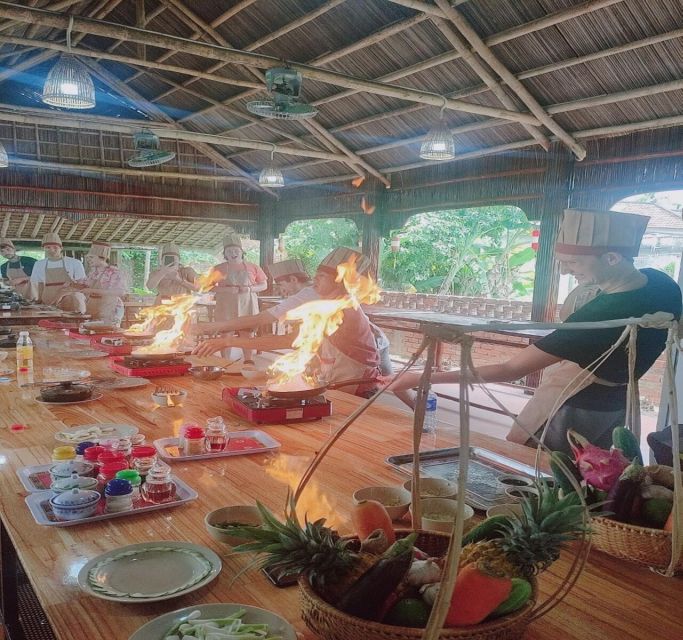
This is the core of the class: you cook four named Vietnamese dishes with a local chef and an English-speaking guide. The exact flow depends on the day and pace, but you can expect to move through prep, cooking, and plating with guidance.
Bun Bo Nam Bo (Southern-style beef vermicelli)
Southern-style beef vermicelli has a different feel than the pho you might already know. You’ll be working with beef and a noodle base, and you’ll likely notice how the balance of sauce and herbs shapes the final bowl.
For you, the value here is learning how Vietnamese meals aren’t only about broth. They’re also about layered flavors—something you’ll taste as you build and adjust your own plate.
Pho Bo Ha Noi (Hanoi-style beef rice noodle soup)
Pho can be deceptively simple. The difference between a good pho experience and a great one is usually in the broth depth and how the noodles and beef come together.
In this class, you cook Pho Bo Ha Noi, so you get the Northern-style approach rather than only a one-size-fits-all version. During cooking, pay attention to what the chef focuses on—those cues are usually the real secrets behind the flavor.
Also, because you’re making rice-based components during the class, pho won’t feel like an imported dish. You’ll understand it as a local process that starts with rice.
Banh Xeo (sizzling Vietnamese crepes)
Banh Xeo is where the class gets hands-on in a different way—heat management. Crepes like this cook fast, and the sizzling sound is basically part of the recipe.
You’ll learn how to handle the batter and cook it until it sets properly. If you’ve ever watched someone make banh xeo and wondered why yours didn’t turn out right, this is the kind of class where the answer becomes obvious: the pan heat and the pour thickness matter.
Goi Cuon (Vietnamese salad rolls)
Goi cuon is the lighter, refreshing side of the lineup. It’s also a technique class: you’re dealing with rice-paper style wrappers and filling combos.
The value is learning how to roll without turning it into a sticky mess. Even if your first rolls aren’t restaurant-perfect, you’ll take home the method for practice later.
If you’re thinking ahead to feeding yourself after the class, this dish is a great one to replicate, because it’s flexible with herbs and fillings.
Eating what you cook: lunch or dinner in the same session
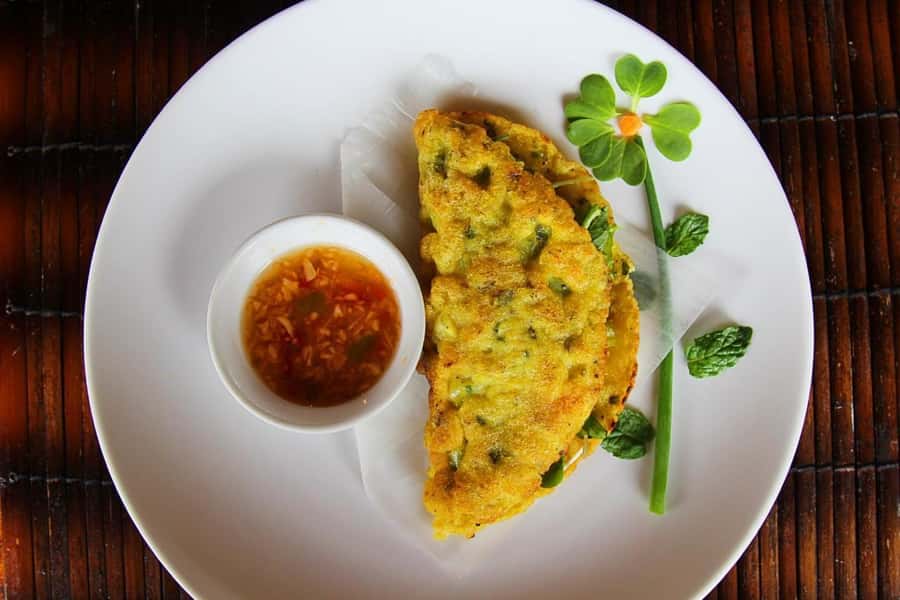
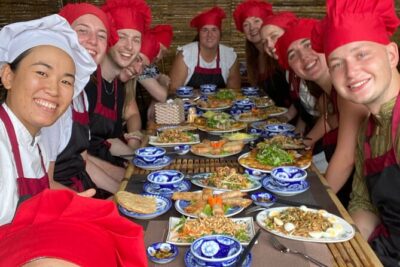
After you finish cooking, you sit down to eat your meal. That’s not just convenient—it’s part of why this experience works.
You get to taste right away while your memory of the process is fresh. You’ll notice things like how your broth feels once it cools slightly, how your crepe texture compares to what you aimed for, and whether the roll thickness was right.
You’ll also get unlimited mineral water and juices during the experience, which helps keep the pace comfortable. And yes, you’ll leave with local souvenirs too.
Take-home recipes: the cheat code for cooking later
At the end of class, you receive recipes to take home. This matters because photos won’t show you the small choices: how much of an ingredient, how the chef talks about heat, and how to avoid common mistakes.
If you’re cooking again later, use these recipes as a framework rather than a strict script. The best way to recreate it is to remember the method you learned with the tools—pounding, grinding, and the timing cues.
One extra detail that can make a difference at home: on one recent class, the chef provided very long chopsticks for cooking, and they were taken home afterward. Those kinds of practical items can make your follow-up cooking more enjoyable, even when you’re not in Vietnam.
Small group under 10: why the class feels personal
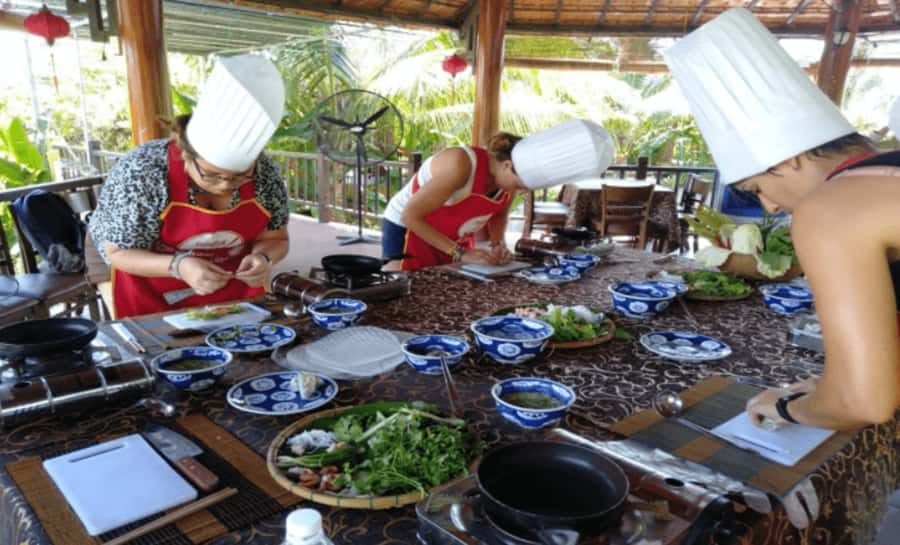
Limiting the group size to 10 participants or fewer changes everything. It’s easier to get individual attention, especially during hands-on steps like grinding rice or working with hot pans.
You’ll also get clearer feedback when something is off—thickness, timing, or how the chef wants the tool motion. If you’re traveling solo or just want to ask a lot of questions without waiting your turn, this format is a big win.
Price and value: why $26 feels fair for a 3-hour experience
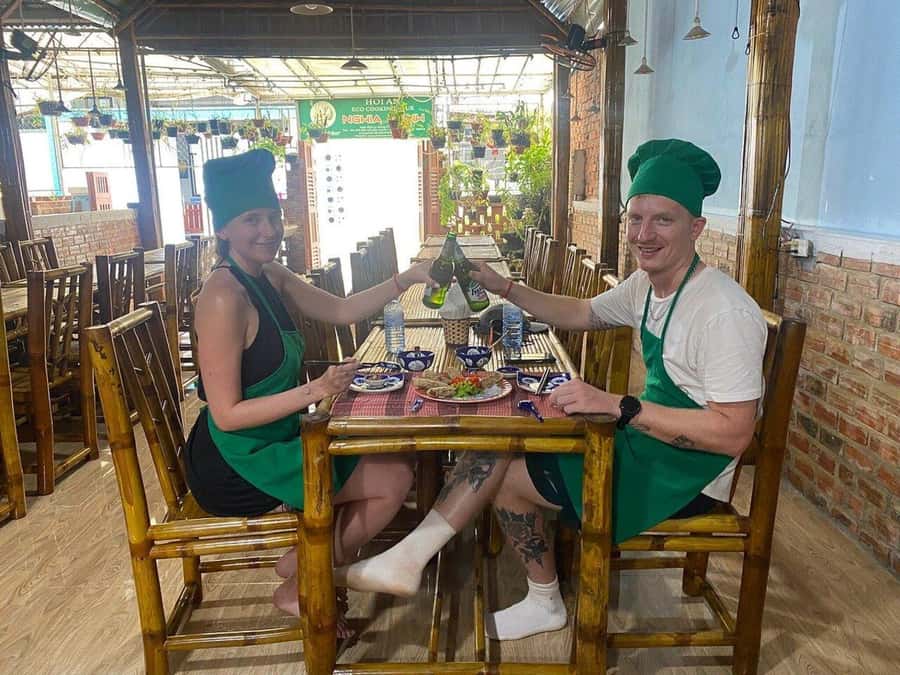
At $26 per person for about 3 hours, the price looks simple on paper. The real value comes from what’s bundled:
- English-speaking tour guide and local chef guidance
- ingredients for cooking
- a ticket in the coconut village
- unlimited mineral water and juices
- a traditional lunch or dinner
- local souvenirs
- and take-home recipes
For you, the key is that you’re paying for more than food. You’re paying for structured practice with techniques and tools. In many Hoi An experiences, you either watch cooking or you eat. Here you do both, quickly.
If you’re on a tight budget, it’s a strong choice because it includes the meal. If you’re a food-first traveler, it’s also efficient since it covers pho plus three more dishes in a single session.
What’s not included: plan around the missing pieces
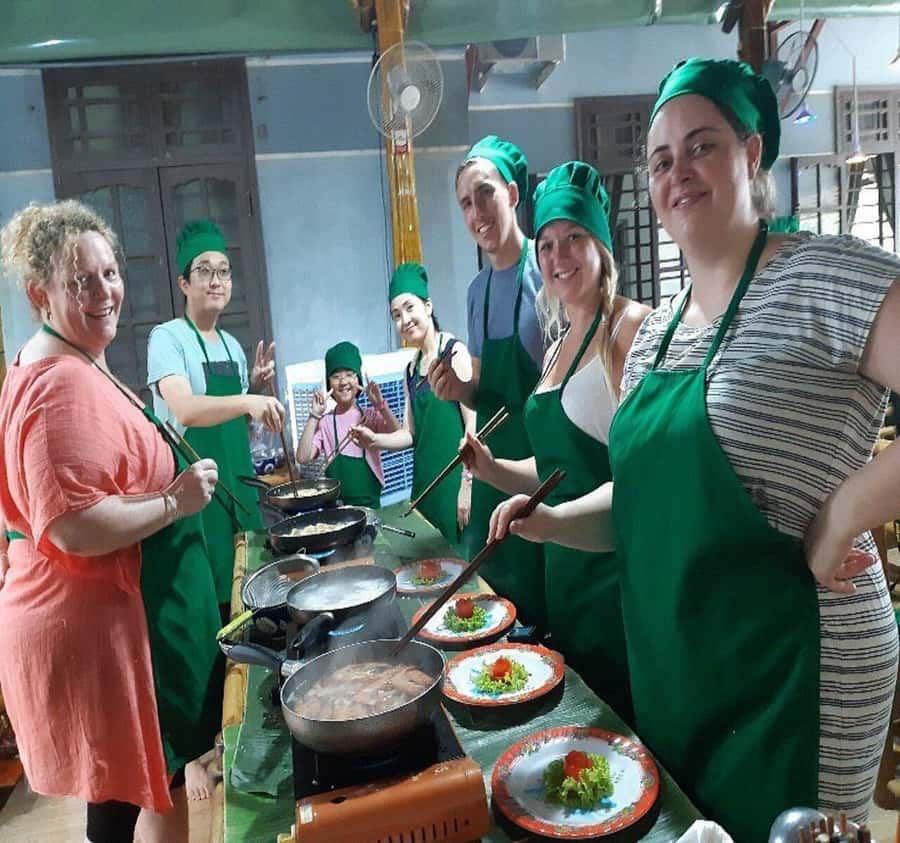
To set expectations, understand what you won’t get:
- no hotel pickup or drop-off
- no local market trip
- no basket boat trip
- personal drinks are not included (though water and juices are covered)
That’s not a deal-breaker; it just changes how you structure your day. If you’re hoping for extra sightseeing, treat this class as the anchor activity. Build the rest around it.
Who should book this cooking class (and who might skip it)
Book this if:
- you want a short, hands-on Hoi An food experience
- you want pho plus other Vietnamese dishes, not just one highlight
- you like learning with your hands—rice tools are a major part of the class
- you’re happy to cook and eat in the same 3-hour window
You might skip it if:
- you need wheelchair accessibility
- you’re hoping for lots of extra stops like a market or boat ride
- you don’t want a structured class and prefer casual street-food wandering instead
Also keep in mind the setting is designed for visitors to experience the process. The class still focuses on real tools and real cooking, but if you dislike anything that feels commercial, approach with realistic expectations.
Should you book Bay Mau Cooking Class and Making Pho?
Yes—if your priority is learning the methods behind Vietnamese rice-based cooking and eating what you make, this is a smart use of time in Hoi An. The small group, the named dishes, and the rice-tool practice make it feel more substantial than a typical cooking demo.
I’d especially recommend it if you’re the kind of traveler who likes to leave with a skill, not just a photo. You’ll walk away knowing what goes into dishes like Pho Bo Ha Noi and Banh Xeo, and you’ll have recipes to recreate the basics at home.
If you’re comfortable meeting at the Big Dragon Bridge area and handling your own transport to the coconut village, it’s hard to beat the value for a $26, 3-hour food lesson.
FAQ
How long is the Hoi An Bay Mau cooking class?
The class lasts about 3 hours.
Where do I meet the group?
You meet in front of Ba Tran Cooking Class, near the Big Dragon Bridge. The chef meets you there and takes you to Bay Mau Cooking Class in the coconut village.
Is hotel pickup or drop-off included?
No. Pickup and drop-off from Hoi An hotels are not included.
What dishes will I cook?
You will cook four dishes: Bun Bo Nam Bo, Pho Bo Ha Noi, Banh Xeo, and Goi Cuon.
Are vegetarian options available?
Vegetarian options are available upon request.
Is the experience wheelchair accessible, and are pets allowed?
Wheelchair users are not suitable for this activity, and pets are not allowed.
More Tour Reviews in Hoi An
- Hoi An: Basket Boat Ride in the Coconut Forest
★ 4.9 · 4,956 reviews - Hoi An: Vietnamese Coffee Culture and Coffee Making Class
★ 4.9 · 4,006 reviews - Hoi An: Vietnamese Foldable Lantern Making Class
★ 4.9 · 3,742 reviews - Cooking Class Hoi An:Local Market, Basket Boat, Fishing & Cooking
★ 5.0 · 3,660 reviews - Hoi An Cooking Class(Market,BasketBoat Crabfishing&Cooking Class)
★ 5.0 · 3,386 reviews - Hoi An: My Son Sanctuary Early Morning w. Champa Food Brunch
★ 4.9 · 2,750 reviews
Cook It Yourself: More Hoi An Kitchens
- Cooking Class Hoi An:Local Market, Basket Boat, Fishing & Cooking
★ 5.0 · 3,660 reviews - Hoi An Cooking Class(Market,BasketBoat Crabfishing&Cooking Class)
★ 5.0 · 3,386 reviews - From Hoi An: Market Tour, Basket Boat Ride and Cooking Class
★ 4.8 · 2,208 reviews - Hoi An: Basket Boat with Lantern-Making & Cooking Class Tour
★ 4.9 · 1,444 reviews - Hoi An Cooking Class(Local market,Basket Boat,Fishing & Cooking)
★ 5.0 · 1,323 reviews - Hoi An: Market Experience with Optional Fishing and Cooking
★ 4.7 · 928 reviews
Round Baskets Through the Coconut Palms
- Hoi An: Basket Boat Ride in the Coconut Forest
★ 4.9 · 4,956 reviews - Cooking Class Hoi An:Local Market, Basket Boat, Fishing & Cooking
★ 5.0 · 3,660 reviews - From Hoi An: Market Tour, Basket Boat Ride and Cooking Class
★ 4.8 · 2,208 reviews - Hoi An: Basket Boat with Lantern-Making & Cooking Class Tour
★ 4.9 · 1,444 reviews - Hoi An: Coconut Basket Boat Ride by Hangcoconut
★ 4.8 · 1,364 reviews - Hoi An Cooking Class(Local market,Basket Boat,Fishing & Cooking)
★ 5.0 · 1,323 reviews
Just Reviewed: Fresh Hoi An Trips


Basket Boat & Coconut Village, compared.
 ★ 4.9Basket Boat Ride in the Coconut ForestFrom $34,956 reviews
 ★ 5.0Cooking Class Hoi An:Local Market, Basket Boat, Fishing & CookingFrom $283,660 reviews
 ★ 4.8Market Tour, Basket Boat Ride and Cooking ClassFrom $172,208 reviews
 ★ 4.9Basket Boat with Lantern-Making & Cooking Class TourFrom $301,444 reviews
 ★ 4.8Coconut Basket Boat Ride by HangcoconutFrom $31,364 reviews
 ★ 5.0Hoi An Cooking Class(Local market,Basket Boat,Fishing & Cooking)From $281,323 reviews
 ★ 5.0Coconut Basket Boat Ride in the Coconut ForestFrom $5971 reviews
 ★ 4.9Basket Boat Ride, Cooking Class by HangcoconutFrom $19802 reviews
Browse the lists this tour appears in