
Reviewed · HOI AN COOKING CLASSES
Farming- Market- Lantern making- Coffee- Cooking (JHA4)
Hoi An gets real fast. You start with farmers, shop a local market, make lanterns, then cook four dishes from what you picked.
I love the mix of hands-on steps that actually connect, not just a checklist. Lantern making is creative and fun, and the market + cooking flow means you learn ingredients you’ll taste for lunch. The one drawback to plan for is logistics: pick-up and drop-off are not included, so you’ll need to get yourself to the meeting point at 53 Đinh Tiên Hoàng street (and back again).
In This Review
- Key highlights at a glance
- Farming, Market, Lanterns, Coffee, Cooking: What You Actually Do
- The 8:30 start: Organic Garden Time With Farmers
- Market Shopping at Hoi An: Picking Ingredients Like a Local
- Lantern Making at a Local Home: The Soul of Hoi An
- Coffee in Hoi An: A Small Break That Changes the Tone
- Jolie’s Welcome: Local Stories and Getting Ready to Cook
- Cooking Four Typical Dishes: Learning by Doing
- Where Hoi An Fits In: Chuc Thanh Pagoda, Ancient Town, and Night Market
- Price and Value: What $70 Buys You in Real Terms
- Who Should Book This (and Who Might Not Love It)
- Should You Book This Hoi An Class?
- FAQ
- Is the class friendly for vegetarians?
- What will I cook during the class?
- Do I get lunch and drinks included?
- Can I take the lantern home?
- Where is the meeting point, and do you provide pick-up?
- How big is the group?
- What if the weather is bad?
Key highlights at a glance
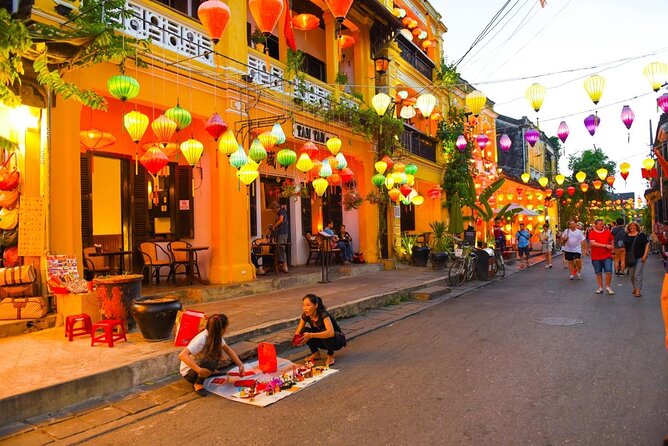
- Organic garden time with local farmers, in an authentic farm setting
- Market shopping where you pick fresh ingredients for your own menu
- Lantern making at a local home, with a lantern you can take home
- Coffee break (including Vietnamese coffee styles) built into the day
- Cook and eat four dishes with what you bought earlier
- Small group size (up to 10), which keeps things relaxed and personal
Farming, Market, Lanterns, Coffee, Cooking: What You Actually Do
This is a full, satisfying half-day in Hoi An that strings together four skills: farm life, shopping like a local, lantern craft, and cooking. The tour runs about six hours and starts at 8:00 am, so you’re done before the heat and before the day fully slips away.
The heart of it is the sequence. You don’t just watch cooking happen. You meet farmers first, then you choose ingredients at the market, then you make four typical dishes yourself. It’s the kind of structure that makes your meal feel earned—and it gives you real takeaways you can use later, whether you recreate dishes at home or just order confidently in restaurants.
Your host for the day is Jolie, and you’ll also meet different teachers along the way (the cooking instruction has been credited to instructors like Kelly, and other hosts mentioned in the day’s storytelling include Hannah and Ut). So expect a warm, home-style feel rather than a rigid classroom.
One more thing that adds charm: the plan includes time around Hoi An’s sights—Chuc Thanh Pagoda, Hoi An Ancient Town, and a stop at the Hoi An Night Market—plus a playful window where you can play guitar if you can. Even if you can’t, it’s a nice reminder that this is meant to be relaxed.
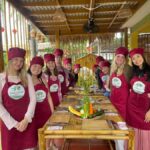
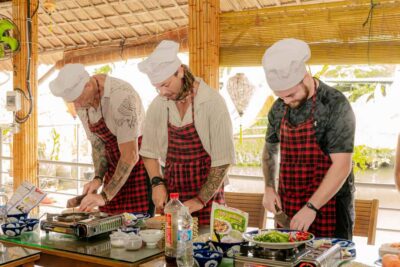
Aprons on for another Hoi An kitchen
- Cooking Class Hoi An:Local Market, Basket Boat, Fishing & Cooking★ 5.0 · 3,660 reviews
- Hoi An Cooking Class(Market,BasketBoat Crabfishing&Cooking Class)★ 5.0 · 3,386 reviews
- From Hoi An: Market Tour, Basket Boat Ride and Cooking Class★ 4.8 · 2,208 reviews
- Hoi An: Basket Boat with Lantern-Making & Cooking Class Tour★ 4.9 · 1,444 reviews
The 8:30 start: Organic Garden Time With Farmers
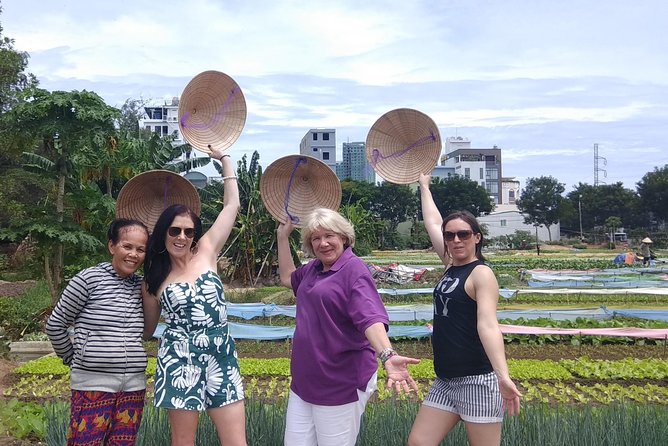
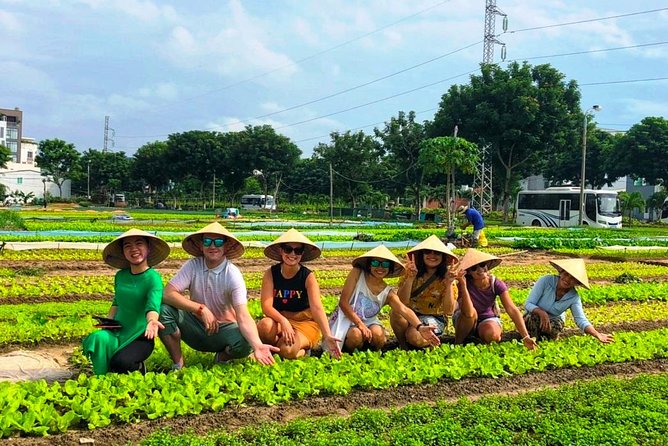
You meet at 53 Đinh Tiên Hoàng street and head out to one of the organic gardens in Hoi An. The morning farm session lasts about 30 minutes. This is short, but it’s enough to shift your mindset from tourist mode to farmer mode.
You’ll spend time with local farmers to understand real farm life. That matters because Vietnamese cooking is ingredient-driven. When you understand how herbs and produce grow (and why certain things taste a certain way), the dishes make more sense. You’re also likely to notice how the day’s other tasks connect back to this: what you see on the farm influences what you’ll look for at the market.
Keep your expectations practical. This isn’t a long, formal workshop. It’s more like a guided look at everyday work, then you’re off to buy what you’ll cook. Wear something comfortable for uneven ground and consider bringing a light layer, even in warm weather.
Market Shopping at Hoi An: Picking Ingredients Like a Local
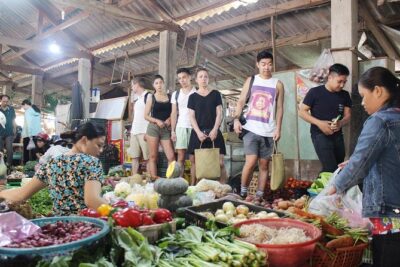
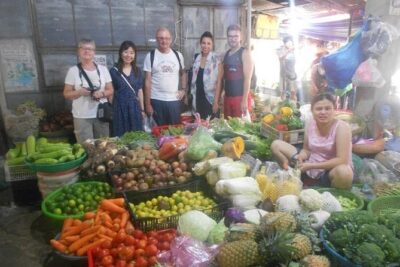
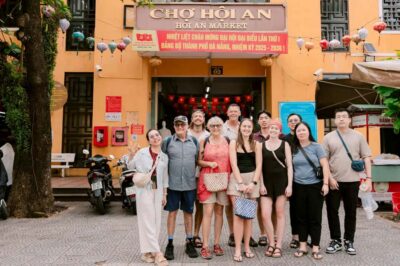
Around 9:00 am, you head to the local market in Hoi An. This is where the tour stops being passive. You buy the fresh products for your cooking class and learn how Vietnamese shopping works—how people choose produce, how food is handled, and what ingredients matter for flavor and texture.
This part is one of the best reasons to book, even if you think you’ve already seen a market in Vietnam. Here, it’s not about strolling. It’s about selecting ingredients for four dishes you’ll cook soon after. That makes the market feel sharper and more purposeful.
Vegetarians are welcome with vegetarian ingredients. So you can tell your needs and still build your menu from market finds rather than being handed a separate, watered-down version of the class.
Also, note that shopping time is limited by the schedule. So if you have strong preferences—more herbs, less spicy, no particular ingredient—be ready to speak up early so the market choices reflect your dinner, not someone else’s.
Lantern Making at a Local Home: The Soul of Hoi An
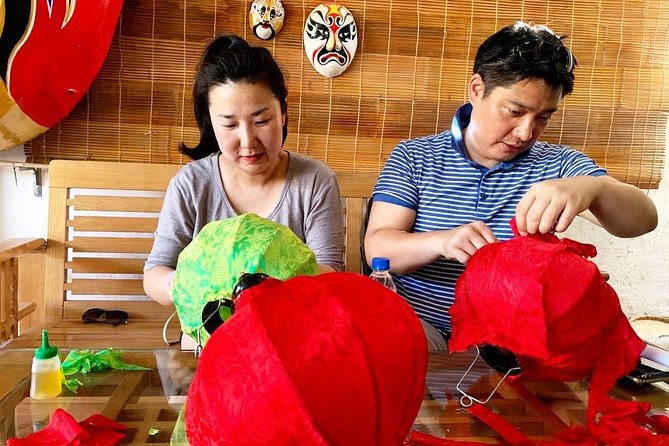
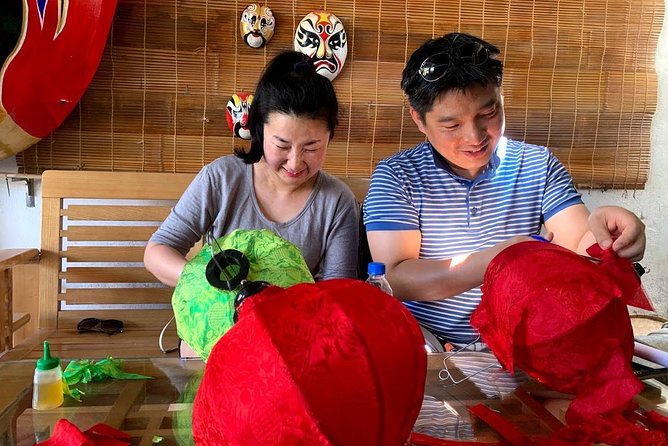
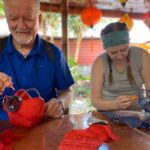
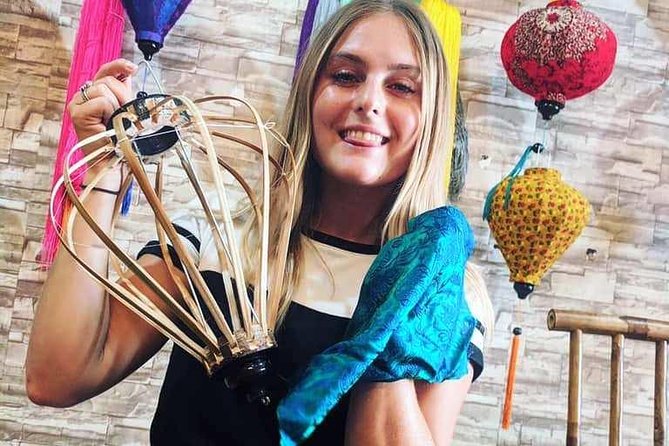
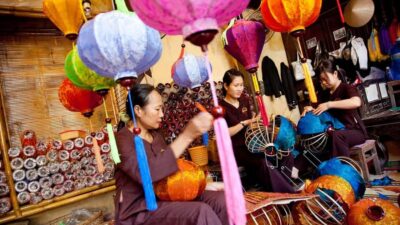
Next is lantern making, typically around 9:30 am. You go to a local house where you learn how to make a simple, lovely lantern. The tour frames lanterns as the soul of Hoi An, and that’s not just marketing. Even if you’ve never made one before, the craft connects you to the city’s signature look and nightly atmosphere.
You make your own lantern to bring home, which is a big part of the satisfaction factor. Cooking feeds you now. A lantern hangs longer.
There’s also a practical pause built in. After you make your lantern, you take a break and have a cup of coffee. This matters because lantern making can be fiddly. The break resets everyone and keeps the energy easy, not frantic.
If you’re curious about the craft, watch how your instructor guides the steps. The goal is a simple lantern, not a perfection contest. Let the group pace help you. In a small group (up to 10 people), you’ll usually have time to ask questions without feeling rushed.
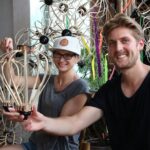
Fold and glue your own, a few more workshops

Coffee in Hoi An: A Small Break That Changes the Tone
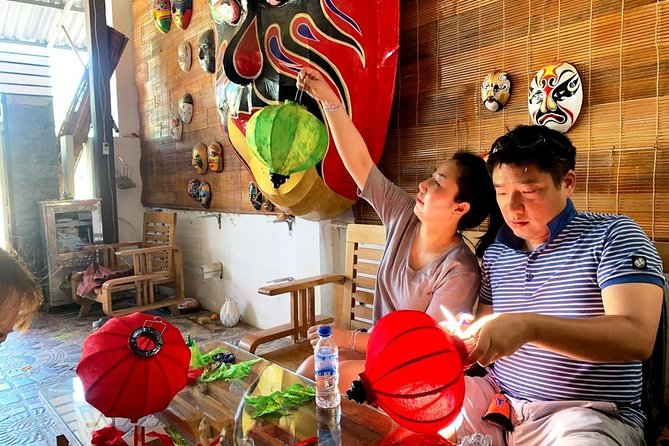
The coffee stop is scheduled after lantern making, so it acts like a palate reset and a mood reset. You’ll be having coffee and/or tea as part of the experience, and the overall tone tends to shift into storytelling and laughter.
One of the best details from the day’s descriptions and feedback is how the coffee moment fits naturally between activities. It’s not a detour. It’s the pause that makes the next part—your cooking—feel like a calm continuation instead of a second job.
If you’re a coffee drinker, this is where you can pay attention to local styles. Hoi An is known for its coffee culture, and the day’s coffee break is built to give you a true taste of that side of the town.
Jolie’s Welcome: Local Stories and Getting Ready to Cook
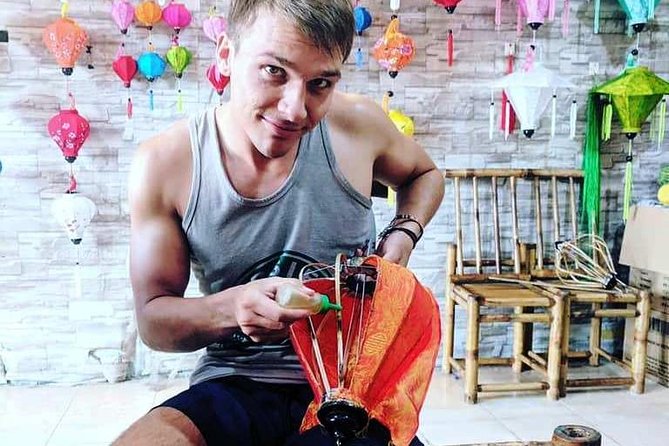
Around 10:30 am, you go to Jolie’s home for a welcome drink. Then you hear stories about local life from Jolie. This is the moment where the tour starts to feel like a visit to someone’s world rather than a timed route.
These storytelling moments matter more than you might think. Cooking classes can turn into recipes only. Here, you’re getting context—how people live, what they do, and how the ingredients fit into daily routines. That context makes the cooking more memorable because you’re connecting food to real habits.
And you’ll be ready to cook soon after. At about 10:45 am, it’s time to use the ingredients purchased earlier.
Cooking Four Typical Dishes: Learning by Doing
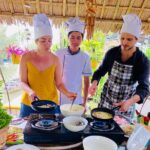
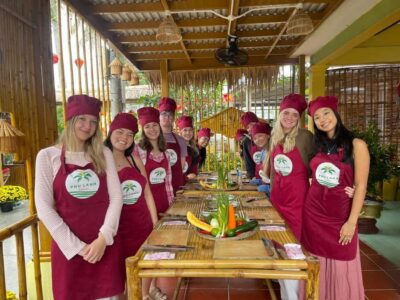
The cooking section is the payoff. You’ll cook four typical dishes using ingredients from the market. The fact that you bought the ingredients earlier is huge for learning. You’re not just following directions with generic items. You’re using what you selected based on taste, freshness, and recipe needs.
This is also where vegetarian participants can adapt smoothly, since the class is designed to accept vegetarian ingredients. In practice, that means you’re not stuck waiting for a different plan—you’re still building your menu from your own market picks.
Expect a hands-on style rather than a lecture-heavy format. The best skill you’ll pick up is likely how to handle the ingredients as you cook—timing, seasoning balance, and how Vietnamese flavors build step by step.
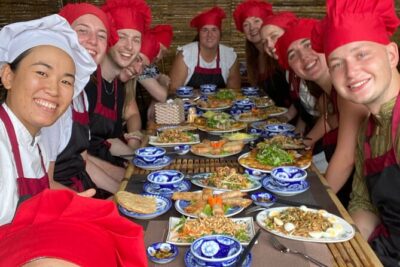
Then at about 13:15, you enjoy your meals cooked by yourself. This is one of the strongest values in the day: you’re not just learning. You’re eating what you made, while the experience is still fresh.
Where Hoi An Fits In: Chuc Thanh Pagoda, Ancient Town, and Night Market
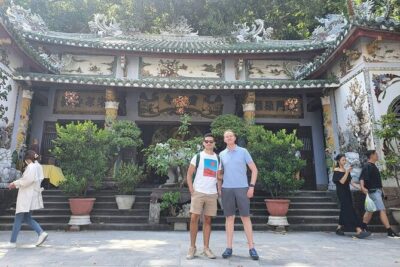
Between the farm, market, craft, coffee, and cooking, the day also includes a few location stops. You’ll visit Chuc Thanh Pagoda, get time in Hoi An Ancient Town, and include a stop at the Hoi An Night Market.
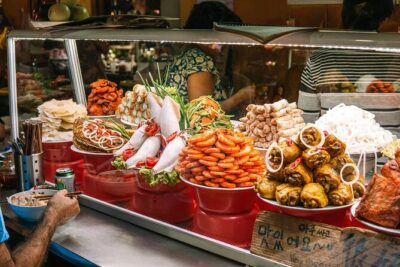
Because the cooking class runs until around early afternoon, the timing for the night market stop may feel more like a quick look than a full evening wander. Still, the inclusion is useful. It keeps you connected to the city rather than only inside a workshop rhythm.
Chuc Thanh Pagoda adds a quiet, spiritual contrast to the more hands-on parts of the day. Ancient Town helps you orient your bearings in Hoi An, especially if it’s your first visit. The night market stop is your taste of the lively evening scene, even if you won’t get a long linger.
Price and Value: What $70 Buys You in Real Terms
At $70 per person for about six hours, this is priced for a full experience, not just a cooking lesson. Here’s what you’re getting that justifies the cost:
- You pay for a connected day: farm visit + market shopping + lantern making + cooking
- Lunch and coffee/tea are included
- You take something home (your lantern), not only a meal
- The group stays small (maximum 10), which tends to improve hands-on time
The biggest value isn’t the price tag. It’s how much of the day is active and how much of it is tied together. If you’ve done cooking classes before that were mostly recipes and tasting, this one feels different because you do the shopping and the craft in the same morning arc.
Two small cost caveats to remember: pick-up and drop-off are not included, and there can be an extra public holiday surcharge of USD 9 per person. Those aren’t dealbreakers, but they affect the real total cost once you plan your day.
Who Should Book This (and Who Might Not Love It)
This tour fits you well if you want more than a meal. You’ll enjoy it if you like markets, you’re curious about farming, and you want a practical cooking experience that teaches ingredient logic.
It’s also a great pick for couples or solo visitors who enjoy a small-group format. You get enough structure to feel organized, but not so much that you can’t relax.
It may not be perfect if you want a long sightseeing day. The schedule is packed with activities tied to the class, and the tour ends around 2:00 pm back at the meeting point.
Should You Book This Hoi An Class?
Yes—if you want a morning that teaches you how Vietnamese flavors are built, not just what they taste like. The combination of organic farm time, market ingredient shopping, lantern making you can take home, and then cooking four dishes makes this one of the more complete half-day experiences in Hoi An.
If you’re the type who enjoys creating things and eating what you made, this is your lane. If you’re only looking for a basic cooking lesson or a long night market wander, you might feel the schedule is too tight.
FAQ
Is the class friendly for vegetarians?
Yes. All vegetarians are welcome with vegetarian ingredients.
What will I cook during the class?
You cook 4 typical dishes.
Do I get lunch and drinks included?
Lunch is included, and coffee and/or tea are included as well.
Can I take the lantern home?
Yes. You make a simple lantern and keep it as a Vietnamese gift.
Where is the meeting point, and do you provide pick-up?
You meet at 53 Đinh Tiên Hoàng street, Sơn Phong, Hội An, Quảng Nam 51308, Vietnam. Pick-up and drop-off are not included.
How big is the group?
The maximum group size is 10 travelers.
What if the weather is bad?
The experience requires good weather. If it’s canceled due to poor weather, you’ll be offered a different date or a full refund.
If you want, tell me your travel dates and whether you prefer mild or spicy flavors, and I’ll suggest the best way to plan your morning around this start time.
Morning Markets by the River
- Cooking Class Hoi An:Local Market, Basket Boat, Fishing & Cooking
★ 5.0 · 3,660 reviews - Hoi An Cooking Class(Market,BasketBoat Crabfishing&Cooking Class)
★ 5.0 · 3,386 reviews - From Hoi An: Market Tour, Basket Boat Ride and Cooking Class
★ 4.8 · 2,208 reviews - Hoi An Cooking Class(Local market,Basket Boat,Fishing & Cooking)
★ 5.0 · 1,323 reviews - Hoi An: Market Experience with Optional Fishing and Cooking
★ 4.7 · 928 reviews - Hoi An Eco Tour Cooking Class & Fishing (Local market,basket boat,learn cooking)
★ 5.0 · 567 reviews
Make Your Own: More Lantern Workshops
- Hoi An: Vietnamese Foldable Lantern Making Class
★ 4.9 · 3,742 reviews - Hoi An Full Lantern Making Class- A special Foldable lantern
★ 5.0 · 2,007 reviews - Hoi An: Basket Boat with Lantern-Making & Cooking Class Tour
★ 4.9 · 1,444 reviews - The Lantern Lady: Traditional Lantern Class in Old Town
★ 4.9 · 444 reviews - Hoi An: Local Foldable Lantern-Making Class with Locals
★ 4.9 · 410 reviews - Hoi An: Cooking Class with Market, Lantern Making, Basket Boat
★ 5.0 · 221 reviews
Cook It Yourself: More Hoi An Kitchens
- Cooking Class Hoi An:Local Market, Basket Boat, Fishing & Cooking
★ 5.0 · 3,660 reviews - Hoi An Cooking Class(Market,BasketBoat Crabfishing&Cooking Class)
★ 5.0 · 3,386 reviews - From Hoi An: Market Tour, Basket Boat Ride and Cooking Class
★ 4.8 · 2,208 reviews - Hoi An: Basket Boat with Lantern-Making & Cooking Class Tour
★ 4.9 · 1,444 reviews - Hoi An Cooking Class(Local market,Basket Boat,Fishing & Cooking)
★ 5.0 · 1,323 reviews - Hoi An: Market Experience with Optional Fishing and Cooking
★ 4.7 · 928 reviews
Just Reviewed: Fresh Hoi An Trips



Hoi An Cooking Classes, compared.
 ★ 5.0Cooking Class Hoi An:Local Market, Basket Boat, Fishing & CookingFrom $283,660 reviews
 ★ 5.0Hoi An Cooking Class(Market,BasketBoat Crabfishing&Cooking Class)From $283,386 reviews
 ★ 4.8Market Tour, Basket Boat Ride and Cooking ClassFrom $172,208 reviews
 ★ 4.9Basket Boat with Lantern-Making & Cooking Class TourFrom $301,444 reviews
 ★ 5.0Hoi An Cooking Class(Local market,Basket Boat,Fishing & Cooking)From $281,323 reviews
 ★ 4.7Market Experience with Optional Fishing and CookingFrom $4928 reviews
 ★ 4.9Basket Boat Ride, Cooking Class by HangcoconutFrom $19802 reviews
 ★ 5.0Hoi An Eco Tour Cooking Class & Fishing (Local market,basket boat,learn cooking)From $29567 reviews