
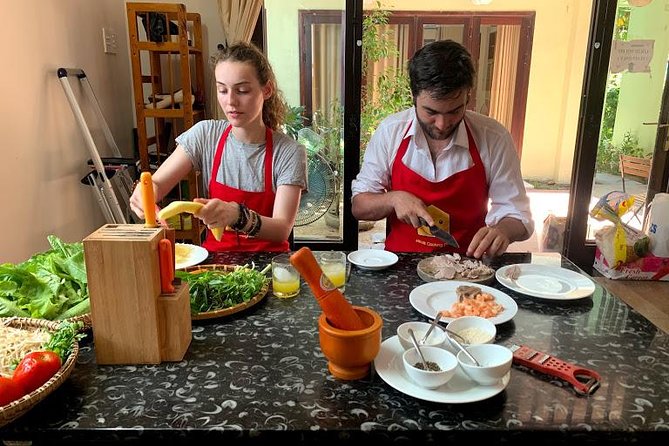
Reviewed · HOI AN COOKING CLASSES
Cooking with Jolie in Hoi An
Hoi An cooking begins with a market stroll. This class runs about five hours in a family home, mixing a bit of old-town sightseeing with real hands-on cooking of four Vietnamese dishes. I like the way it starts with fresh market ingredients and a coffee break, but plan ahead because there’s no pickup or drop-off, and public holidays can add a $9 per-person fee.
I also like the teaching style. A professional chef (with guides including Rosie and Hannah, based on the cooking crew names you’ll see in past sessions) helps you build confidence, not just copy recipes. You can cook vegetarian too, using vegetarian ingredients, and you end up eating the lunch you made.
In This Review
- Key Things I’d Plan for Before You Go
- Why This Hoi An Class Feels Personal, Not Performed
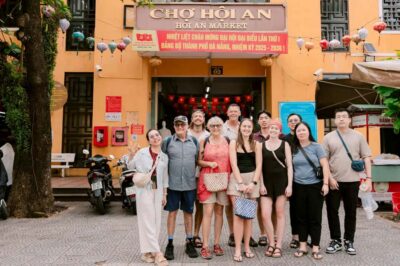
- Ancient Town, the Japanese Covered Bridge, and Chuc Thanh Pagoda
- How the Market and Farm Stop Changes the Cooking (For Real)
- Coffee Pause: A Small Break That Helps You Cook Better
- The Cooking Class: Four Dishes, Real Technique, No Experience Required
- What “4 dishes” can mean for your skill growth
- Eating Lunch Where You Cooked It
- Vegetarian Option That Works With the Whole Day
- Price and Value: Is $55 Worth It?
- Practical Notes That Save You From Annoying Friction
- Start time and stomach management
- Transportation
- Weather dependence
- Mobile ticket
- Who Should Book This (and Who Might Not)
- Should You Book Cooking with Jolie in Hoi An?
- FAQ
- How long is the cooking class?
- What does the class cost?
- What’s included in the price?
- Can vegetarians join?
- How many dishes will I cook?
- What group size is this class limited to?
- Is pickup or drop-off included?
- What if the weather is bad or it’s a public holiday?
Key Things I’d Plan for Before You Go
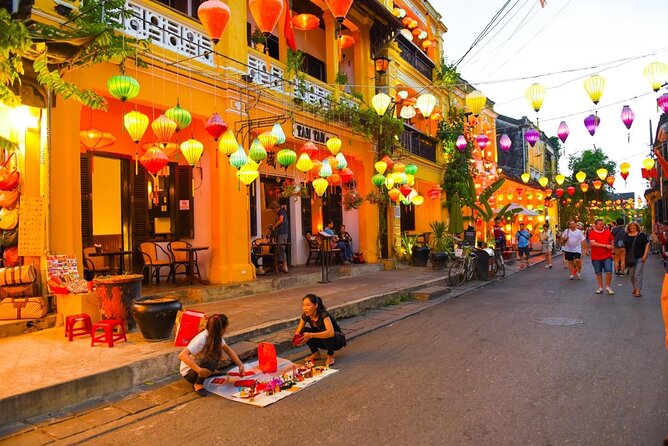
- Family-home cooking: you eat in the same kind of space locals use, not a studio.
- Market + coffee setup: you start by choosing produce and building the flavors before the stove.
- Four dishes, taught step-by-step: practical technique over vague instructions.
- Vegetarian-friendly: vegetarian ingredients are available for the cooking class.
- Small group size: capped at 12, so there’s a real chance to ask questions.
- Lunch and drinks included: water plus tea and coffee, and you eat what you cook.
Why This Hoi An Class Feels Personal, Not Performed
A cooking class in Vietnam can sometimes feel like a script: show up, cook a couple things, pose for photos, leave. This one aims for the opposite. You cook in a real family home, where the day includes the market run and then getting your hands on the food.
The big win is that the focus stays practical. You’re not just watching someone else work. You’re learning how to choose ingredients, handle prep tasks, and cook with guidance from the chef and the team.
That’s also why the small group matters. With a maximum of 12 people, you’re more likely to get quick answers when something goes off—like a sauce that needs adjusting or a pan that runs hotter than expected.
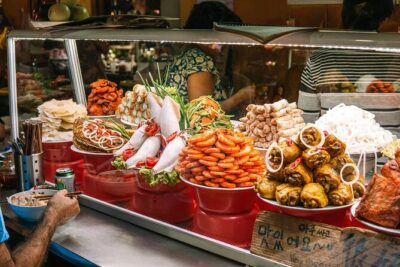
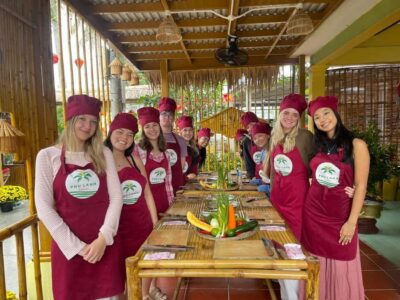
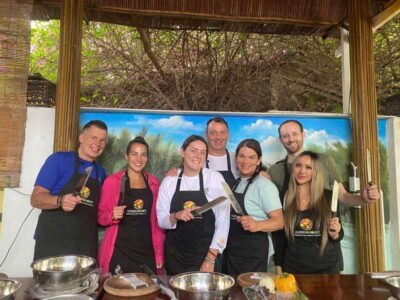
Aprons on for another Hoi An kitchen
- Cooking Class Hoi An:Local Market, Basket Boat, Fishing & Cooking★ 5.0 · 3,660 reviews
- Hoi An Cooking Class(Market,BasketBoat Crabfishing&Cooking Class)★ 5.0 · 3,386 reviews
- From Hoi An: Market Tour, Basket Boat Ride and Cooking Class★ 4.8 · 2,208 reviews
- Hoi An: Basket Boat with Lantern-Making & Cooking Class Tour★ 4.9 · 1,444 reviews
Ancient Town, the Japanese Covered Bridge, and Chuc Thanh Pagoda
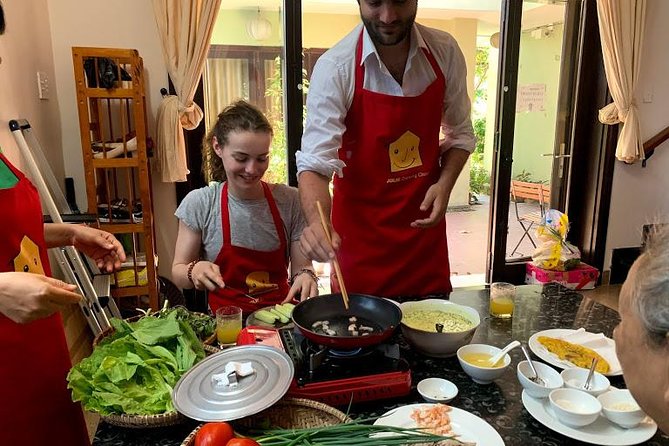
The class starts with three classic Hoi An stops, and they do more than fill time. They help you get your bearings and make the cooking feel rooted in the place you’re in.
First comes Hoi An Ancient Town, a good way to see the old streets and understand why this town is such a food-and-craft magnet. This part is also a timing tool. It gives you a gentle warm-up before you start the ingredient hunt, so you’re not jumping straight from arrival into a hot kitchen.
Next is the Japanese Covered Bridge. Even if you’ve seen it in photos, seeing it in person helps it click as part of Hoi An’s mix of influences. It’s also a straightforward stop: quick, recognizable, and easy to fit into a five-hour plan.
Then you’ll reach Chuc Thanh Pagoda. This is a calmer counterpoint to the bridge and ancient streets. It’s the kind of stop that adds context to what you’re eating later, because it reminds you that this is a living community, not just a postcard.
One consideration: the whole day depends on good weather. If you’re going during a season with rain showers, build in patience, since the experience can be changed or refunded if conditions aren’t good.
How the Market and Farm Stop Changes the Cooking (For Real)
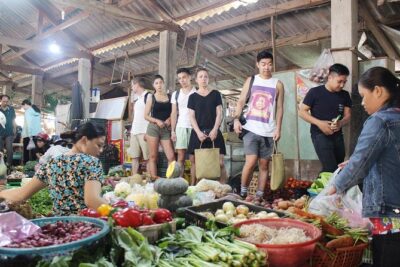
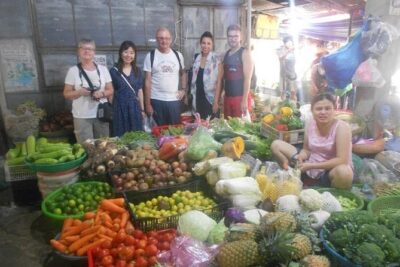
The strongest part of this experience is the early ingredient work. You pick fresh foods at a farm and market, and you get to observe daily life while you choose what will go into your dishes.
Here’s why that matters for your final meal: Vietnamese cooking is built on balance. You’re usually working with fresh herbs, vegetables, aromatics, and sauces that carry flavor in layers. When you select the ingredients yourself, you start noticing what each one does.
When you’re walking the market, pay attention to things that are easy to miss when you shop casually:
- which herbs look fresh versus wilted
- the smell of produce (yes, you can use your nose)
- how vendors handle and stack items
- what looks in season and plentiful
This is also where vegetarian cooking becomes much easier. If you’re planning to do vegetarian ingredients, you’ll be choosing the produce that can stand in for the meat-based flavor structure—so your dishes don’t feel like an afterthought.
Coffee Pause: A Small Break That Helps You Cook Better
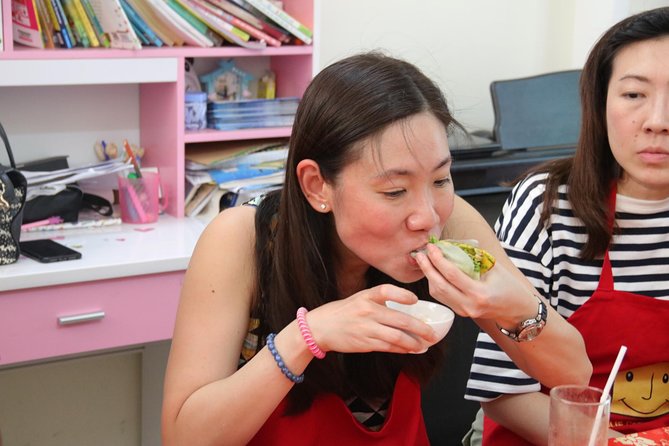
After the shopping, you’ll enjoy coffee and then move into cooking mode. It’s a simple moment, but it’s a smart one. After walking, heat, and a bit of sensory overload, you want your brain to feel steady before you start chopping and stirring.
It also helps you settle into the teaching pace. With a professional chef and a small group, you’ll get clearer instructions when you’re not rushing from one thing to the next.
Coffee and the warm-up drink setup are included, along with water, tea, and coffee during the class. You’re not left searching for hydration mid-session, which is a small thing that makes the whole experience smoother.
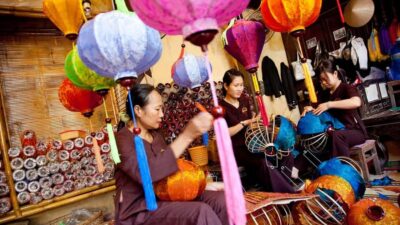
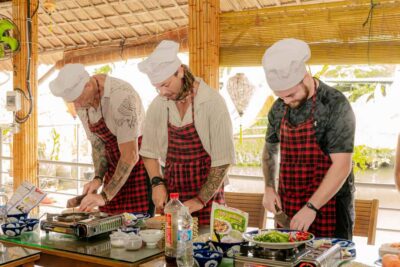
More hours at the Hoi An stove
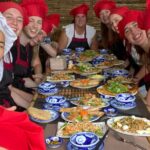

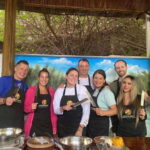

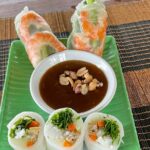
The Cooking Class: Four Dishes, Real Technique, No Experience Required
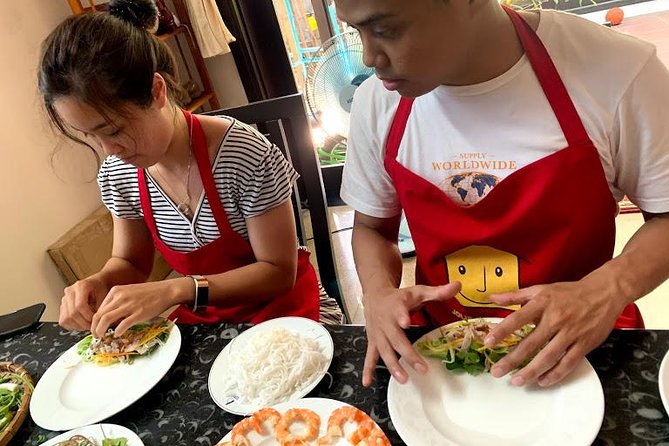
You’ll cook four traditional Vietnamese dishes, with instruction from a professional chef. The key promise here is technique: learning how to do the steps correctly so you can repeat the results later at home.
From past sessions, the instruction has been hands-on and a little playful. People have highlighted learning specific techniques such as making decorative items like flowers from tomato skins and working on cooking skills like flipping pancakes. That sort of detail usually means the chef is paying attention to small moments that make food look and taste right.
The class is also interactive. Instead of a one-way lecture, you’ll be actively doing prep and cooking tasks during the session. That’s ideal if you’ve never cooked Vietnamese food before, because you’re not stuck translating unfamiliar flavors while doing everything from scratch.
What “4 dishes” can mean for your skill growth
Even without knowing your exact recipe lineup in advance, the structure helps your cooking learning in three ways:
- you practice a repeating set of foundations (chopping, timing, seasoning)
- you see how herbs and fresh ingredients are used, not just added
- you learn how sauces and heat levels affect the final taste
Eating Lunch Where You Cooked It
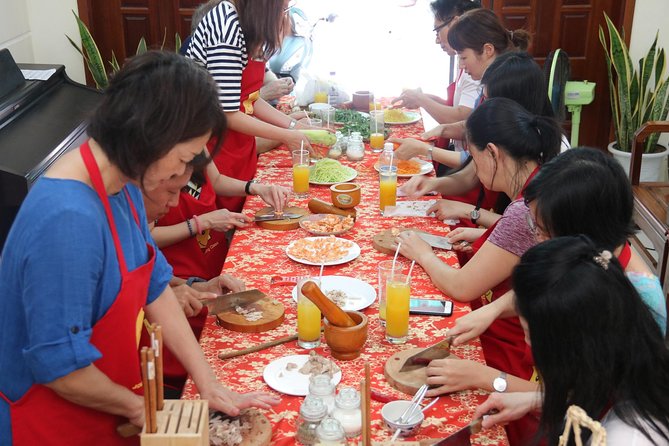
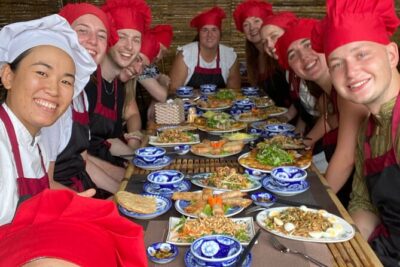
The lunch is included, and the expectation is that you eat what you made during the class. That’s part of the value. In many cooking lessons, the meal feels separate from the cooking. Here, it’s the payoff.
You’ll likely notice the difference between food you cook yourself and food you order. You can taste the small choices you made—like how fresh herbs were added, or how long something simmered.
Also, the home setting changes the feel. A family home is louder in a good way. There’s a sense of normal life happening around you, and it fits the idea of getting an authentic slice of Hoi An rather than just collecting a food souvenir.
Vegetarian Option That Works With the Whole Day
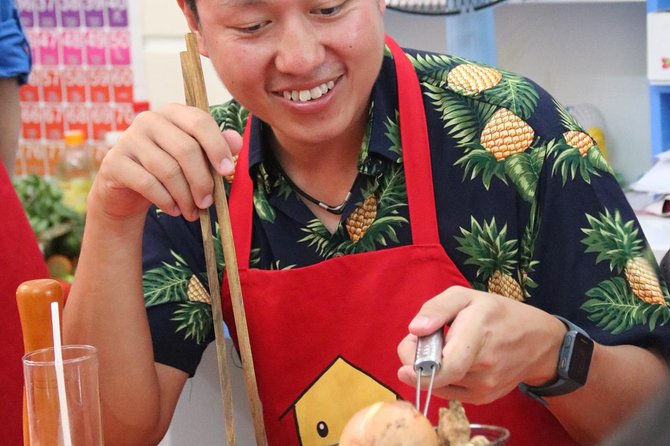
Vegetarians are welcome, and the class can accommodate vegetarian diets with vegetarian ingredients. That matters because some cooking classes say they can do vegetarian, but the plan is vague.
Here, the structure still holds:
- you select your produce during the market and farm portion
- you cook four dishes using vegetarian ingredients
- the teaching team stays involved so you’re not left guessing substitutions
If you’re doing vegetarian cooking, you should feel comfortable asking questions during the prep steps. You’ll get the best results when you learn how each component is supposed to function in the dish, not just what to swap.
Price and Value: Is $55 Worth It?
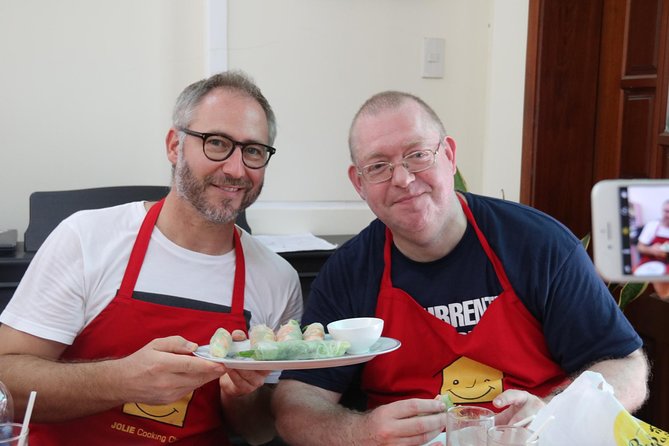
$55 per person for about five hours, including lunch and drinks, can be a solid deal in Hoi An—especially because you’re paying for instruction plus real local food buying, not just a kitchen session.
What you’re getting for the money:
- four dishes with step-by-step help from a chef
- lunch included (so you’re not budgeting extra for a meal later)
- water plus tea and coffee included
- a small-group format capped at 12
The main value “math” for you is time and guidance. If you tried to copy this day on your own, you’d spend time figuring out ingredients and translations, and you’d still lack someone guiding technique. Here, that support is part of the price.
One cost to watch: if your date falls on a public holiday, there’s a $9 per-person surcharge payable onsite.
Practical Notes That Save You From Annoying Friction
A few details can make your day smoother.
Start time and stomach management
Some sessions run in the morning, and people have advised arriving hungry—skip breakfast if your class starts early. The logic is simple: you’ll be tasting and cooking, and then you’ll have lunch at the end. If you eat too early, you’ll likely enjoy the class less because food takes over your appetite.
Transportation
There’s no pickup or drop-off. The meeting point is at 14 Lưu Trọng Lư, Tân An, Hội An, Quảng Nam 560000, Vietnam, and the activity ends back at the meeting point. Plan to get yourself there on time, ideally with a buffer.
Weather dependence
The experience requires good weather. If it’s canceled due to poor weather, you’ll be offered a different date or a full refund. It’s one of those “watch the forecast” situations where flexibility helps.
Mobile ticket
You’ll use a mobile ticket. Bring your phone battery and make sure you can access the ticket on the day.
Who Should Book This (and Who Might Not)
This is a great fit if you want:
- hands-on cooking instruction
- a small group size
- ingredient shopping before cooking
- a vegetarian-capable class
It’s also a good choice for people who want the Hoi An experience beyond the usual walking loop. You’re mixing sights with cooking, so you get both the place and the food.
You might think twice if:
- you dislike walking or being outside before you cook
- you need door-to-door transport since pickup is not included
- you’re traveling on a day where weather disruptions would really hurt your schedule
Should You Book Cooking with Jolie in Hoi An?
I’d book this if you want Vietnamese cooking you can repeat, not just a full stomach and a few photos. The home setting, market ingredient run, and the promise of four dishes taught with real technique make it feel like learning a skill, not buying an activity.
If you like practical lessons, and you’re okay handling your own way to the meeting point, this is strong value. And if vegetarian cooking is part of your plan, the class is designed to handle it with vegetarian ingredients.
FAQ
How long is the cooking class?
It runs for about 5 hours.
What does the class cost?
The price is $55.00 per person.
What’s included in the price?
Lunch is included, along with bottled water, and tea and coffee.
Can vegetarians join?
Yes. The class can accommodate vegetarians with vegetarian ingredients.
How many dishes will I cook?
You’ll make 4 traditional Vietnamese dishes.
What group size is this class limited to?
It is limited to a maximum of 12 travelers.
Is pickup or drop-off included?
No. Pick up and drop off are not included.
What if the weather is bad or it’s a public holiday?
The experience requires good weather, and if it’s canceled due to poor weather you’ll be offered a different date or a full refund. If your tour date is on a public holiday, there is a $9.00 per person surcharge payable onsite.
Learn Another Vietnamese Dish
- Cooking Class Hoi An:Local Market, Basket Boat, Fishing & Cooking
★ 5.0 · 3,660 reviews - Hoi An Cooking Class(Market,BasketBoat Crabfishing&Cooking Class)
★ 5.0 · 3,386 reviews - From Hoi An: Market Tour, Basket Boat Ride and Cooking Class
★ 4.8 · 2,208 reviews - Hoi An: Basket Boat with Lantern-Making & Cooking Class Tour
★ 4.9 · 1,444 reviews - Hoi An Cooking Class(Local market,Basket Boat,Fishing & Cooking)
★ 5.0 · 1,323 reviews - Hoi An: Market Experience with Optional Fishing and Cooking
★ 4.7 · 928 reviews
More Tour Reviews in Hoi An
- Hoi An: Basket Boat Ride in the Coconut Forest
★ 4.9 · 4,956 reviews - Hoi An: Vietnamese Coffee Culture and Coffee Making Class
★ 4.9 · 4,006 reviews - Hoi An: Vietnamese Foldable Lantern Making Class
★ 4.9 · 3,742 reviews - Cooking Class Hoi An:Local Market, Basket Boat, Fishing & Cooking
★ 5.0 · 3,660 reviews - Hoi An Cooking Class(Market,BasketBoat Crabfishing&Cooking Class)
★ 5.0 · 3,386 reviews - Hoi An: My Son Sanctuary Early Morning w. Champa Food Brunch
★ 4.9 · 2,750 reviews
Cook It Yourself: More Hoi An Kitchens
- Cooking Class Hoi An:Local Market, Basket Boat, Fishing & Cooking
★ 5.0 · 3,660 reviews - Hoi An Cooking Class(Market,BasketBoat Crabfishing&Cooking Class)
★ 5.0 · 3,386 reviews - From Hoi An: Market Tour, Basket Boat Ride and Cooking Class
★ 4.8 · 2,208 reviews - Hoi An: Basket Boat with Lantern-Making & Cooking Class Tour
★ 4.9 · 1,444 reviews - Hoi An Cooking Class(Local market,Basket Boat,Fishing & Cooking)
★ 5.0 · 1,323 reviews - Hoi An: Market Experience with Optional Fishing and Cooking
★ 4.7 · 928 reviews
Just Reviewed: Fresh Hoi An Trips



Hoi An Cooking Classes, compared.
 ★ 5.0Cooking Class Hoi An:Local Market, Basket Boat, Fishing & CookingFrom $283,660 reviews
 ★ 5.0Hoi An Cooking Class(Market,BasketBoat Crabfishing&Cooking Class)From $283,386 reviews
 ★ 4.8Market Tour, Basket Boat Ride and Cooking ClassFrom $172,208 reviews
 ★ 4.9Basket Boat with Lantern-Making & Cooking Class TourFrom $301,444 reviews
 ★ 5.0Hoi An Cooking Class(Local market,Basket Boat,Fishing & Cooking)From $281,323 reviews
 ★ 4.7Market Experience with Optional Fishing and CookingFrom $4928 reviews
 ★ 4.9Basket Boat Ride, Cooking Class by HangcoconutFrom $19802 reviews
 ★ 5.0Hoi An Eco Tour Cooking Class & Fishing (Local market,basket boat,learn cooking)From $29567 reviews
Browse the lists this tour appears in