
Reviewed · COUNTRYSIDE CYCLING & FARM LIFE
Biking to Explore Traditional Craft Villages in Hoi An.
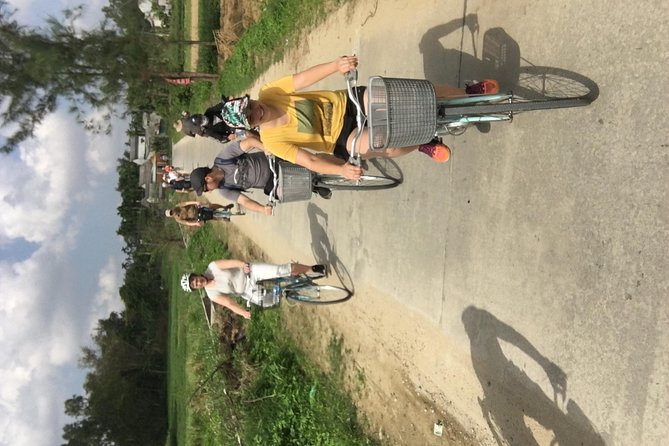
A morning bike ride can be the fastest way to understand a place. This one mixes hands-on workshops with quiet villages and working fields, all with an English-speaking guide and small group energy (up to 10 people). I love the hands-on making in pottery, reed mats, and rice flour snacks, and I also like the easy, scenic cycling through countryside just outside Hoi An. One thing to consider: it runs early and depends on good weather, so plan for a light morning start.
You’ll be picked up around 8:00am, then spend about five hours crisscrossing traditional jobs—some focused on craftsmanship you can take home, others showing daily life like pagodas, memorials, and the farming scenes along the ride. You should be comfortable cycling at an easy pace and ready to get involved with your hands, not just watch from the sidelines.
In This Review
- Key Points Before You Go
- Morning Bike Ride Through Hoi An’s Craft Villages
- Thanh Ha Pottery Village: Clay Work You Can Actually Keep
- Rice Paper and Noodles: Cooking That Explains a Whole Ingredient Chain
- Reed Sleeping Mats: A Different Kind of Craft Challenge
- River Stops With Pagoda, War Monument, and Cemetery Stories
- Cycling Through Chili Gardens, Corn, Rice Fields, and Buffalo Photos
- Traditional Carpentry Village: Wood Carving and Fishing Boat Craft
- Boat Back to Hoi An Old Town: Let the Day Settle
- Price and Value: Why $45 Works for What You Do
- Who This Bike Craft Tour Suits Best (and Who Might Not)
- Should You Book This Craft-Village Bike Tour in Hoi An?
- FAQ
- What’s the duration of the tour?
- Where does the tour start?
- What activities are included during the workshops?
- Do I get to eat anything on the tour?
- Is transportation included?
- How many people are in the group?
- What’s included in the price?
- What isn’t included?
- What if the weather is bad?
- Is there free cancellation?
Key Points Before You Go
- Workshop souvenirs you make yourself at Thanh Ha pottery and other family homes
- Rice flour food you prepare and eat during the rice paper and noodle stop
- Reed mat crafting with a challenge that’s different from pottery
- War-era storytelling during the river-side segment with a pagoda, war monument, and cemetery
- Small-group feel with up to 10 travelers and a leisurely rhythm
Morning Bike Ride Through Hoi An’s Craft Villages
This tour is built around one simple idea: you get closer when you do something with your hands. You’ll start the day at 8:00am with hotel pickup, then hop onto a bike and roll out while the countryside is still calm.
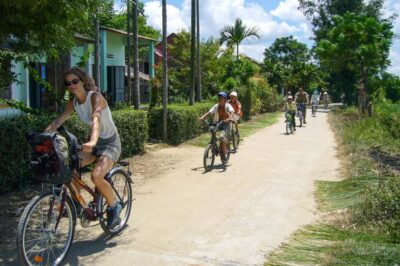
Expect a leisurely pace. One past participant clocked about 15 km on the bikes, and that lines up with the way the day is structured: short rides between stops, then real time with families who run the craft work. With only up to 10 people, it doesn’t feel rushed or crowded.
And yes, it includes a boat ride too—because Hoi An’s waterways are part of the story, not just a pretty backdrop. You’ll finish in the early afternoon, around 1:30pm, back in the old town area.
Off the tourist track by bike, more rides
- Hoi An Countryside: Guided Morning or Afternoon Bicycle Tour★ 4.9 · 686 reviews
- HOI AN Hidden Gems in Rural Villages & River Islands PRIVATE TOUR★ 5.0 · 494 reviews
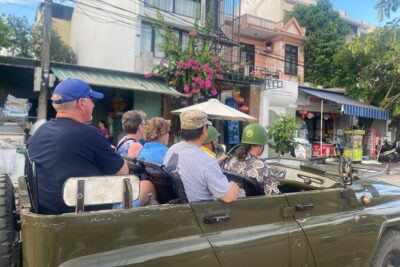
- Hoi An Countryside Jeep Tour: Food, Culture & Daily Life★ 5.0 · 414 reviews
- Hoi An Countryside Vespa Tour: Food, Culture & Daily Life★ 5.0 · 406 reviews
Thanh Ha Pottery Village: Clay Work You Can Actually Keep
Your first stop is Thanh Ha Traditional Pottery Village, where you visit families who make bricks, tiles, and the kinds of ceramic pieces used in everyday life and traditional buildings. It’s not a show. You’ll learn how the process works and then try making pieces yourself.
The workshop portion focuses on practical forms—cups, jars, bowls, and pots—and you’ll make items by yourself and keep them as a souvenir. That detail matters for value. A ceramic you craft with your own hands feels different than something you buy off a shelf, and it also gives you a reason to ask questions.
What to watch for is how families explain the work. You’re seeing traditional methods, but you’re also learning what the craft is for: building materials and functional ceramics that fit local routines. If you like process tours, this is the strongest start of the whole day.
A small consideration: pottery is a hands-on activity, so you’ll want to be okay with getting a bit involved. Bring clothes you don’t mind getting dusty or slightly messy, and keep an extra layer in mind in case the morning feels cool.
Rice Paper and Noodles: Cooking That Explains a Whole Ingredient Chain
Next you’ll ride to a local family that makes rice paper and noodles from rice flour. This stop is one of the most satisfying because it’s both a craft and a meal experience. You learn how to make it, you participate, and then you get to enjoy what you make.
What I like about this kind of workshop is that it connects dots. Rice flour isn’t just an ingredient—it becomes food textures, shapes, and cooking results. Even if you’ve eaten Vietnamese rice paper before, this gives you context for how it turns from ground grain into something you can roll, cook, and eat.
This part also fits the pacing of the tour. After pottery, a food workshop gives your brain a break from clay while still keeping your hands busy. It’s also an easy way to understand Vietnamese daily customs because you’re working with something local families likely use often, not only for tourism.
Practical note: because you eat what you make, consider having a light breakfast before pickup so you feel good during the session. The tour runs early, and you’ll be cycling and participating throughout.
Reed Sleeping Mats: A Different Kind of Craft Challenge
From there, you head to another family who specializes in sleeping mats from reeds. This workshop is different from pottery in texture and technique, and that variety is a big part of the day’s charm.
You can challenge yourself by making one of these mats by hand. That matters because reed mats aren’t just decorative. They connect to practical needs—comfort, materials available locally, and the skill to turn raw reeds into something usable.
In a tour like this, reed-work can be the stop where you slow down and focus. There’s less instant visual reward than pottery glazing (since mats are woven), but you’ll likely feel proud when it comes together. It’s also a great way to see how “craft” in Vietnam often means solving real daily problems with local materials.
If you’re wondering which workshop is easiest, it’s hard to rank because it depends on what your hands naturally like. But reed mats are usually memorable because the building blocks are so different from clay.
More of the countryside by bike




River Stops With Pagoda, War Monument, and Cemetery Stories
Halfway through, the tour shifts from workshops and fields to a more reflective, historical segment. You’ll ride through a river area to see a pagoda, war monument, and cemetery, then listen to stories about the Vietnam War from your local guide.
This is the moment where the tour feels less like a craft circuit and more like cultural education. You’re not just learning how things are made. You’re also learning why places look the way they do—and how memory is kept in real public spaces.
Even if history isn’t your main interest, this stop adds weight to the day. It also helps you understand the craft villages in context: living and working in a country shaped by conflict means tradition often survives because people rebuild, carry skills forward, and keep community identity strong.
A consideration: this part can be emotionally serious. Keep your tone respectful and take it as a learning pause, not a “quick photo break.” If you tend to feel sensitive around war stories, plan to move slower and stay present.
Cycling Through Chili Gardens, Corn, Rice Fields, and Buffalo Photos
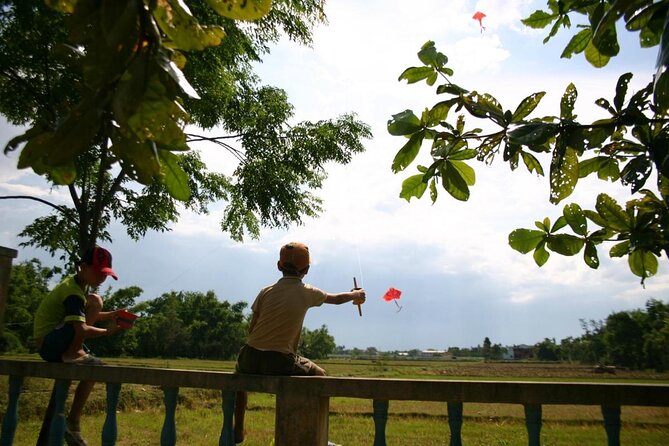
After the river segment, you cross areas used for farming—there’s mention of a chili garden, corn farming, and rice fields. This is where the tour becomes a countryside photo walk without turning into a strict walking tour.
You’ll have chances to take photos of water buffalo, which is the kind of scene that instantly signals “real life here,” not staged scenery. It also helps make the ride feel meaningful because you’re not just going from one workshop to another.
I also like that the guide’s storytelling likely helps you connect what you see. Even when the cycling is easy, the background explanations turn the fields into more than just scenery.
Bring sun protection. Even at a leisurely pace, you’ll be outside in the morning hours, and the ride includes multiple crossings and open views.
Traditional Carpentry Village: Wood Carving and Fishing Boat Craft
The final workshop stop is the traditional carpentry village, where you see how skilled locals carve wooden statues and fishing boats. This is a strong end because it broadens the craft world beyond ceramics, reeds, and food.
Boat carving and fishing-related crafts connect directly to Vietnam’s coastal life and the work rhythm that comes with it. You’ll see detail work that’s meant to last, not mass-produced for quick sales. Even if you don’t try making something here, watching the process gives you a better sense of what “skill” means in a craft village.
Why it works as a closer: earlier stops taught you making and trying. This one shows the outcome of years of practice—woodwork that supports livelihoods. It’s a good mental transition from hands-on tasks into observation mode.
Boat Back to Hoi An Old Town: Let the Day Settle
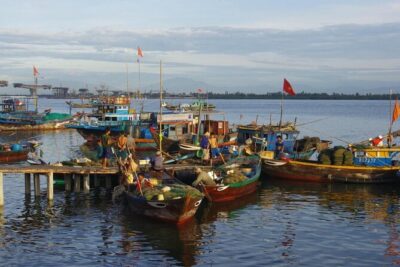
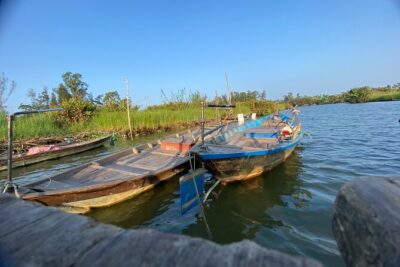
After the carpentry stop, you get onto a boat return to Hoi An old town. This is more than transport. It’s a gentle way to shift gears after a busy sequence of workshops, historical stops, and countryside riding.
On a day like this, the boat ride can feel like your reward: sit down, take in the waterways, and let your brain process what you just learned. It also helps the tour land smoothly instead of ending with a stressful ride back into town.
You finish around 1:30pm, which is perfect if you want to eat lunch afterward and still have time to explore Hoi An at your own pace.
Price and Value: Why $45 Works for What You Do
At $45 for roughly five hours, this tour is good value because you get a bundle of things that usually cost separately: workshop visits, an English-speaking guide, bikes and a boat, plus bottled water.
The big value is participation. You’re not only watching pottery, noodle-making, and reed mat weaving—you’re doing it. That’s why the tour feels like education and souvenir shopping happened at the same time, without the usual pressure.
Also, the max group size of 10 matters. Smaller groups often mean more time with families and fewer awkward bottlenecks around the workspaces. That’s part of what makes the day feel personal instead of industrial.
One more value point: the day is structured around both craft and real context—historical memorial sites and daily farming scenes. That mix helps the tour stay interesting even if you’re not obsessed with clay or weaving.
If you’re comparing it to a private tour, you likely won’t get the same one-on-one attention, but for a shared experience this price seems well matched to the activities included.
Who This Bike Craft Tour Suits Best (and Who Might Not)
This tour is a great fit if you want more than “sit and see” sightseeing. If you like craft work, food-making, and learning why everyday places exist, you’ll probably enjoy the flow.
You’ll likely be happiest here if you:
- enjoy hands-on workshops and want keepable results
- don’t mind a morning start and light cycling at an easy pace
- want a guide who can connect craft with local life and story
It might be less ideal if:
- you’re hoping for a high-intensity workout (this is meant to feel leisurely)
- you don’t want any war-related content during the day
- weather is shaky—since the experience requires good weather, you may need to reschedule if conditions don’t cooperate
Should You Book This Craft-Village Bike Tour in Hoi An?
If your ideal day includes making something with your own hands, seeing how locals work, and getting countryside views without a hard trek, I think this is a smart booking. The combination of pottery, rice flour food, reed mat weaving, and carpentry is a rare set of variety for one half-day.
Book it if you like a guided route that keeps you from wasting time. Past participants also praised the guide experience—one named Hung was described as fantastic and very engaged—so you’ll likely get clear explanations that turn each stop into something you can actually remember.
Skip it or reschedule if weather is unreliable, because the day is outdoors and depends on cycling and river crossings. If the skies are good, this is the kind of tour that makes Hoi An feel like more than a postcard.
FAQ
What’s the duration of the tour?
The tour runs for about 5 hours and typically finishes around 1:30pm.
Where does the tour start?
You’ll get picked up from your hotel at about 8:00am.
What activities are included during the workshops?
You’ll visit families to learn and try making items such as pottery (cups, jars, bowls, pots), rice paper and noodles, and sleeping mats made from reeds. You’ll also visit a traditional carpentry village to see wood carving of statues and fishing boats.
Do I get to eat anything on the tour?
Yes. During the rice paper and noodle stop, you’ll learn how to make it and then enjoy eating what you prepare.
Is transportation included?
Yes. The tour includes bikes and a boat.
How many people are in the group?
The tour has a maximum of 10 travelers.
What’s included in the price?
Included are all visit tickets, an experienced English-speaking guide, bottled mineral water, bikes, and the boat.
What isn’t included?
Personal expenses and tips are not included.
What if the weather is bad?
This experience requires good weather. If it’s canceled due to poor weather, you’ll be offered a different date or a full refund.
Is there free cancellation?
Yes. You can cancel for a full refund up to 24 hours before the experience starts.
The Countryside on Two Wheels
- Hoi An Countryside Bike Cycling Tour with Basket Boat and lunch
★ 5.0 · 325 reviews - Hoi An: Morning Countryside Tour by Bike
★ 4.8 · 303 reviews - Hoi An Morning Countryside Tour by Bike
★ 5.0 · 282 reviews - Hoi An countryside cycling tour
★ 5.0 · 227 reviews - Hoi An Countryside Biking Tour(Vegetable village -basket boat – fishing village)
★ 5.0 · 216 reviews - ATV Quad Bike Hoi An Adventure & BBQ Feast
★ 5.0 · 190 reviews
More Tour Reviews in Hoi An
- Hoi An: Basket Boat Ride in the Coconut Forest
★ 4.9 · 4,956 reviews - Hoi An: Vietnamese Coffee Culture and Coffee Making Class
★ 4.9 · 4,006 reviews - Hoi An: Vietnamese Foldable Lantern Making Class
★ 4.9 · 3,742 reviews - Cooking Class Hoi An:Local Market, Basket Boat, Fishing & Cooking
★ 5.0 · 3,660 reviews - Hoi An Cooking Class(Market,BasketBoat Crabfishing&Cooking Class)
★ 5.0 · 3,386 reviews - Hoi An: My Son Sanctuary Early Morning w. Champa Food Brunch
★ 4.9 · 2,750 reviews
Into the Paddies on Two Wheels
- Hoi An Countryside: Guided Morning or Afternoon Bicycle Tour
★ 4.9 · 686 reviews - HOI AN Hidden Gems in Rural Villages & River Islands PRIVATE TOUR
★ 5.0 · 494 reviews - Hoi An Countryside Jeep Tour: Food, Culture & Daily Life
★ 5.0 · 414 reviews - Hoi An Countryside Vespa Tour: Food, Culture & Daily Life
★ 5.0 · 406 reviews - Hoi An Countryside Bike Cycling Tour with Basket Boat and lunch
★ 5.0 · 325 reviews - Hoi An: Morning Countryside Tour by Bike
★ 4.8 · 303 reviews
Just Reviewed: Fresh Hoi An Trips




Countryside Cycling & Farm Life, compared.
 ★ 4.9Guided Morning or Afternoon Bicycle TourFrom $28686 reviews
 ★ 5.0HOI AN Hidden Gems in Rural Villages & River Islands PRIVATE TOURFrom $65494 reviews
 ★ 5.0Food, Culture & Daily LifeFrom $79414 reviews
 ★ 5.0Food, Culture & Daily LifeFrom $93406 reviews
 ★ 5.0Hoi An Countryside Bike Cycling Tour with Basket Boat and lunchFrom $41325 reviews
 ★ 4.8Morning Countryside Tour by BikeFrom $29303 reviews
★ 5.0Hoi An Morning Countryside Tour by BikeFrom $29282 reviews
★ 4.8Morning Countryside Tour by BikeFrom $29303 reviews
★ 5.0Hoi An Morning Countryside Tour by BikeFrom $29282 reviews
 ★ 5.0Hoi An countryside cycling tourFrom $41227 reviews
Browse the lists this tour appears in